Why B2B Businesses Need a Single Source of Truth for Operations
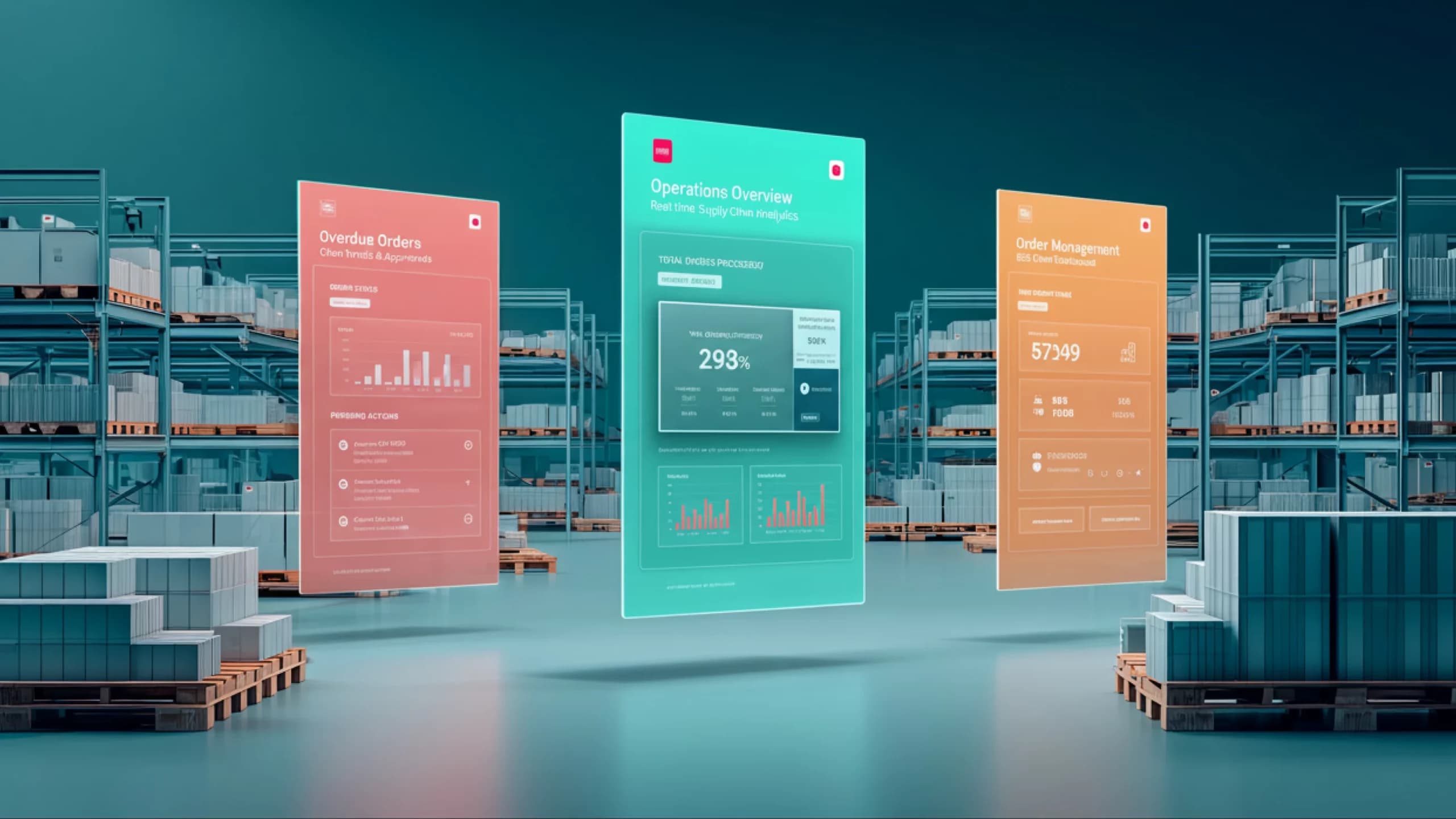

Why B2B Businesses Need a Single Source of Truth for Operations
It is usually due to the fact that two people are not on the same page
Sales says that the order is confirmed, while the Warehouse states that the inventory isn’t available, and then Finance informs that the invoice has not been generated yet.
Everyone is basically “right”, but in the end, the customer is still left without the order.
If you’ve ever been in a meeting where three departments brought three different views of the same data, then you have witnessed the absence of a single source of truth in operations.
In B2B, where every penny counts and the speed of fulfilment is key, scattered data is not just an inconvenience. It’s a burden.
Let’s take a closer look at what a single source of truth really is, why growing wholesalers have a hard time without it, and how aligning operations translates into a competitive edge.
What “Single Source of Truth” Really Means
A single source of truth (SSOT) in operations refers to the fact that all people, sales, warehouse, procurement, and finance, are all working on the same data in real-time.
Not similar data.
Not “updated later” data.
The same data.
In practical terms, it means:
- One version of stock availability
- One view of order status
- One record of customer pricing
- One consistent set of operational numbers
When your systems are aligned, decisions become simpler. When they are not, teams spend more time reconciling data than acting on it.
Data consistency in business is not about being perfect. It is about being aligned.
The Risks of Fragmented Systems
Creating fragmented systems is usually not the goal of most B2B businesses. It is a gradual process.
You can have:
- Financial control accounting software
- A different inventory tracking tool
- A dedicated CRM for the sales team
- Spreadsheets serving as the data sources
Each of these tools may work efficiently on its own. The real issue is that it disrupts the connection between them.
When systems are disordered:
- A sales representative may quote a product that is not in the inventory
- The warehouse department may pick an item that is already allocated to another department
- Finance may show some revenue which the operations can`t find any links to
This is the initial way in which the operational delays come into being. And little by little, they are registered as usual.
A statement like that or mottos one hears include:
Just verify the stock before finalising the order.
Finance’s data will be updated tomorrow.
“System is just a part of the spreadsheet; it is more accurate besides.”
These are the signs that something is wrong.
Inventory, Orders and Warehouse Alignment
Inventory is the centre of gravity in wholesale operations.
The whole business will seem shaky if your stock does not coincide with orders and warehouse movement.
A proper single source of truth ensures the following:
- Stock levels are updated in real-time.
- Orders automatically reserve inventory.
- Warehouse teams work based on live demand signals.
- Sales sees accurate availability.
This is the point at which the Simplisales Dashboard, being an integrated platform, becomes essential. Your operational data resides in a single environment rather than juggling disconnected tools.
With stock movements, everyone stays in the loop.
An order placed is automatically updated in all places.
There is no delay. There are no conflicting reports.
Eliminating Data Duplication
Data duplication is one of the unnoticed operational risks.
It seems to be harmless, but eventually causes inconsistencies.
For example:
- Customer prices are stored in two different systems
- Product SKUs that are independently managed in accounting and inventory
- Manual entry of purchase orders only
Every duplicate entry brings in the chance of human error.
In the long run, this results in:
- Incorrect margins
- Time wasted in reconciliation
- Conflicts between departments
The only source of truth is the one that automates data flow between systems and eliminates unnecessary duplication.
The Simplisales Website has customer information linked to live operational records, like prices and availability, directly instead of static exports.
Similarly, the Simplisales App guarantees that field sales representatives have access to the same live data that is available to office teams.
Simplicity is built on consistency. When friction is reduced, performance grows.
Why Operational Consistency Drives Profitability
The operational data management is not merely a technical enhancement, but it is the very thing that affects the profitability directly.
As data becomes consistent:
- The purchasing decisions are more precise
- Safety stock levels can be cut down
- Delivery performance gets better
- The trust of the customers strengthens
Gartner reported that companies exhibit strong data governance and integration, and as a result, they eliminate operational inefficiencies and enhance decision quality in all departments.
In the wholesale business, improved refunds mean fewer mistakes, which will protect margins.
Building Operational Consistency Without Replacing Everything
A frequently held belief is that the only way to attain is by having to change all the existing systems.
No, such is not the case.
The aim here is neither to get rid of accounting tools nor CRM. What we are trying to build is a layer of unified operational functions where core processes work in line automatically.
The platform could be Simplisales that is the central operational layer acting as that:
- Orders are automatically communicated to inventory
- Inventory data propagates to different sales channels
- Sales reports reflect real-time availability
- Reporting contains data only from coherent records
This means that you are not managing integrations manually anymore; your business systems collaborate without any effort.
This is the ultimate form of a single source of truth when it comes to operations.
The Competitive Edge of Alignment
When all your operations work off a single reliable data source, something subtle but remarkable takes place:
- The teams will stop questioning the figures.
- The meetings will dive into actions and not into reconciling.
- The decisions will be moved up.
On the other hand, fragmented system firms that are in competition have to waste time validating data because they are not in alignment. While you are busy helping clients.
In the fast-moving B2B stratosphere, the decision-making swiftness can be more of an asset than the operational scope.
Conclusion: One Version of the Truth Is a Strategic Asset
Experience a seamless B2B e-commerce journey with Simplisales.
The future is bright for wholesale businesses. Make it brighter with Simplisales, a simple and affordable B2B e-commerce solution for wholesalers.
If you frequently listen to:
Which report is correct?
Let me check another system.
The numbers do not match.
Your business is not actually short of data, which is the issue; rather, it is short of alignment.
The single source of truth is not just a way to handle your system. It is a means of building trust both in and outside the organisation.
It is the operational clarity for the operational complexity.
References
Gartner – How to Design an Effective Data and Analytics Governance Operating Model
Inventory Source – Inventory Accuracy: Why It Matters and How to Achieve It
Related Blogs
Explore more insights for your wholesale business.
Operations · 28 SEPT 2026
Digital Wholesale Catalogues: Managing Pack Sizes
Why digital catalogues are more than online product lists A buyer opens a wholesale catalogue and finds three versions of […]
Operations · 04 SEPT 2026
Distributor Ordering Systems: Supporting Branches, Buyers and Account-Specific Pricing
Why distributor ordering is different A distributor may have one customer account with five branches, twenty buyers and several delivery addresses. […]

Operations · 31 AUG 2026
B2B Order Management Systems: Which Statuses, Approvals and Rules Do You Need?
Why B2B order management needs more than an order list At 8.30 on a Monday morning, a wholesaler’s […]
Run your business,
without the complexity
Start free · Try paid plans for 30 days.
