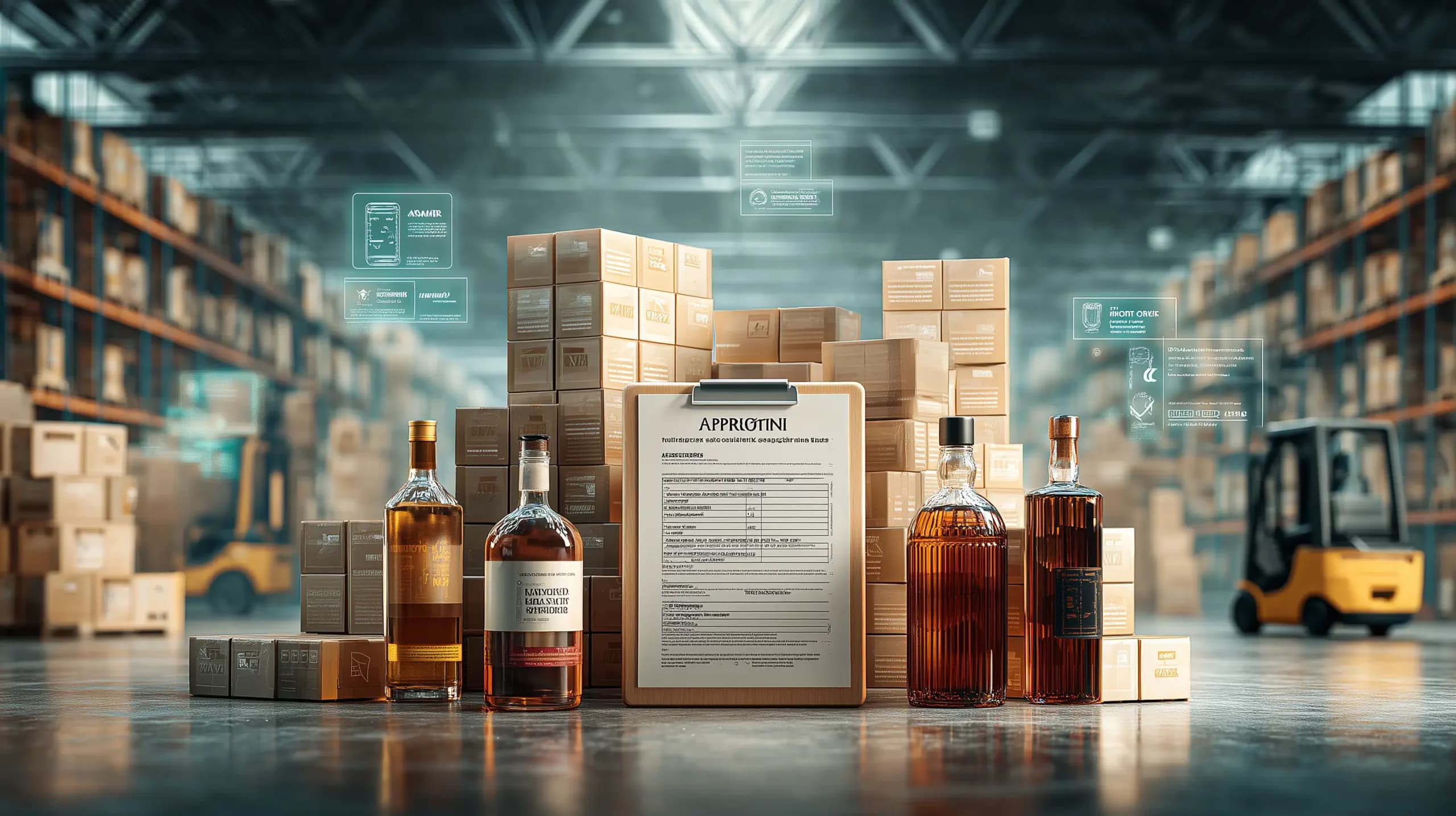

“Can I start selling as soon as my company is registered?”
Generally, no.
There is no general wholesale licence in the UK, but businesses selling alcohol to other businesses or individuals for sale or supply may need approval under the Alcohol Wholesaler Registration Scheme (AWRS).
AWRS is administered by HM Revenue & Customs and is designed to reduce alcohol duty fraud and prevent fake products from entering legitimate supply chains in the UK.
Do You Need AWRS Approval?
AWRS generally applies when all of the following are true:
| Test | What it means |
| You have a UK establishment | The business has an establishment in the UK |
| You sell or arrange alcohol sales | This can include wholesalers, importers, producers and brokers |
| The sale is at or after the duty point | UK Alcohol Duty has become due |
| The buyer is another business | The alcohol is for onward sale or supply |
This applies to drink wholesalers, cash-and-carry businesses, specialist wine merchants, alcohol importers, and producers selling to other businesses.
There may be some types of sales that would not be caught – for example business-to-business sales that are only ancillary or incidental to your main business, or one-off business-to-business sales by a retailer not in the business of wholesaling alcohol. Business group transfers are not included either. But you should not simply assume that such sales would pass under the radar. If you intend to engage in regular business-to-business sales of alcohol as part of your business model, you should check the position with HMRC before you start trading.
Apply at Least 45 Days Before Trading
You should apply for approval at least 45 calendar days before you plan to start trading as a wholesaler of alcohol.
Do not trade until you have received your approval from HMRC. If you trade in wholesale alcohol before you are approved, your stock could be seized, and you could be fined and face other enforcement action.
You will not have permission to trade until you are formally approved. It is your responsibility to make sure any application is made in good time.
You must apply online to HMRC for approval as a wholesaler using the Alcohol Wholesaler Registration Scheme service. You will need a Government Gateway account.
You will need information about your business, such as your tax and National Insurance numbers, your company and VAT registration details, information about key people in your business, details of the trading premises, the different types of alcohol you intend to wholesale, your customers and suppliers and whether you import or export alcohol.
Prepare for HMRC’s Fit and Proper Test
HMRC looks at the business and the key people associated with it.
The test is about whether the business is real, fit and proper, and whether it’s unlikely that it will pose a serious risk of tax fraud or non-compliance. Your tax history will be part of the checks, along with Companies House details, relevant convictions and previous regulatory breaches.
New businesses need a viable commercial strategy in place before applying. You may be asked for a business plan that covers costs, suppliers, customers, market analysis and predicted profits. You could also get a visit about your accounting records, stock and your supply chain.
Lack of detail or an impractical model could hold up the application or be a reason for it to be turned down.
What Happens After Approval?
Upon approval, an AWRS Unique Reference Number (URN) is issued to your business.
The URN must be included on invoices for wholesale sales of alcohol and customers who request the number must be provided with it. Trade customers are expected to verify the number with HMRC’s online service before purchase and repeat the check periodically.
Any relevant changes to directors, partners, contact details, trading names, VAT registration, or premises must be reported to HMRC within the appropriate deadline.
AWRS approval is granted to the approved legal entity. It does not automatically transfer should the legal entity change.
Due Diligence and Record Keeping
Approved wholesalers must carry out reasonable and proportionate due diligence throughout their supply chains.
This involves ensuring that suppliers and customers are legitimate and looking for warning signs, including unrealistically low prices, unexplained cash payments, differing bank accounts, missing invoices, unclear transport arrangements, or an inability to demonstrate that duty has been paid.
The Simplisales Dashboard has the potential to centralise your supplier details, purchase orders, customer accounts and records, inventory, warehouse locations and sales orders. It does not pretend to be a replacement for existing AWRS-compliant processes or professional advice, but linked records should certainly help any checks or investigations run more smoothly.
AWRS Is Not the Only Requirement
Nevertheless, don’t be under any illusion that AWRS obviates the need for any other licence or registration.
As well as all the products that have excise duty (fuel, tobacco, etc.), alcoholic drinks come under the general heading of food and drink businesses, and so it’s very likely that your product will need Food Business Registration with your local authority as well.
The other obvious thing to check is your local alcohol licensing requirements. Selling in a strictly business-to-business wholesale context is one thing, but it’s quite another if you are selling them to the public. Even a single bottle sale would constitute retail sales, and is more than likely to require local premises and personal licensing if the public have access in any form, including tastings. The position varies throughout the UK, and not even all hybrid business types (e.g. internet sales only) escape, so do check locally.
Importing will bring you right back to the importing basics of customs declarations, VAT, Customs Duty and Alcohol Duty. If you plan to hold or move duty suspended alcohol, you will need additional excise approvals, and possibly also approved warehouse arrangements. AWRS doesn’t make an ordinary warehouse into an excise warehouse.
You may find documentation that mentions Alcohol Duty Stamps. The scheme was finally wound up on 1st May 2025.
Alcohol Wholesale Launch Checklist
Before you make your first sale, are you able to confirm that you have done the following?
- Checked whether your activities fall within AWRS.
- Applied at least 45 days before your intended start date.
- Received approval before beginning wholesale trade.
- Created supplier and customer due diligence procedures.
- Set up six-year record retention and stock controls.
- Added your URN to relevant invoices.
- Checked food registration, local licensing and import requirements.
- Confirmed whether any stock will be held under duty suspension.
Final Thoughts
Becoming an alcohol wholesaler in the UK involves more than buying drinks in volume and supplying trade customers.
For most in-scope businesses, AWRS approval is the central requirement. You must apply early, satisfy HMRC’s fit and proper assessment and wait for approval before trading.
After approval, compliance continues through supplier checks, accurate records, invoice requirements and regular monitoring. Building these processes correctly from the beginning makes it easier to demonstrate compliance and scale the business without losing control.
Related Blogs
Explore more insights for your wholesale business.
Wholesaling · 28 AUG 2026
B2B Pricing: SaaS Fees, Add-Ons and Total Cost of Ownership
The Monthly Subscription Is Only the Starting Point How Current B2B eCommerce Pricing Models Compare Shopify: Low Entry Cost Does Not Mean You Need Shopify Plus BigCommerce: Watch GMV and Payment Costs Add-Ons Can Change the Comparison Completely Calculate Total Cost of Ownership The Best Platform Depends on What You Already Have Where Simplisales Fits […]
Wholesaling · 27 JUL 2026
How to Become a Tobacco Wholesaler in the UK
This blog post explains that becoming a tobacco wholesaler in the UK requires more than registering a company, as businesses involved in manufacturing, importing, storing, transporting, or selling tobacco must comply with the Tobacco Track and Trace system. Wholesalers need an Economic Operator ID for the business, a Facility ID for each relevant premises, and […]

Wholesaling · 10 JUL 2026
Starting a Food Wholesale Business in the UK: Registration, Food Safety and Legal Requirements
Establishing a wholesale food business in the UK goes beyond getting set up as a company. Food safety and regulatory responsibilities must be met before trading starts. For the majority of food wholesalers, getting registered by completing a free Food Business Registration form with the local authority is all that is needed, but those wholesalers […]
Run your business,
without the complexity
Start free · Try paid plans for 30 days.
