B2B eCommerce Platform vs Wholesale Ordering Software: Which One Do You Actually Need?
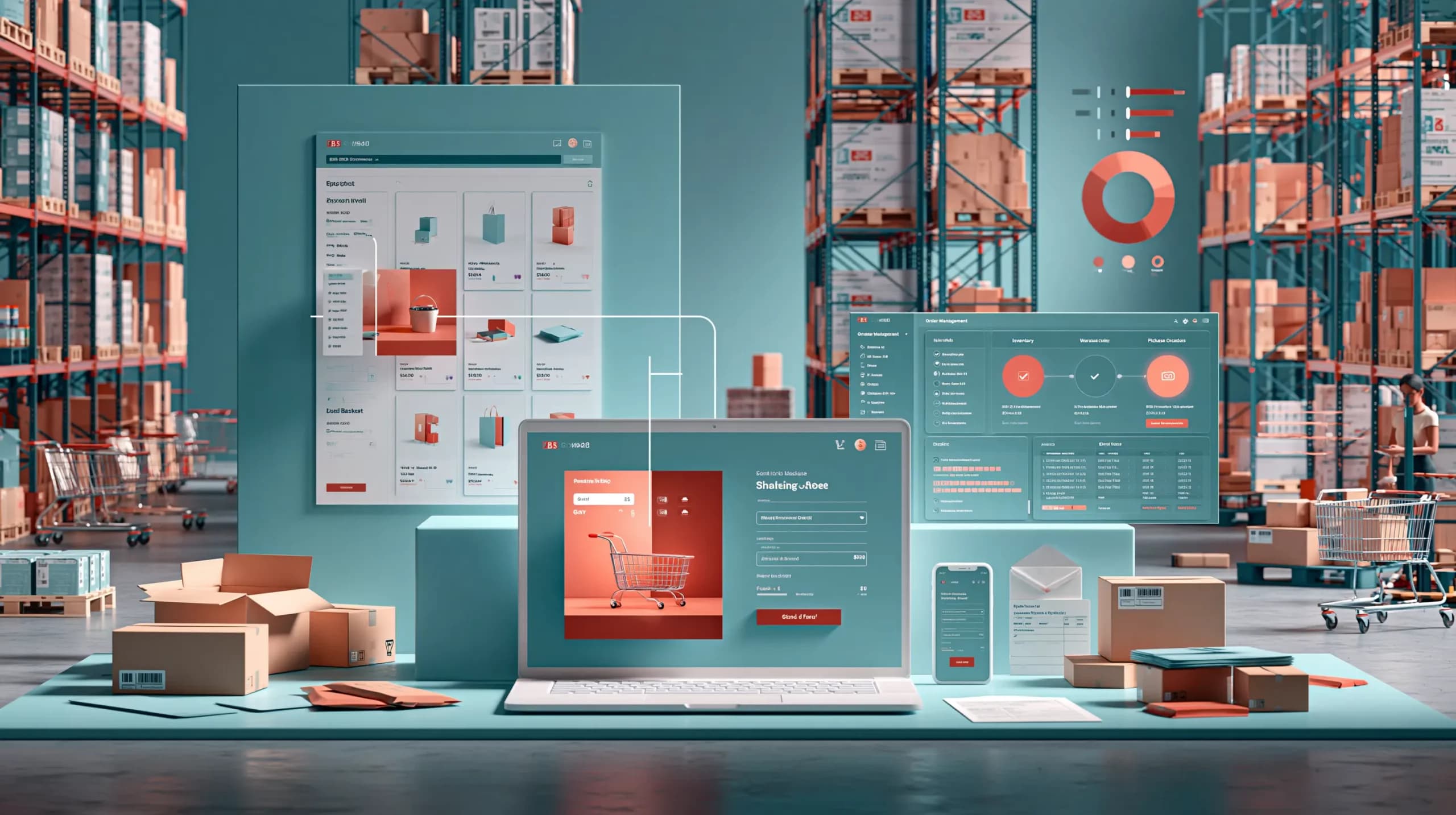

A wholesaler decides it is finally time to move ordering online.
The first requirement sounds simple:
“We need a B2B ecommerce website.”
Then the operations team joins the conversation.
Customers have individual price lists. Sales representatives take orders on the road. Products are sold by case and pallet. Stock sits across several warehouses. Some customers still order through WhatsApp or email. Purchase orders, picking and deliveries all need to connect somehow.
Suddenly the question is no longer just:
“Which website should we buy?”
It becomes:
“Do we need a B2B ecommerce platform or wholesale ordering software?”
The terms are often used interchangeably, and modern products increasingly overlap. But they usually start from different problems.
A B2B ecommerce platform typically starts with the digital buying experience.
Wholesale ordering software typically starts with the wholesale ordering and operational workflow.
Understanding where your complexity sits will help you choose the right one.
What Is a B2B eCommerce Platform?
A B2B ecommerce platform allows businesses to sell products to other businesses online.
Unlike a standard consumer store, modern B2B platforms can support requirements such as:
- Customer-specific catalogues
- Contract and volume pricing
- Company accounts with several buyers
- Payment terms
- Minimum and maximum quantities
- Bulk ordering
- Purchase order numbers
- Approval workflows
- Self-service account management
Platforms such as Shopify B2B and BigCommerce B2B Edition demonstrate how far the category has developed. What was once largely a storefront can now manage sophisticated company accounts, negotiated pricing, purchasing permissions and sales-representative workflows.
A B2B ecommerce platform is therefore particularly attractive when the main objective is:
“We need a powerful digital sales channel.”
What Is Wholesale Ordering Software?
Wholesale ordering software approaches the same problem from a different direction.
Instead of beginning with the storefront, it starts with how a wholesaler receives and processes orders.
That may include orders arriving through:
- A B2B website
- A mobile ordering app
- Sales representatives
- Telephone
- PDFs or spreadsheets
- Internal customer-service teams
The software may then connect those orders with customer pricing, inventory, purchasing, warehouses and fulfilment.
The question becomes less:
“How good is the website?”
and more:
“What happens to every order before and after checkout?”
That distinction is important for distributors where ecommerce is only one part of a much larger wholesale operation.
B2B eCommerce Platform vs Wholesale Ordering Software
There is considerable overlap, so this table describes the typical emphasis, not an absolute rule.
| Requirement | B2B eCommerce Platform | Wholesale Ordering Software |
| Professional B2B storefront | Core strength | Usually included or connected |
| Customer-specific pricing | Common | Core requirement |
| Customer-specific catalogues | Common | Core requirement |
| Bulk / quick ordering | Common | Core requirement |
| Company accounts and buyer permissions | Often strong | Varies |
| Content, SEO and merchandising | Usually stronger | Usually secondary |
| B2C + B2B in one storefront | Often strong | Less central |
| Mobile ordering app | Varies | Often important |
| Sales-rep ordering | Available on some platforms | Often core |
| Email / WhatsApp order capture | Less common | More likely |
| Multi-warehouse operations | Often integration-dependent | Frequently deeper |
| Picking and packing | Often external/app-based | May be integrated |
| Supplier / purchase order management | Usually external | Often included |
| Delivery operations | Usually external | May be included |
| Accounting / ERP integration | Common | Usually essential |
| Best starting point | Digital commerce | Wholesale operations |
The important word here is starting point.
A strong B2B ecommerce platform can be extended into operations. A strong wholesale ordering platform can deliver a sophisticated ecommerce experience.
The decision depends on how much extension you need.
Choose a B2B eCommerce Platform When the Storefront Is the Priority
Imagine a manufacturer already has an ERP, warehouse management system and established purchasing processes.
Operations work.
The missing piece is digital commerce.
Customers need a modern portal where they can log in, access negotiated pricing, place bulk orders, manage company users and view order history.
The company may also sell directly to consumers and want B2B and B2C channels on the same infrastructure.
That is a strong use case for a dedicated B2B ecommerce platform.
Its strengths may include:
- Storefront customisation
- Content management
- Search and merchandising
- International storefronts
- B2B and B2C commerce
- Large integration ecosystems
- APIs and headless commerce
The business does not need the ecommerce platform to become its warehouse system.
It needs ecommerce to plug into an operational stack that already works.
Choose Wholesale Ordering Software When Order Operations Are the Problem
Now consider a traditional distributor.
Customers currently email spreadsheets, phone the office or send WhatsApp messages. Sales representatives write orders while visiting shops. Customer prices live in several places.
The warehouse needs to know what to pick, purchasing needs visibility of shortages and management wants one view of incoming orders.
Launching a beautiful website solves only part of that problem.
Customers may order online, but staff could still be:
copying orders between systems, checking prices manually and switching between separate inventory, purchasing and warehouse tools.
This is where wholesale ordering software becomes more attractive.
The objective is to create one ordering workflow regardless of where the order originated.
For businesses like this, features such as sales-rep ordering, customer trading rules, multi-unit products, warehouse visibility and purchase-order management may be more important than advanced storefront merchandising.
The Multi-Channel Question Is Often the Deciding Factor
Ask one simple question:
“Will all of our customers realistically order through the website?”
For many wholesalers, the answer is no.
Some customers will love self-service.
Others will continue calling their representative.
A restaurant may send a WhatsApp message. A retailer may email a purchase order because that is how their procurement system works.
A B2B portal can still be extremely valuable, but forcing every customer through one channel may not be realistic.
In that situation, your technology needs to solve order consolidation, not just online checkout.
The best setup may be one where ecommerce orders, sales-rep orders and manually received orders eventually enter the same workflow.
Do You Need Inventory and Warehouse Management Too?
Another useful test is where your operational problems begin.
If your main concern is:
“Customers need somewhere better to order.”
you may primarily need ecommerce.
If the problem continues:
“Then we need to know which warehouse fulfils it, reserve stock, generate a picking queue, replenish shortages and arrange delivery.”
you are moving into wholesale operations.
This does not automatically mean one monolithic system is better.
Many businesses deliberately use separate best-of-breed systems:
B2B ecommerce → ERP → WMS → accounting → delivery software.
That architecture can be extremely powerful.
It can also become expensive and integration-heavy.
For smaller and mid-sized wholesalers, consolidating several of those functions into a wholesale platform may reduce the number of integrations they have to maintain.
Integration Matters More Than the Category Name
Whichever route you choose, do not evaluate the software in isolation.
Ask what happens when an order moves through the business.
For example:
Customer logs in
→ sees agreed catalogue and pricing
→ checks available stock
→ submits order
→ credit rules are applied
→ stock is allocated
→ warehouse picks the goods
→ order is dispatched
→ invoice reaches accounting
→ customer sees updated account information
A system may have an excellent storefront and still leave several manual gaps in that workflow.
Another may have excellent operations but offer a customer experience that does not meet your ecommerce goals.
The right platform is the one that reduces the gaps relevant to your business.
Where Simplisales Fits
Simplisales sits deliberately across both sides of this distinction.
The Simplisales Ecommerce Apps provide customer-facing B2B ordering through branded web and mobile experiences. Customers can see account-specific catalogues, agreed prices and relevant delivery options.
Behind that, the Simplisales Dashboard manages the wider wholesale workflow.
Orders from ecommerce, sales representatives, WhatsApp, emailed purchase orders and other channels can be brought into the same operational environment.
The platform also covers areas such as:
- Customer trading rules and price lists
- Multi-unit products
- Real-time stock across multiple warehouses
- Supplier records and purchase orders
- Picking and fulfilment
- Sales-representative ordering
- Returns and credit notes
- Delivery routing
- Accounting integrations
That makes the positioning different from simply adding a wholesale checkout to a website.
The aim is to connect how the customer orders with how the wholesaler operates afterwards.
That does not mean every business needs that breadth. A company with established ERP and warehouse systems may prefer a more specialised ecommerce layer.
The right decision depends on the gaps already present in your technology stack.
Which One Do You Actually Need?
Use these questions before choosing a platform:
- Is our main problem creating a better B2B website, or processing wholesale orders?
- Do we already have reliable ERP, inventory and warehouse systems?
- Will customers order only online, or through several channels?
- Do customers have individual catalogues, prices and trading terms?
- Do sales representatives place orders for customers?
- Do we need a branded mobile ordering app?
- Do we manage several warehouses or stock locations?
- Do we need purchasing and supplier management?
- Does the warehouse need picking and packing workflows?
- Do we sell both B2C and B2B?
- Which system will own customers, products, pricing and stock?
- Which integrations will be required after launch?
- How much custom development will those integrations require?
If most of your requirements sit around the digital storefront, start your evaluation with B2B ecommerce platforms.
If they extend deeply into ordering, sales reps, inventory, purchasing and fulfilment, investigate wholesale ordering software as well.
Beware the “Cheapest Platform” Comparison
Subscription cost alone can be misleading.
Imagine Platform A costs less each month but requires separate software for wholesale pricing, warehouse operations, sales reps and purchasing.
Platform B costs more but replaces several subscriptions and integrations.
Neither is automatically cheaper.
Your comparison should include:
Platform fees + apps/modules + implementation + integrations + maintenance + internal administration.
Also consider what remains manual after launch.
Saving £200 per month on software is not much of a saving if employees spend dozens of hours re-entering orders between systems.
Final Thoughts
The difference between a B2B ecommerce platform and wholesale ordering software is becoming less clear every year.
Modern ecommerce platforms now offer sophisticated wholesale functionality. Wholesale-first platforms increasingly provide polished websites and mobile apps.
That is why choosing by category name is not particularly useful.
Instead, start with the problem.
If your operations already work and customers simply need a better digital purchasing experience, a B2B ecommerce platform may be exactly what you need.
If orders arrive from everywhere and the difficulties continue through pricing, stock, purchasing, warehouse fulfilment and sales representatives, a broader B2B ordering software platform may provide more value.
The best solution is not the one with the longest feature list.
It is the one that removes the most friction from the way your customers buy and the way your team fulfils those orders.
Related Blogs
Explore more insights for your wholesale business.
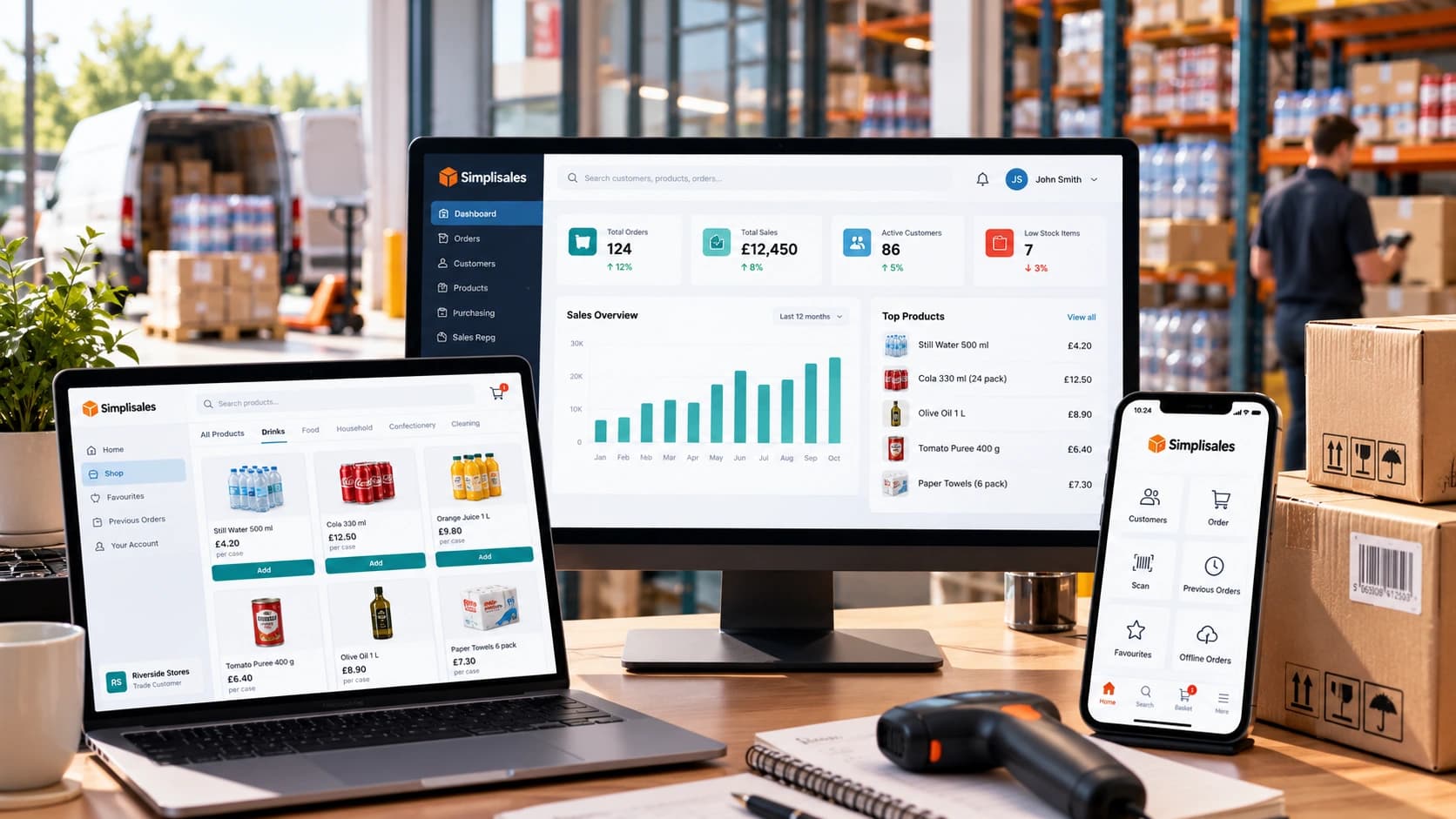
Wholesaling Softwares · 19 OCT 2026
Wholesale Software for Small Businesses
You do not need an ERP just because spreadsheets are failing The minimum wholesale software stack Layer 1, such as accounting is remaining the financial source of truth Layer 2, like ordering and customer-specific trading rules Layer 3 – stock, buying and foundational warehouse control What not to buy too early When the minimum stack […]
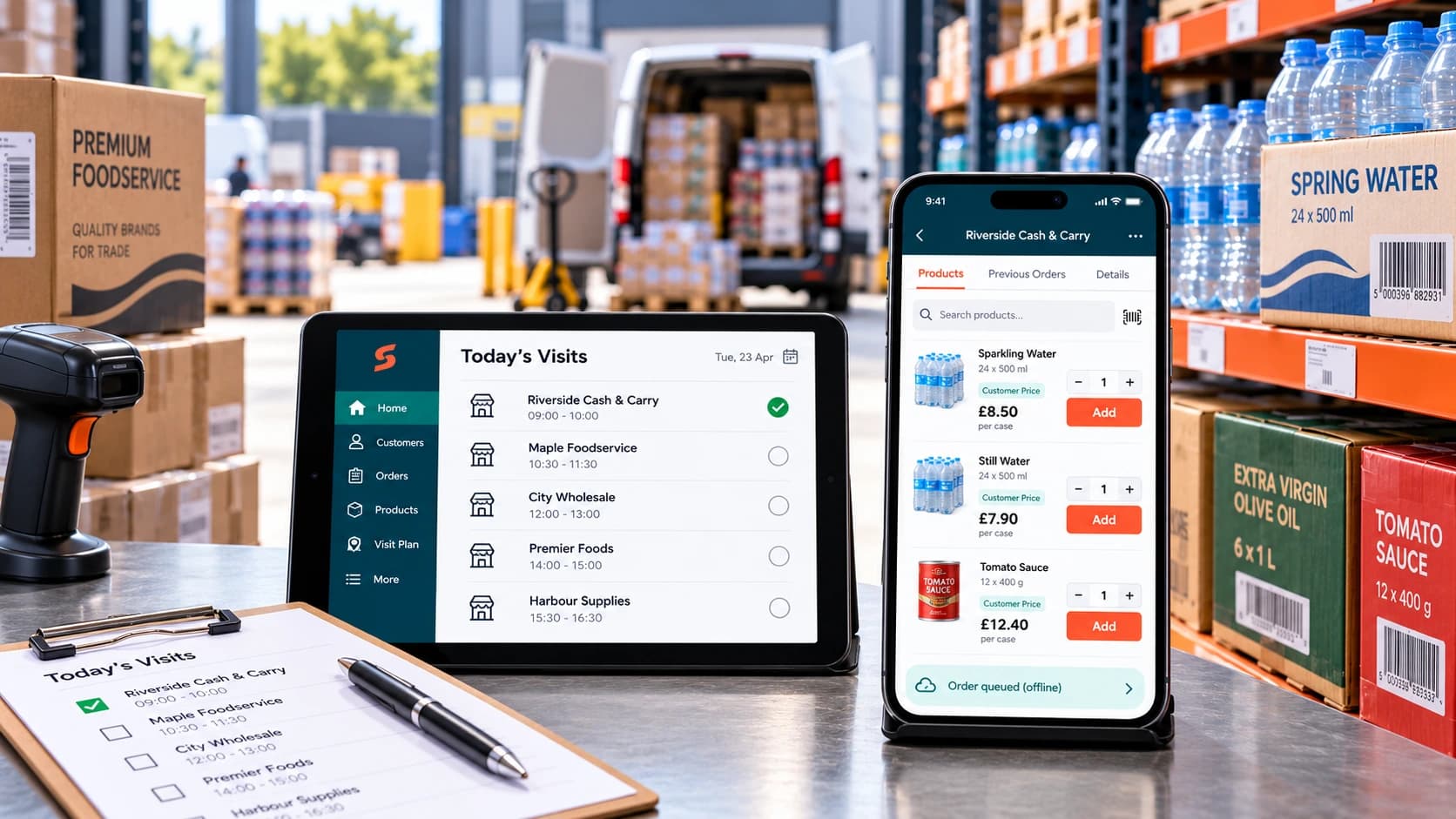
Ecommerce Tips · 12 OCT 2026
How to Roll Out a Sales Rep Ordering App
A […]
Wholesaling Softwares · 18 SEPT 2026
Wholesale Stock Control Software: How to Prevent Overselling Across Sales Channels
Why wholesalers oversell A warehouse holds 50 cases of a product. The website shows all 50 as available. A sales representative promises 20 to a customer, a telesales colleague […]
Run your business,
without the complexity
Start free · Try paid plans for 30 days.
