Why Growing Wholesalers Struggle with Multi-Currency Operations
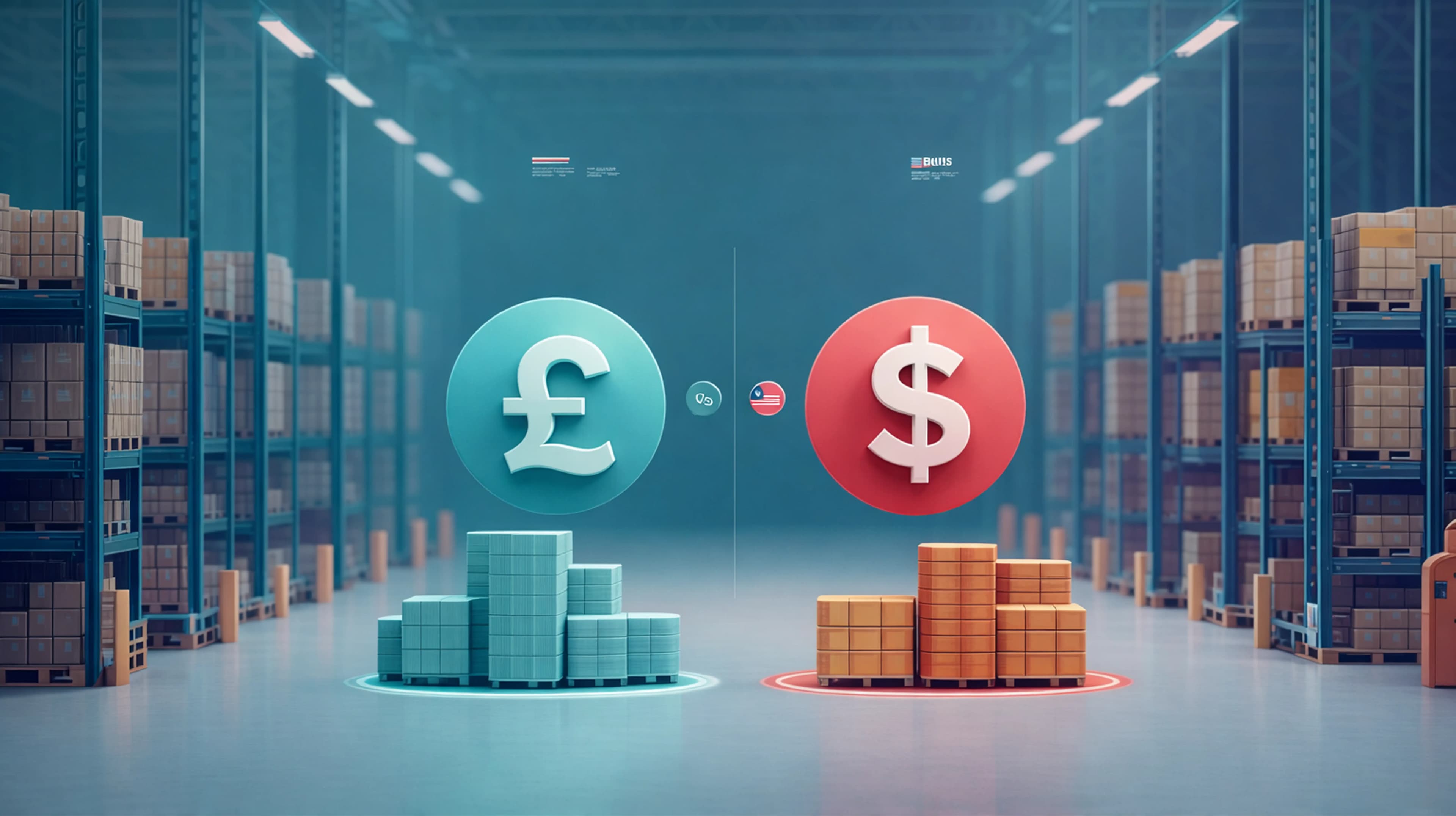

A vivid incident in the lives of many enterprises which are growing wholesalers and advanced traders exporter is but one.
It was the case of having a foreign customer on board, who, in addition to the good volumes and healthy margins, brought overall excitement to the whole team. Instead, the meeting room saw someone who didn’t think much of it and asked:
Are we going to issue this in euros or pounds?
Well, what plus do we take for an exchange rate during the invoicing?
There was silence in the room.
When a wholesaler gets into multi-currency, it seems to be fine at first and is even an asset. It is a sign of a good company, with clients across the globe, making a profit. But it does not last long, and it becomes a huge challenge you have to face.
Let us analyse why so many mid-sized wholesalers have their financial systems and processes disrupted by multi-currency operations and what works instead to enable you to operate them with ease and without the need for finance, sales, and operations to become daily firefighting.
When Multi-Currency Becomes Unavoidable
The most common case is when the term multi-currency is not a сommon one for wholesalers. They see it just as it is.
You start selling:
- Exporting companies
- Cross-border distributors
- International online stores
- Overseas customers
Out of the blue, you have to address the issue of:
- Various customer currencies
- Suppliers sending invoices in another currency
- Reporting that no longer lies neatly at the end of the month
The fewest teams overcome this issue by coping manually with small volumes. A person is in charge of a whole exchange conversion tab in a spreadsheet. Someone else marks “locks” an exchange rate for the week. It seems to be good enough.
Until it is not.
Pricing, Orders and Reporting: Where Things Start to Crack
The issue with multi-currency is that it cannot be isolated to a single location. It spreads and shows up across the operation`s entire spectrum.
Pricing gets messy
The sales teams cannot help but ask:
Is this price fixed in euros, or is it subject to fluctuation due to the exchange rates?
Are we protecting the margin, or are we just trying to be competitive?
When there is no solution, the pricing errors are inconsistent. Two customers ordering the same product might end up with very different effective price and nobody is aware of the reason behind it.
Orders lose clarity
Orders may be issued in one currency, be changed to another internally, and then be carried out in a third currency. When that occurs:
- Discount tracking is practically impossible.
- Credit limits are debased
- Margin calculations become disordered
Reporting stops making sense
Finance departments are the last to suffer, but the hardest.
Revenue reports look good when stated in local currency, but they tell a different story about profitability after conversions. End-of-month reports generate queries instead of clarifications:
“How come sales grow, but the cash flow shrinks?”
“Where has the margin gone?”
Currency Mismatches Between Systems
System misalignment is the top rare problem in wholesale with multi-currency.
A typical scene is:
- The accounting software is doing a currency conversion
- The inventory system is tracking a stock item only in the base currency
- The sales tool is presenting prices in customer currency
- Spreadsheets are the only means of interconnecting these systems
Each system could be “right” on its own. However, together, they lead to misunderstanding.
This is the reason teams lose trust in data. Decision-makers slow the decision process. Approvals are getting postponed. Friction in operations occurs.
Why Spreadsheets Fall Apart at Scale
Spreadsheets are perceived as adaptable, which is why they are charming. However, the emergence of multi-currency highlights its boundaries quickly.
They are the ones having issues with:
- Real-time swapping of currencies
- Using more than one currency in the same product
- Keeping track of margin consistency
- Keeping track of the audit and taking responsibility
Above all, spreadsheets are not able to relate actions to outcomes. A shift in the exchange rate does not automatically alter the pricing, stock value, or order profitability.
As a result, the teams end up spending more time on reconciliation than on normal operations.
Real-Time Data Across Currencies Changes Everything
Multi-currency is only possible when all people are working from one real-time perspective.
That’s the difference between the knowledge of the operation being in multiple currencies and the control over it.
A piece of integrated software like the Simplisales Dashboard brings this to the wholesalers:
- Monitor orders, stock, and sales in various currencies at the same time
- See aggregated performance without manual conversions
- Instantly, not just at the end of the month, grasp the impact on margin
Instead of questioning “Which is the correct number?”, teams start thinking “What should we do next?”
Keeping Sales Teams Confident Across Borders
Sales teams are commonly the first to meet friction.
They are told:
Your competitor has quoted in our local currency.
Why did the price change from last week?
With the Simplisales App, field and inside sales teams will:
- Be able to quote in customer currency without fear
- Read the up-to-the-minute price and current stock availability
- Eliminate boring back-and-forth with finance
Selling point’s confidence grows in the money and thus in the customer’s conversion rate and trust.
Multi-Currency Without Operational Complexity
The main point is not transforming your business into an operation heavily funded by finance. It is the opposite.
By separating the accounting compliance function from the operational visibility through the Simplisales Website and Simplisales Dashboard, you can:
- Keep your accounting systems intact
- Incorporate a multi-currency feature within operations
- Go global without having to change your organisation’s core structure
You don’t need additional tools; the only thing required is efficient inter-tool coordination
Why This Becomes a Competitive Advantage
Many wholesale distribution companies are not venturing into the international market due to operational fear, and not because of demand.
The ones who tackle multi-currency head-on swiftly can act fast on:
- Accurate pricing
- Margin protection
- Rapid responses to market changes
- International customers being part of the team
To put it differently, clear currency management becomes a stepping stone in the pathway, not a blockage.
Conclusion: Growth Shouldn’t Mean Guesswork
Experience a seamless B2B e-commerce journey with Simplisales.
The future is bright for wholesale businesses. Make it brighter with Simplisales, a simple and affordable B2B e-commerce solution for wholesalers.
Multi-currency operations are not financial issues; they are operational ones.
If your teams are:
- Debating on which figures are accurate
- Verifying margins once more after orders are made
- Finding out about currency losses too late
Then it is not exchange rates, it’s visibility.
Using the right operational instruments atop your already in place systems, multi-currency turns from being a threat to a normal activity.
British Business Bank – What is Foreign Exchange risk?
Airwallex – Foreign exchange risk: What causes it and how to reduce it
Related Blogs
Explore more insights for your wholesale business.
Operations · 28 SEPT 2026
Digital Wholesale Catalogues: Managing Pack Sizes
Why digital catalogues are more than online product lists A buyer opens a wholesale catalogue and finds three versions of […]
Operations · 04 SEPT 2026
Distributor Ordering Systems: Supporting Branches, Buyers and Account-Specific Pricing
Why distributor ordering is different A distributor may have one customer account with five branches, twenty buyers and several delivery addresses. […]

Operations · 31 AUG 2026
B2B Order Management Systems: Which Statuses, Approvals and Rules Do You Need?
Why B2B order management needs more than an order list At 8.30 on a Monday morning, a wholesaler’s […]
Run your business,
without the complexity
Start free · Try paid plans for 30 days.
