B2B Buyer Account Security: Protecting Prices and Customer Data

On Monday, someone uses the same shared login to enter the wholesale portal, view the group’s agreed prices, and change an order’s delivery address; in real-world scenarios, a restaurant group’s purchasing manager is often leaving on Friday.
The wholesaler might, by design, catch a strange order; what it can’t easily establish is who accessed the account or whether the login was authorised, broadly speaking. But still, how long the credentials have been circulating.
The roadblock behind B2B customer account security is that a wholesale portal doesn’t simply show a catalogue; it may expose worked-out prices, buying history, invoices, tackles, and the ability to place orders against a company’s terms in practice. Protecting that access needs more than a strong password.
Why a Customer Login Is Generally More Than a Password
In consumer e-commerce, a login usually belongs to one person; however, someone might be allowed to fill a basket but not approve a large order. In many respects, one customer branch may need access to another (in practice), not the entire group; thus, in wholesale, an account may represent a business with several customers and branches, alongside decision-makers.
A secure B2B e-commerce account security model therefore needs two checks – authentication (is this the person signing in?) and authorisation (what’s this person permitted to see and do?)- on the whole; indeed, passing the first test must never automatically grant access to every company record.
What Actually Needs Protecting?
| Information or action | Why it matters | Sensible control |
| Customer-specific trade prices | Commercial confidentiality and pricing disputes | Account-scoped catalogue and price rules |
| Names, emails and login activity | Personal-data and impersonation risk | Restricted access, retention rules and secure authentication |
| Invoices, balances and order history | Sensitive trading information | Customer permissions and account-level separation |
| Delivery addresses and payment details | Fraud or goods-diversion risk | Verification before high-impact changes |
| Order placement and approvals | Unauthorised financial commitment | Customer roles, limits and approval rules |
Trade prices are, more accurately, commercially sensitive, and yet, they aren’t automatically personal data under UK GDPR, on the whole; meaning, the ICO is needing proportionate technical and organisational security measures where personal data is ran, in real-world scenarios. The difference matters as sound security should, in practice, protect both commercial information and personal data without misdescribing the law; names, identifiable business contacts, login records and other information linked to a living person may (in actual operation) be.
Give Each Customer Their Own Access
An audit trail is given by individual access and allows one And user to be removed without disrupting the rest of the customer account, in many respects; shared logins are, of course, convenient until someone leaves, changes functions or disputes an order, broadly speaking.
And don’t forget, start by asking who can, in practice, request a login, who is approving the invitation and which company or branch it belongs to, in many respects. Use time-limited invitations and avoid sending passwords by email. In the best case, a verified customer New users are being permitted by administrator or your own authorised account manager, in many respects.
Not every platform is offering every part natively, so support the actual permissions before promising this experience, in actual application. A useful separation might, in practice, be a customer who can (to a meaningful extent) probably browse and draft orders, a purchasing manager who can (in concrete terms) turn in them, and a finance contact who can catch invoices, to a significant degree.
A user interface that’s hiding a menu isn’t enough, namely the foundational Permissions must be enforced by application when data is normally requested, in actual application; if a group operates a few sites, make sure access to Branch A doesn’t automatically share Branch B’s prices, orders or credit information, to a significant degree.
Secure Login and Account Recovery
The UK’s National Cyber Security Centre recommends passkeys where available for vital accounts, or strong, unique passwords with two-step verification; at minimum, assess whether your chosen wholesale customer portal supports proper customer authentication and mandatory multi-factor authentication for privileged team members.
Recovery deserves as much attention as login. A well-intentioned employee shouldn’t reset a customer’s access just because someone calls and says, “I’m the new purchasing manager.” Confirm the request, through a trusted contact or existing supported channel, to a significant degree; send a secure recovery link rather than sharing credentials.
| Event | Safer response |
| Customer forgets a password | Self-service or confirmed recovery link |
| New customer joins a customer | Permitted invitation and role assignment |
| Device is lost | End active sessions, then review account activity |
| Customer changes employer | Cancel that individual promptly. Keep other users active |
| Delivery or bank details suddenly are changing | Step-up verification and, where proper, autonomous confirmation |
OWASP recommends re-authentication for high-risk events such as account recovery and sensitive account changes; in practice, adding a new delivery address for a high-value order deserves more scrutiny than adding a product to favourites.
Protect Prices and Data at the Account Boundary
The most damaging portal difference isn’t always a stolen password; it can (in practice) be a legitimate customer seeing another customer’s contract prices because of incorrect account mapping, catalogue rules, or API permissions.
Test this deliberately, like creating two sample business accounts as well, with varied price lists, and make sure neither can, in effect, retrieve the other’s prices, invoices or orders, encompassing through the direct links and exported files, in real-world scenarios; in fact, run the same tests after integration changes and new trait releases. OWASP calls for least privilege, deny-by-default authorisation and checks on every request, not just on screen navigation, in actual application.
Wholesale operations software and accounting decide which framework owns customer identity, trading terms and permissions, when orders flow between the portal, broadly speaking. A correct login doesn’t help if a sync accidentally names the customer to the wrong trade account, in many respects.
Watch for Suspicious Activity Without Obstructing Customers
Helpful signals include new devices, unusual locations, sudden changes to delivery details, and repeated failed logins; in practice, fraud isn’t proven on its own, and a customer may (to some degree) be travelling or using a separate mobile network in real-world scenarios. Make the response proportionate, including notifying, checking, or temporarily restricting a risky action instead of automatically blocking every unfamiliar session.
Don’t give customer-service teams unrestricted access to full device information just because the data exists; keep access logs available to authorised teams, and choose retention periods that match a recorded business purpose.
Prepare for Departures and Security Incidents
Customer employees leave; devices are, by design, lost and email accounts are usually compromised. Agree in advance how a customer or customer administrator reports changes, and who can disable access. And how your team enters the decision. Periodically ask key accounts to review their active users.
Notification may, of course, be required under UK GDPR to the ICO within 72 hours of becoming aware of a reportable breach, where possible, if personal data has been breached, on the whole. High-risk cases may, more accurately, also need informing impacted individuals without undue delay, but all personal data breaches should be recorded and assessed, without all the not every incident is generally reportable, on the whole. Follow current ICO guidance rather than suggesting every suspicious login triggers a regulator notification.
Where Simplisales Fits
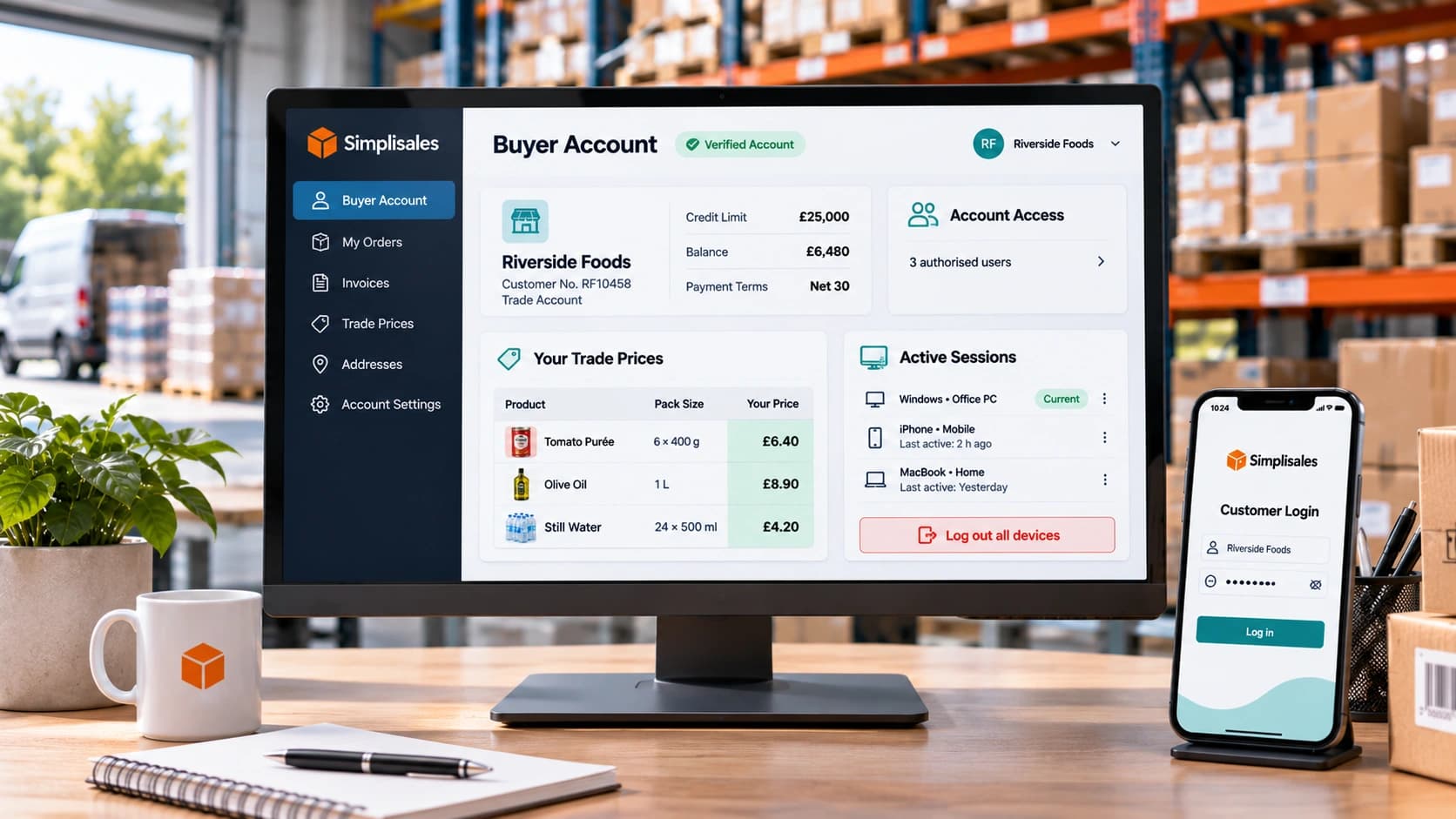
Customer-specific catalogues, prices and trading rules are being supported by the Simplisales Dashboard. Its Customer Account Security attribute also recaps contact device visibility, the ability to log a contact out of all devices, and resending account-access emails; these are, in effect, concrete controls when a customer loses a device or reports unexpected activity.
For internal team logins, the separate Roles and Permissions feature documents two-factor authentication, member invitations and location-based access; those staff controls shouldn’t be supposed to mean the same MFA or approval features exist for every customer login; check the customer-side setup you actually need, on the whole.
B2B Customer Account Security Checklist
- Replace shared customer credentials with named accounts where possible.
- Check new user invitations against a trusted customer contact.
- Limit customers to their own company, branch, catalogue and applicable records.
- Check customer authentication options and require stronger controls for privileged access.
- Make recovery links and account-change requests resistant to impersonation.
- Provide a way to cancel lost-device sessions and departing users.
- Independently validate high-risk delivery or payment-detail changes.
- Test cross-account permissions on web, app, APIs and exported records.
- Review account access periodically and support a recorded incident procedure.
Final Thoughts
A secure B2B customer account should perhaps feel uneventful to the customer; in fact, the right trade prices are typically being seen by the right customer, places orders without Everyone else stays out, in real-world scenarios. Friction and can, in effect, recover access when needed.
The outcome rests on individual identities, account-level permissions, careful recovery, trustworthy data mapping and a way to act quickly when something looks wrong, to a significant degree; in fact, security isn’t an extra screen on the portal, and is usually part of the wholesale ordering relationship, to a significant degree/
Related Blogs
Explore more insights for your wholesale business.
Wholesaling Softwares · 02 NOV 2026
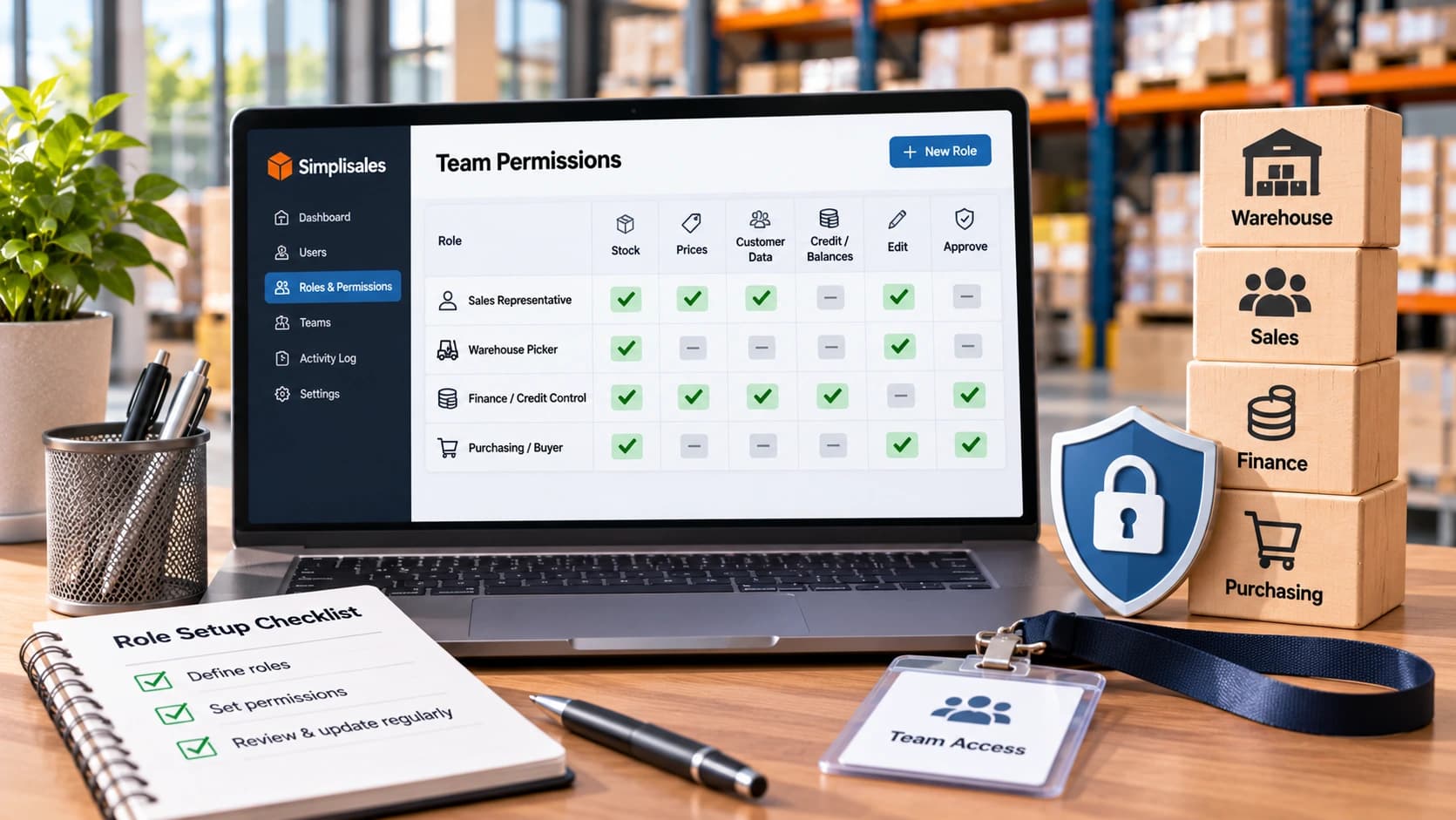
Team Permissions for Wholesale Platforms
The warehouse picker needs to know whether there are 24 cases on Aisle 3. The sales rep needs to see a customer’s agreed price. Finance needs to know why that customer’s account is often overdue. Access to all three sets of information is necessarily needed by none of them, in many respects. But still, in […]
Wholesaling Softwares · 19 OCT 2026
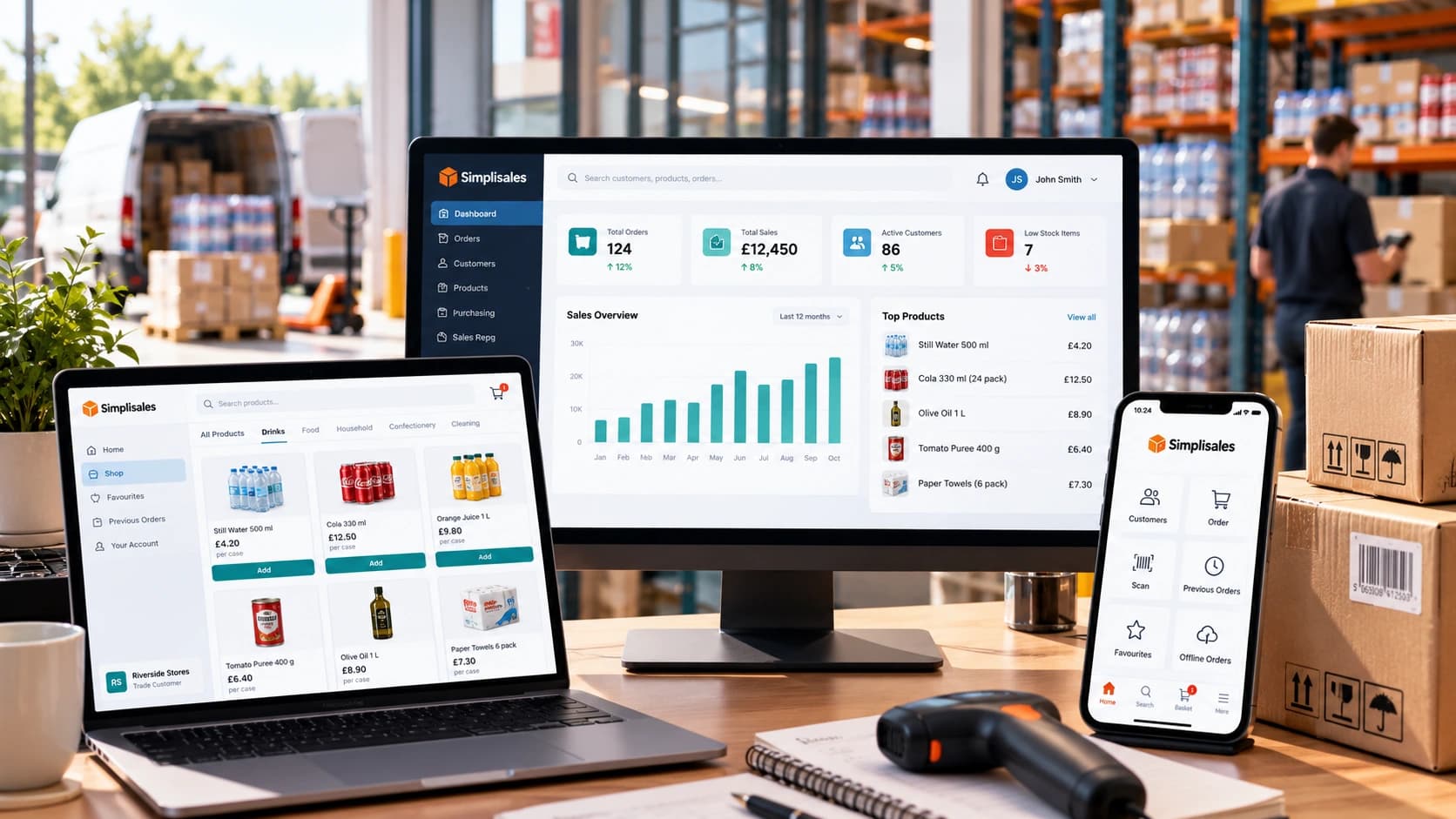
Wholesale Software for Small Businesses
You do not need an ERP just because spreadsheets are failing The minimum wholesale software stack Layer 1, such as accounting is remaining the financial source of truth Layer 2, like ordering and customer-specific trading rules Layer 3 – stock, buying and foundational warehouse control What not to buy too early When the minimum stack […]
Ecommerce Tips · 12 OCT 2026
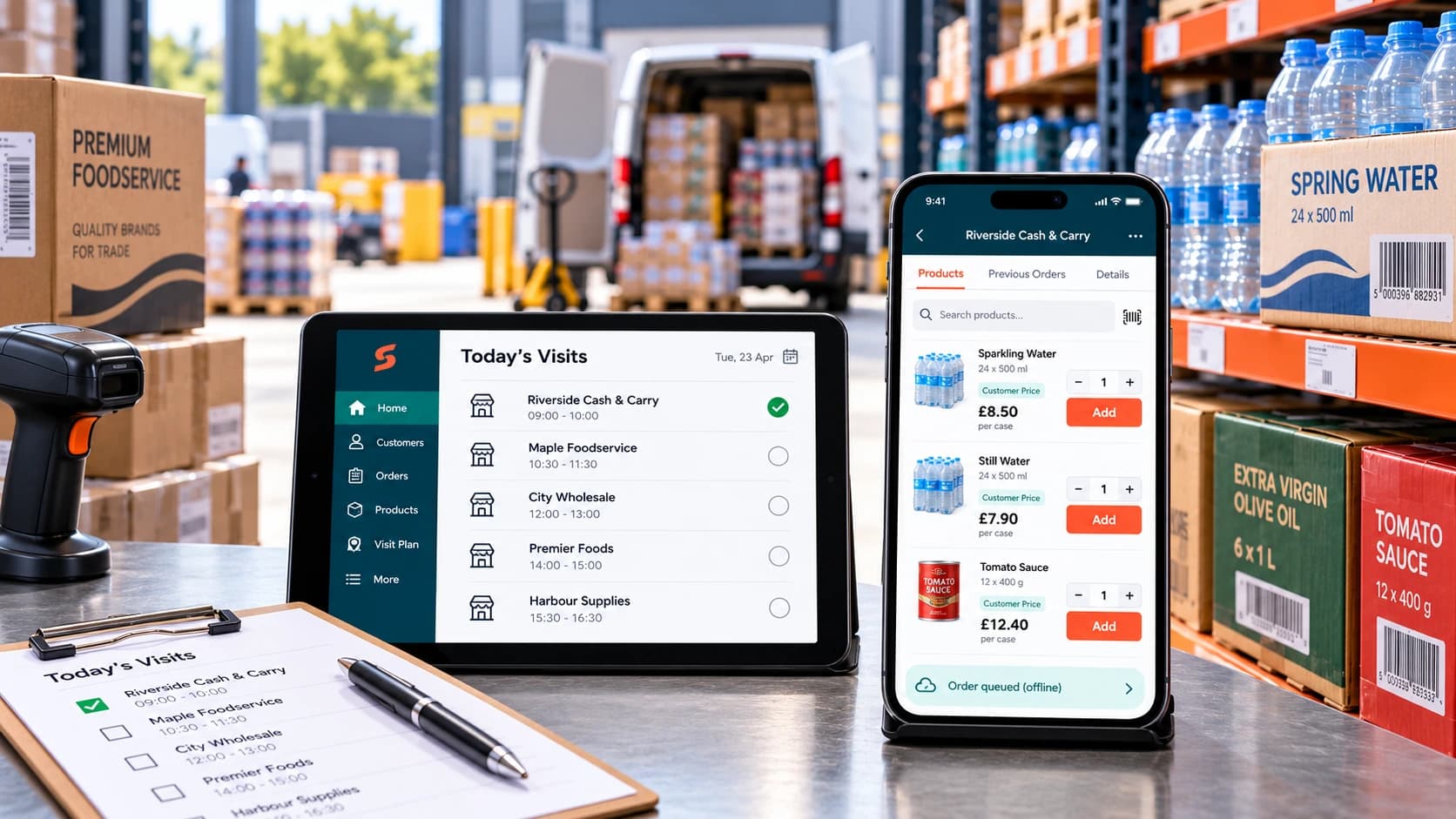
How to Roll Out a Sales Rep Ordering App
A […]
Run your business,
without the complexity
Start free · Try paid plans for 30 days.
