Food Wholesale Supplier Management: Keeping Purchasing, Products and Payments Connected

We all know the moment in food wholesale that starts with a simple question.
‘Can we get more of this in by Friday?’
The product sells well, the customer is waiting, and the warehouse team is pretty sure more is already on the way. Then someone checks the purchase order. Someone else checks the supplier details. Finance wants a prompt if there’s an outstanding balance. The sales team wants to know immediate stock availability.
Suddenly, one small purchasing question turns into five separate conversations.
That’s why food wholesale supplier management is more than just saving supplier names and phone numbers. It’s the connective tissue between purchasing, products, payments, and stock control.
Why Supplier Management Is More Than Storing Contact Details
Supplier management goes beyond emailing a purchase order. It involves communication, tracking updates, documenting agreements, managing supplier performance, ensuring compliance with the law and your company regulations, and monitoring risk.
An updated supplier record should empower you to make quick, accurate, and informed decisions. It should also allow your team to adjust one input and output without any human interaction.
If a supplier indicates a new minimum order, a new lead time, or a new invoice address, your records should reflect it immediately, without you having to remind someone to update the file.
Linking Suppliers to Products and Warehouses
Products within food wholesale have a high turnover rate. Therefore, supplier details must not be isolated from your stock and warehouse operations.
A supplier is more than just a vendor; they are directly associated with product availability, replenishment lead time, unit cost, and order fulfilment rate.
This also holds true if you run more than a single warehouse. If your team does not have a clear view of which suppliers are linked to which products, you will make purchases without proper lead time or pay more for certain products.
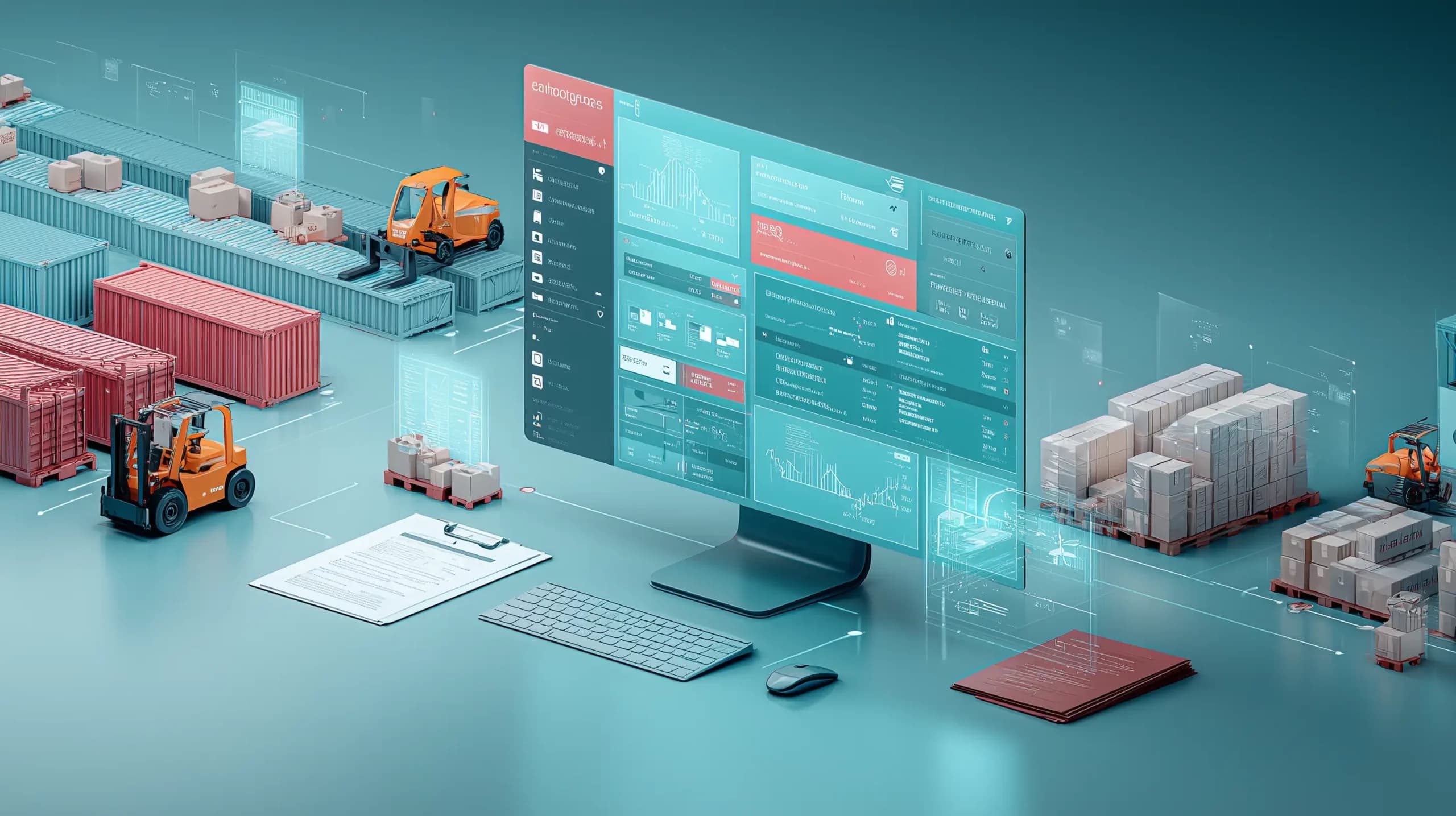
The Simplisales Dashboard allows all relevant supplier records to be stored along with products, inventory, and purchase orders. This will provide your team with a clearer picture of what is being sourced, its demand, and how it integrates into your overall warehouse operation.
Tracking Sourced Products and Supplier-Specific Details
You don’t have the same relationship with every product.
One supplier might provide the products you sell the most of, while another gives you a specialist product or pack size. Others could fit in that last-minute emergency purchase category, while some stock your slowest-moving items. On top of that, each could have different lead times, pricing, and trading terms that influence how you do business with them.
If this information isn’t readily available when you raise a PO, bad things happen.
The wrong products get ordered.
The supplier gets a call about something a different supplier could help with.
Someone takes up time checking a detail that someone else has already verified.
A connected supplier record can help with that. When you can see all products, product details, and purchase history with a supplier in one place, you can make informed decisions about what to order and from whom.
Creating Purchase Orders from Supplier Records
You don’t want your Purchase Orders to be a stand-alone operation.
In an interconnected wholesale environment, this should be a derivative of what you do with your supplier. Your team should be able to access your supplier, review the products associated with them, take a glance at recent engagements, and only then create a purchase order. No back-and-forth between multiple disparate systems.
This is vital since a lot of the time, it’s the context that’s missing and makes you postpone the purchase.
Before you can go ahead and place it, you may need to look up the stock, double-check a product detail, check the supplier balance, or even see when you last purchased the product. If all of the above is spread across several locations, such as piles of paper or different software pieces, you’re wasting time.
Monitoring Supplier Balances and Payment Terms
Suppliers are more than just purchases. It’s a relationship built on trust.
If your payment terms are vague, and balances are tough to follow, those purchasing decisions get a lot harder. Your team may be ready to place a new order, but finance has to figure out what’s still owed. And your supplier may handle that new order differently based on past payments.
It’s why supplier payment tracking should be part of supplier management, not a whole other process.
When balances, payment terms, and purchasing activity are simple to check in on, your team can start making better decisions before issues get out of hand.
Reviewing Recent Purchase Orders and Top Supplied Products
Which suppliers have been favoured with the most significant orders?
What items have they supplied?
Which orders are overdue or have yet to be delivered?
Tracking this information encourages more proactive purchase planning. Rather than simply waiting until an item runs out, you can monitor and detect the patterns of your suppliers and products. This strategic approach is supported by connected data, which transforms the insights from daily ordering into vital business information.
Final Thoughts: Better Supplier Records Lead to Better Stock Control
In the fast world of food wholesale, isolated supplier information is a liability.
When supplier details, sourced items, purchase order statuses, account balances, contact information, and purchasing activities are stored and updated in separate locations, it’ll take an age to get the answers you need. And that delay is risky when it comes to managing your stock.
Better management of your suppliers clarifies the purchase process within your organisation, showing you precisely what has been sourced, ordered, spent, and is now due. This leads to better purchasing decisions in the future, too.
In the world of food wholesale, those insights are invaluable.
Related Blogs
Explore more insights for your wholesale business.

Supply Chain Management (SCM) · 17 MAR 2026
How Warehouse Location Management Improves Fulfilment Speed
Organizing the locations in a warehouse helps greatly to speed up the processing of orders, since the shelves, racks, and bins for each product are assigned accurately, giving the warehouse teams the opportunity to find them instantly instead of hunting for them manually. The major reason for delays in some increasing wholesale warehouses is not […]

Supply Chain Management (SCM) · 01 DEC 2025
Predictive Inventory Management: How AI Keeps Shelves Stocked
AI-powered predictive inventory management helps wholesalers avoid stockouts, reduce excess inventory and plan purchasing with far greater accuracy by analysing historical sales, seasonality, supplier lead times, customer behaviour and market trends. Traditional methods like spreadsheets and guesswork can’t keep up with today’s fast-changing demand, leading either to shortages that damage trust or overstock that locks […]

Supply Chain Management (SCM) · 17 NOV 2025
AI in Wholesale Logistics: Smarter Routes, Faster Deliveries
Intelligent data-driven decision-making and the associated elimination of guesswork direct the transition of wholesale logistics through AI. No longer dependent on intuition, distributors have the opportunity to improve routes, forecast delivery times, minimise fuel and labour costs, and provide complete transparency to customers. Compared to human planners, AI is able to see live traffic, weather, […]
Run your business,
without the complexity
Start free · Try paid plans for 30 days.
