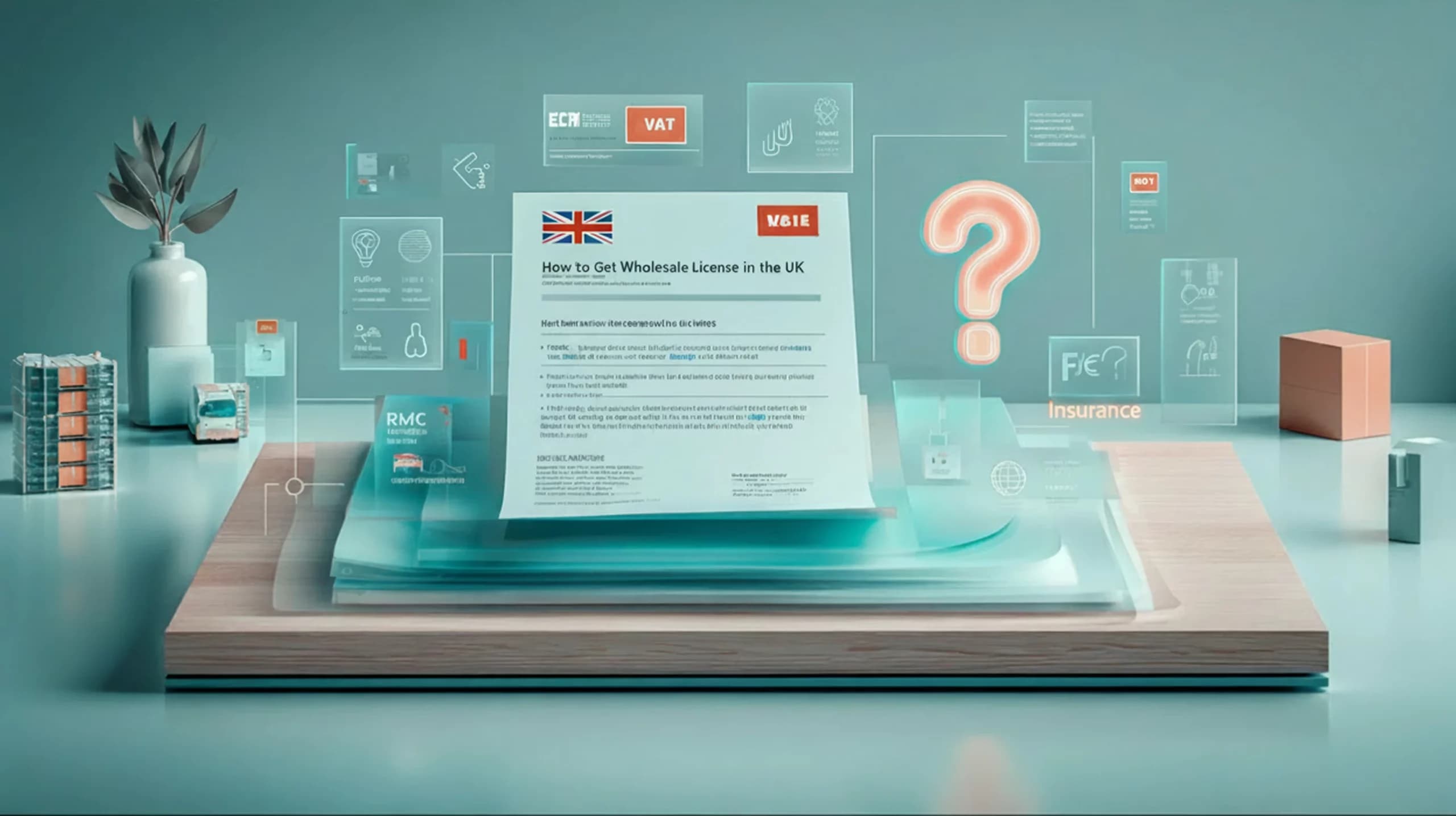

If you are considering starting up a wholesale business in the UK, then you’ve likely posed the same question that several thousand entrepreneurs ask themselves each month.
“Do I need a wholesale licence?”
It’s a simple question to ask. But the answers you’ll find on the internet appear to be far from straightforward.
One website will inform you that you need a wholesale licence before you can sell a single item. Another suggests you just form a company and get started trading.
But which one is true?
The true answer isn’t as complicated as you might think.
For most wholesale businesses in the UK, there is no ‘wholesale license’; it simply doesn’t exist.
However, that shouldn’t be taken to mean you can legally register a company one day, and be up and running selling goods the next. Depending on what you’re selling, where you’re selling it, employing staff or importing goods, there are several different legal registrations and business requirements you’ll need to undertake before you can get down to trading.
If you’re getting ready to start a wholesale business, this guide will take you through everything you need to know… from registering your company, to VAT, SIC codes, industry-specific licences, and getting your operation ready to scale up.
Do You Actually Need a Wholesale Licence in the UK?
First, let’s address the most common misunderstanding about this.
Unlike in other countries, in the UK, there is no generic wholesale licence required for most types of wholesale enterprises.
That means if you’re wholesaling products such as clothing, stationery, furniture, electronics, toys or household goods, there is usually no licence simply because you’re operating as a wholesaler.
Instead, your legal responsibilities will be determined by:
- The goods you are selling
- If you are importing or manufacturing products
- Whether your specific sector is regulated
- Your tax and employment obligations
The way to look at this is that the government doesn’t give out licences for “wholesaling”.
What they do is regulate particular sectors.
For example:
| Business Type | General Wholesale Licence Required? |
| Clothing Wholesale | No |
| Furniture Wholesale | No |
| Electronics Wholesale | No |
| Office Supplies | No |
| Food & Drink Wholesale | Food Business Registration |
| Alcohol Wholesale | AWRS Registration |
| Medicines & Pharmaceuticals | MHRA Authorisation |
| Tobacco | Tobacco Track & Trace Registration |
This distinction is important because many new business owners spend weeks looking for a license that simply doesn’t exist.
Step One: Register Your Business
Before you can even think about making sales, you need to have a legal business entity.
For wholesalers, it’s typically a choice between registering as a Sole Trader or a Limited Company. Here’s what you need to know about both:
| Sole Trader | Limited Company |
| Simple to start | Better suited for growth |
| Personally liable | Limited liability |
| Less administration | Greater credibility with suppliers |
| Suitable for small businesses | Preferred by most wholesalers |
Becoming a sole trader is perfectly acceptable; most wholesalers opt for a Limited Company as it gives better protection, looks more professional to suppliers and customers, and makes future expansion easier.
Company registration is done through Companies House.
As part of the registration, you will choose:
- Your company name
- Registered office address
- Directors
- Shareholders
- SIC code
The process is relatively easy, and it’s usually completed online.
Choosing the Correct SIC Code
One thing that tends to overwhelm and confuse new wholesalers, though, is choosing the right SIC (Standard Industrial Classification) code.
Your SIC code is what tells Companies House what your business is actually in.
Some of the most common wholesale SIC codes include:
| Business Activity | SIC Code |
| Non-specialised wholesale trade | 46900 |
| Wholesale of food products | 46390 |
| Wholesale of clothing & footwear | 46420 |
| Wholesale of electronic equipment | 46520 |
| Wholesale of construction materials | 46730 |
If you’re going to be more of a generalist and sell a wide range of products rather than focusing on a niche, then 46900 (Non-specialised wholesale trade) is typically the best fit for most new start-ups.
If and when your business changes focus down the line, you can always alter and update your SIC codes.
Registering for VAT
Another big decision to make is whether to register for VAT.
Many new wholesalers think they don’t need to worry about VAT until they become a big company.
Not necessarily.
You must register for VAT once your taxable turnover exceeds the government threshold, but many wholesalers choose to register voluntarily before that.
Why?
Wholesale businesses buy stock from suppliers who charge VAT.
If you’re VAT registered, you can reclaim the VAT you’ve paid on legitimate business purchases. This can really help with cash flow as your business expands.
If you’re going to be mainly trading with other VAT-registered businesses, voluntary registration is probably something to talk to your accountant about.
Importing Goods? You’ll Probably Need an EORI Number
Chances are, if you’re bringing goods into the UK from abroad, you’ll need an Economic Operators Registration and Identification (EORI) number.
Without it, passing goods through UK customs will be a good deal tougher.
So, if your business brings goods in from Europe, Asia or anywhere outside the UK, getting an EORI number should be one of the first things on your admin list.
It’s free to get and crucial for global trade.
Industry-Specific Licences
Most wholesalers won’t need a general licence, but some industries are heavily regulated.
For example:
Food Wholesale
It is rather typical that you have to first register your food enterprise with the local council before you can start operating.
Alcohol Wholesale
HM Revenue and Customs (HMRC) oversee registration under their Alcohol Wholesaler Registration Scheme.
Pharmaceutical Products
It is mandatory to obtain an authorisation from the Medicines and Healthcare products Regulatory Agency (MHRA). For the wholesale of medicines.
Tobacco
If dealing with tobacco products, you may have to undergo additional registrations and become a part of the UK’s Track & Trace system.
Hence, always make sure to confirm whether the products you are going to deal with fall under these rules.
Opening a Business Bank Account
Separating your business and personal accounts is not just a good habit; it’s a necessity.
Having a business bank account ensures that:
- You manage your accounting more easily.
- You report your taxes more accurately.
- Your supplier transactions are smoother.
- Your customers trust you more.
Most distributors also opt for accounting solutions right from the start to ensure that their finances are in order.
Insurance Is Often Overlooked
Often, new wholesalers are so product and supplier-focused that insurance is only seriously considered once the worst happens.
You might need (depending on your business):
- Public Liability Insurance
- Employers’ Liability Insurance
- Product Liability Insurance
- Commercial Property Insurance
- Stock Insurance
The correct cover will depend on how exactly your business is structured/entered into, but it’s a lot easier to put in place before you begin trading than after something’s gone wrong.
Getting Your Operations Ready
Registering your company is only the beginning.
Once orders start coming in, you will have to answer questions like:
“Which warehouse is holding this stock?”
“Which customer gets this price list?”
“Has this purchase order arrived yet?”
“How many units are actually available?”
Initially, spreadsheets may be used, but as time goes by and customers and products increase, multiple warehouses are added, and spreadsheets are no longer deemed trustworthy.
In such cases, a single, connected operational platform is most useful.
Customers, products, stock, warehouses, and orders are stored in a single operational platform, the Simplisales Dashboard, while your accounting software handles your finances.
Orders from customers who use the Simplisales Website, as well as those from field sales teams who use the Simplisales App, enter this same operational workflow.
You don’t have to replace the accounting software you like to use; we just add the operational features it’s missing.
A Simple Checklist Before You Launch
Before opening your doors, make sure you’ve completed the essentials:
- Register your business with Companies House,
- Choose the correct SIC code
- Register for VAT if required
- Apply for an EORI number if importing goods
- Obtain any industry-specific licences
- Open a business bank account
- Arrange appropriate insurance
- Set up accounting software
- Choose an operational platform for inventory, orders and warehouse management
Final Thoughts
Take a look at Simplisales products and start selling now!
Is your online presence newly flourishing, and you need more information about online B2B ordering?
Starting a wholesale business in the UK is often simpler than people expect.
The biggest surprise is that most wholesalers don’t actually need a wholesale licence.
Instead, success comes from understanding which registrations apply to your business, choosing the right legal structure, and putting solid operational systems in place from the very beginning.
Registering your company is only the first milestone.
Building a wholesale business that can scale efficiently is what comes next.
Whether you’re planning to sell locally or internationally, investing in organised operations from day one will save countless hours as your business grows.
References
GOV.UK – Register a Company
GOV.UK – Find Standard Industrial Classification (SIC) Codes
GOV.UK – VAT Registration
GOV.UK – Apply for an EORI Number
GOV.UK – Register a Food Business
Related Blogs
Explore more insights for your wholesale business.
Wholesaling · 28 AUG 2026
B2B Pricing: SaaS Fees, Add-Ons and Total Cost of Ownership
The Monthly Subscription Is Only the Starting Point How Current B2B eCommerce Pricing Models Compare Shopify: Low Entry Cost Does Not Mean You Need Shopify Plus BigCommerce: Watch GMV and Payment Costs Add-Ons Can Change the Comparison Completely Calculate Total Cost of Ownership The Best Platform Depends on What You Already Have Where Simplisales Fits […]
Wholesaling · 27 JUL 2026
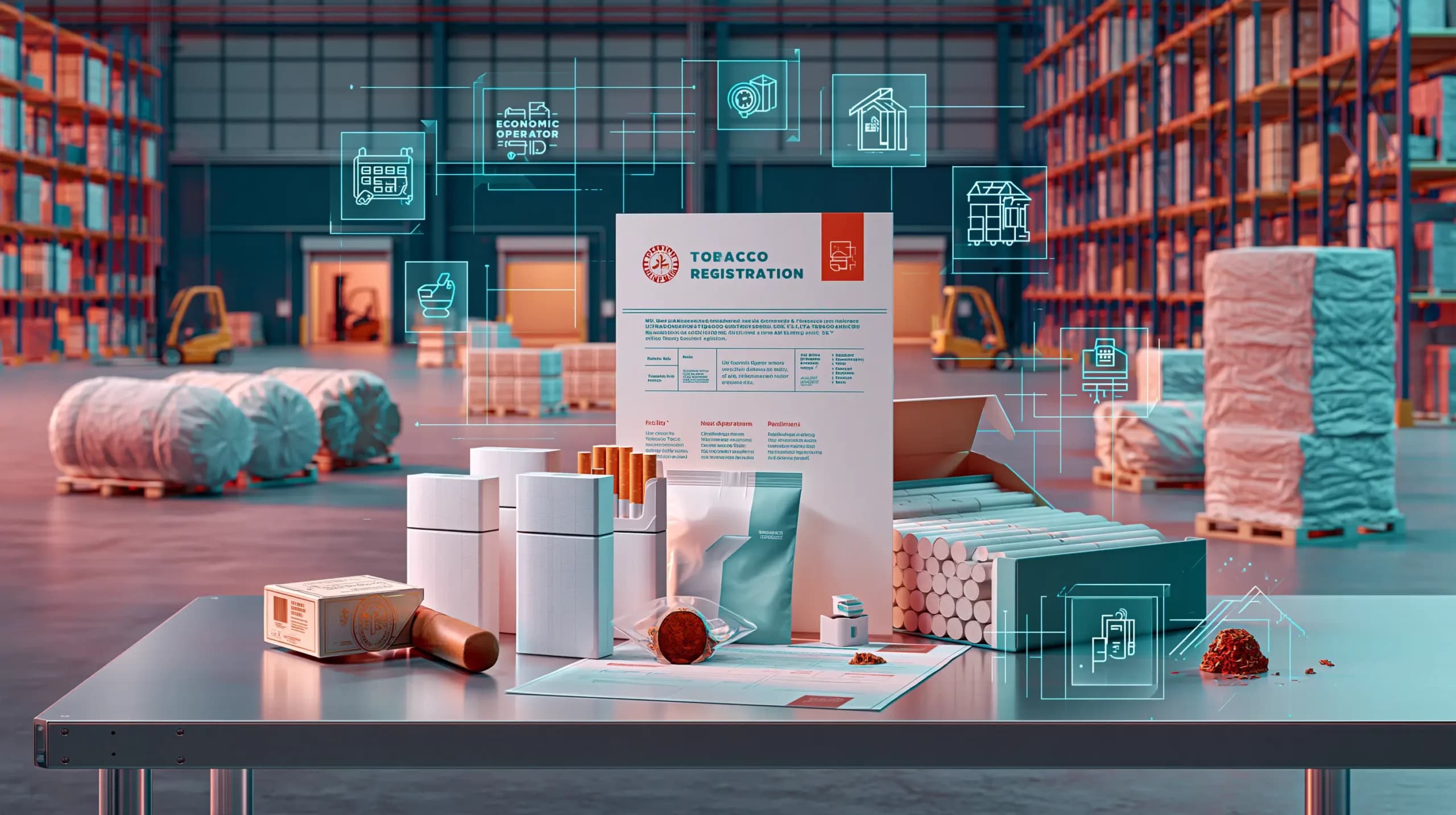
How to Become a Tobacco Wholesaler in the UK
This blog post explains that becoming a tobacco wholesaler in the UK requires more than registering a company, as businesses involved in manufacturing, importing, storing, transporting, or selling tobacco must comply with the Tobacco Track and Trace system. Wholesalers need an Economic Operator ID for the business, a Facility ID for each relevant premises, and […]

Wholesaling · 20 JUL 2026
How to Become an Alcohol Wholesaler in the UK
Starting an alcohol wholesale business in the UK involves more than registering a company, as most businesses selling alcohol to other businesses must obtain approval under HMRC’s Alcohol Wholesaler Registration Scheme (AWRS) before trading. The guide explains who needs AWRS approval, how and when to apply, what HMRC’s fit and proper assessment involves, and the […]
Run your business,
without the complexity
Start free · Try paid plans for 30 days.
