Predictive Inventory Management: How AI Keeps Shelves Stocked


There is one moment in every wholesaler’s life that they secretly dread the most — a call from a frustrated customer who says, “How can you be out of stock once again?” This call almost always happens at the busiest time of the week, and you are probably involved in a thousand things at once: checking orders, reviewing spreadsheets, and even gladly shouting across the warehouse for confirmation of whether that pallet actually arrived… And deep down, you do know that the main reason for distress is not really the missing stock.
The main problem is uncertainty.
Many wholesale businesses still rely heavily on stock planning based on guesswork. You look at data from last year’s sales, forecast demand, and hope that suppliers will deliver on the promised timeline. The truth is, currently, wholesalers can’t have the luxury of dealing with the uncertainty anymore. The margins are tighter; the purchase expectations are higher. Shortage of stocks causes the loss of trust, while excess stock costs cash.
So here’s the good news: predictive inventory management is transforming the whole sphere. And you do not have to be an Amazon or a Tesco to use it. With modern applications, wholesalers of all sizes are able to make use of AI for demand forecasting, prevent shortages and also keep their shelves stocked (and warehouses) with precision.
Let’s discuss how AI-powered forecasting works, its emerging necessity in B2B, and how platforms like Simplisales Dashboard, Simplisales App and Simplisales Website have made predictive inventory management more accessible than ever.
Why Traditional Inventory Management No Longer Works
If you continue relying on spreadsheets or manual tracking, you already know how painful it can be. Traditional inventory methods are facing difficulties as they rely heavily on human assumptions, which cannot be low error compared to AI.
Now, think of all the factors that affect your stock levels:
- Customer seasonality
- Industry cycles
- Supplier delays
- New product launches
- Economic patterns
- Weather changes
- Regional buying behaviour
- Shifts in customer segments
You definitely can’t factor them all in manually.
Most wholesalers take one of the two methods, but they are both quite risky:
The “Better safe than sorry” approach
You overstock to avoid stockouts.
This caused cash flow issues, higher storage costs, and often resulted in dead stock.
The “Just-in-time” approach
The “Just-in-time” approach
You keep a minimum inventory to cut overhead.
This works unless a supplier is late or demand is high — and then you are out of stock.
Neither one is useless anymore.
And here is where AI is outstanding.
What Is Predictive Inventory Management?
Predictive inventory management is one of the applications of artificial intelligence technology (AI). It is the algorithm that automates the processing of data previously fed into it by the user. The algorithm thus finds the previously invisible patterns to humans in the data. The result from the machine learning process is reliable. It follows that forecasting future demand can be improved. The forecast will be more precise after every iteration (or time, in this case).
The AI does not guess the order amount; it instead predicts:
- Which products will sell
- In what quantity
- At what time
- In which region
- To which customer segments
Moreover, it is informing you exactly of the time to reorder and the amount of stock needed to maintain.
Here’s what AI considers when forecasting:
Before we jump into the list, imagine a system that learns your business daily — every sale, every visit, every return. That’s what AI-powered inventory forecasting does.
- Historical sales
- Seasonal cycles
- Supplier lead times
- Economic changes
- Weather trends
- Promotions
- Customer buying habits
- Regional differences
- Product lifecycles
- Stock movement speed
The combination of all variables leads to a nearly supernatural level of accuracy in the predictions.
Why Predictive Inventory Matters for Wholesale Businesses
The wholesale sector is very vulnerable to stock price volatility. For instance, one stockout can result in:
- Unhappy clients
- Cancellation of recurring orders
- Worn-out trust
- Expensive shipping charges on short notice
- Chaos across your operations
AI deals with pretty much all such issues.
Three major benefits of predictive inventory:
1. Fewer Stockouts, More Sales
Nothing is more detrimental to B2B relationships than being unable to deliver what has been contracted. AI makes it possible for you to know the expected shortage days or even weeks before, thus allowing you to place a reorder.
2. Reduced Overstock and Dead Inventory
Most wholesalers go for the “in case of” method and buy too much stock. AI indicates the merchandise that is low in demand right now and is likely to be even less in demand in the near future; thus, you can release cash that would have been needlessly tied up.
3. Happier Customers and Faster Response Times
The predictive inventory generates the right product you always have, which in turn leads to:
- Increased reorders
- Greater buyer confidence
- Stronger relationships lasting longer
The end result will be predictable revenue.
How AI Works Behind Predictive Inventory Forecasting
Before we delve deeper into it, let’s clear one thing that many wholesalers ask:
“Does AI replace humans in decision-making?”
Absolutely not.
AI neither replaces your judgment nor does it do so. It makes it more reliable. You can make far better and logically approved choices based on a clearer vision of the future.
Here’s how AI forecasting works behind the scenes:
1. Data Collection
Sales, stock numbers, returns, and customer behaviour data are all integrated into the system. Using solutions such as the Simplisales App fast-tracks this process because they present the sales insights captured by field reps in real time.
2. Pattern Recognition
AI identifies patterns that humans would not observe — like a group of customers who reorder every 23 days or a hidden seasonal demand spike.
3. Machine Learning
Every week, the algorithm learns from new data.
The more you work, the smarter it gets.
4. Forecasting
The AI predicts demand for the next:
- Day
- Week
- Month
- Quarter
Then, you can accurately plan your purchasing and stocking.
5. Suggested Reorder Points
The Simplisales Dashboard can notify you when you are reaching a reorder point based on AI calculations.
How Simplisales Enables Predictive Inventory Management
Predictive inventory is not a futuristic idea – it is a part of the Simplisales ecosystem.
The respective contributions of each product are outlined below:
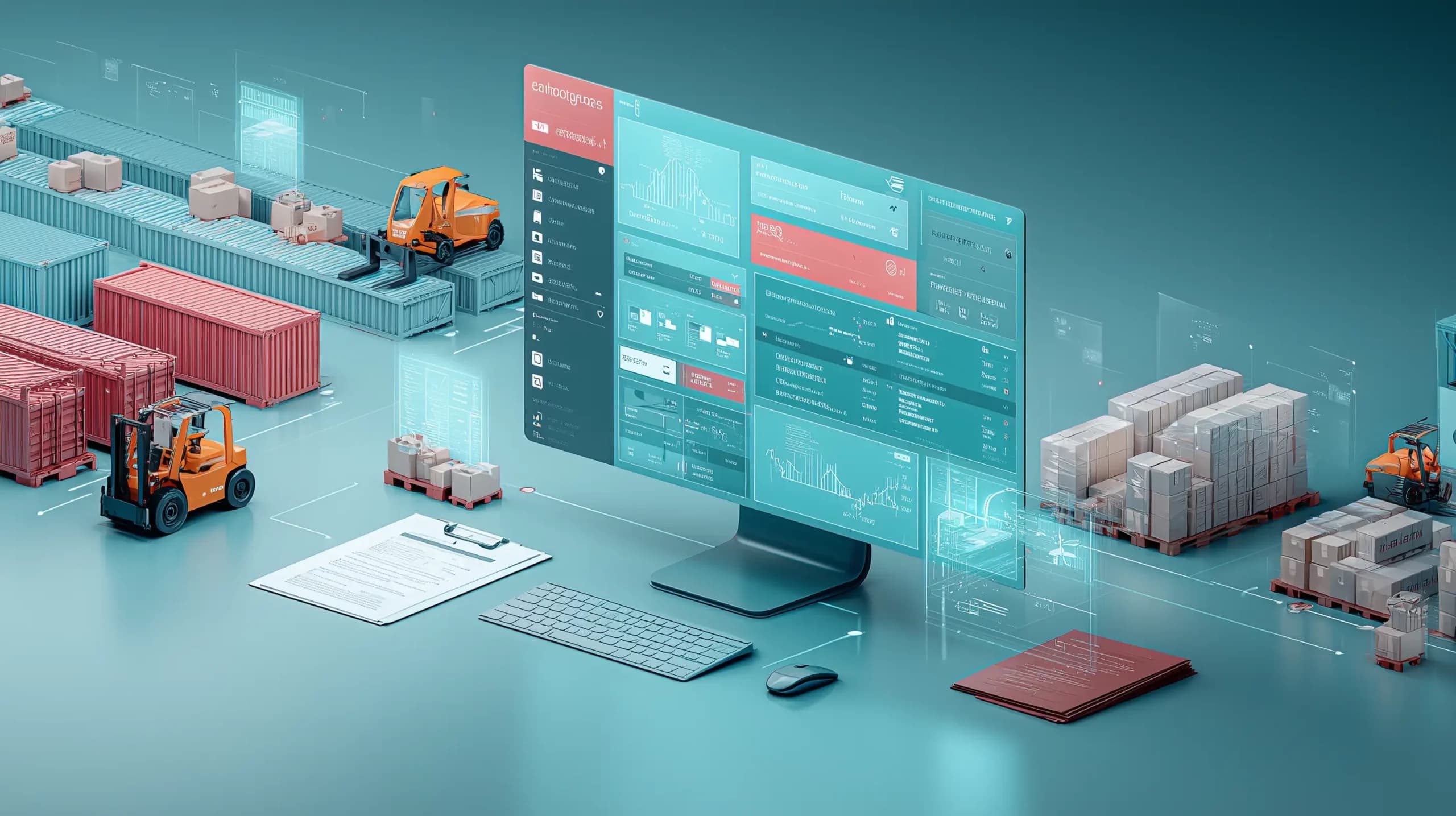
Simplisales Dashboard: Your Predictive Control Centre
The Simplisales Dashboard is at the centre of the entire inventory intelligence process. From here, you can do the following:
- Analyse sales patterns
- Track the stock movement
- Forecast demand trends
- Identify slow-moving items
- Set automated reorder alerts
- Compare regions and customer segments
It is like the brain of your wholesale operation – combining automation and AI to ensure that your stock levels are optimal.
Simplisales App: Real-Time Field Data That Sharpens Predictions
Your sales representatives are your ears and eyes in the field. When they record customer visits, order notes, or forecasted needs through the Simplisales App, this data feeds directly into your forecasting models.
More data → More accuracy → Fewer stock mistakes.
Simplisales Website: Aligning Buyer Behaviour With Stock Predictions
Every search, click, and product view on your Simplisales Website becomes valuable data.
For illustration:
- Which products do customers unceasingly view
- Which categories accelerate in growth
- Which SKUs recover from dips
This is demand intelligence that you could not possibly receive from spreadsheets.
Practical Ways Predictive Inventory Can Transform Your Business
Before listing examples, let’s quickly clarify something: predictive inventory management isn’t just about managing products — it reshapes your whole operational strategy.
Here’s what it unlocks:
1. Smart Purchasing
You don’t overorder anymore; you buy based on the real demand of the market.
2. Supplier Negotiation Power
Instead of guessing, you know exactly what, when and how much you need, which brings better deals.
3. Lower Warehousing Costs
More reliable forecasts- Less unused stock- Less wasted space.
4. Reduced Expiry or Obsolescence
Timely for sectors including fast-moving consumer goods.
5. Higher Customer Satisfaction
The best way to show your reliability is through consistently having stock that you can deliver promptly.
Real Examples of Predictive Inventory in Action
Now, let’s see how predictive inventory works in practice by addressing a few real-world scenarios:
Scenario 1: Seasonal Demand Prediction
Your AI software determines that the Central and Northern regions had a boom in product A and sales by 25% as compared to the Southern region.
There is nothing seasonal about it this time
Scenario 2: Regional Buying Trends
Northern customers buy Product A twice as frequently as Southern customers do.
Optimise your stock by region→ Reduce transfer costs.
Scenario 3: Supplier Delay Compensation
AI identifies the delayed suppliers.
It suggests reorder points earlier than.
Scenario 4: Preventing Overstock
AI notices that there’s a slow decline in interest in Product X.
This would allow you to decrease the number of orders placed, thus preventing thousands of dollars’ worth of dead stock.
Conclusion: Predictive Inventory Is the Future — and It’s Here Right Now
Experience a seamless B2B e-commerce journey with Simplisales.
The future is bright for wholesale businesses. Make it brighter with Simplisales, a simple and affordable B2B e-commerce solution for wholesalers.
Stock management is no longer a dependency on luck.
Now, it doesn’t have to be a gamble but a well-calibrated tactic.
By using AI-driven forecasts, you:
- End stockouts
- Cut down on overstock
- Improve supplier management
- Reach deeper into demand
- Decrease operating costs
- Cultivate customer fidelity
And the best part?
You’re not setting up complex systems or spending corporate-level budgets to begin.
The Simplisales ecosystem — the Simplisales Dashboard, Simplisales App, and Simplisales Website — allows every wholesaler keen on being smart about their growth to grasp predictive inventory easily.
Related Blogs
Explore more insights for your wholesale business.
Supply Chain Management (SCM) · 25 MAY 2026
Food Wholesale Supplier Management: Keeping Purchasing, Products and Payments Connected
Food wholesale supplier management […]

Supply Chain Management (SCM) · 17 MAR 2026
How Warehouse Location Management Improves Fulfilment Speed
Organizing the locations in a warehouse helps greatly to speed up the processing of orders, since the shelves, racks, and bins for each product are assigned accurately, giving the warehouse teams the opportunity to find them instantly instead of hunting for them manually. The major reason for delays in some increasing wholesale warehouses is not […]

Supply Chain Management (SCM) · 17 NOV 2025
AI in Wholesale Logistics: Smarter Routes, Faster Deliveries
Intelligent data-driven decision-making and the associated elimination of guesswork direct the transition of wholesale logistics through AI. No longer dependent on intuition, distributors have the opportunity to improve routes, forecast delivery times, minimise fuel and labour costs, and provide complete transparency to customers. Compared to human planners, AI is able to see live traffic, weather, […]
Run your business,
without the complexity
Start free · Try paid plans for 30 days.
