Why Reporting Fails Without Connected Operational Data
Summary
Table of Contents
Operating a wholesale or distribution business today means making countless micro-decisions daily. Yet, all too often, many of the most important of these decisions are being made based on fragmented, incomplete, or historical data. If your operational data is not in close harmony with your reporting systems, then you’re not really managing your business – you are reacting to its past.
Why Reports Often Show Outdated Data
Why Reports Often Show Outdated Data. The most common issue in business reporting is the data silo. When your warehouse management system (WMS), customer relationship management (CRM), and enterprise resource planning (ERP) software do not work together smoothly, you must manually export, combine, and analyse data. This process creates a significant delay. By the time a weekly or monthly report is put together and reaches your desk, the situation on the warehouse floor has already changed. Outdated data leads to:
- Missed opportunities: Not noticing a sudden increase in demand for a specific SKU.
- Reactive problem solving: Finding out about a supply chain bottleneck days after it has already affected customer deliveries.
- Eroded trust: When teams know the reports are consistently a week late, they stop using them for decision-making.
Accounting Reports vs. Operational Insights
Too many companies never consider what they would measure if they wanted to know how their business is performing today. They’re often unsure which systems could even provide such information. The best source of real-time operational data is your ERP, but few manufacturers utilise it to its full potential.
- While accounting provides timely and accurate information about your financial health, including your profit margins,
- Operational insights can complement this by shedding light on your day-to-day performance in areas such as order fulfilment, inventory management, and customer service.
In order to stay competitive, businesses need to move from just keeping the books in check to actually monitoring the heartbeat of their daily operations.
Sales, Inventory, and Warehouse Metrics
When it comes to distributing products, the sales analytics surrounding sales and inventory management make or break the bottom line. Without connecting your data sources, you cannot possibly know the KPIs driving your business forward.
Some examples of business KPIs that require fully connected data include:
- Inventory Turnover Ratio: Determining how quickly certain product lines move in order to optimise cash flow.
- Order Fulfilment Cycle Time: Measuring the exact duration it takes for a customer to place an order until it ships.
- Fill Rate and Stockouts: Measuring whether or not you have sufficient products in stock to avoid missed opportunities.
- Sales Velocity by Channel: Determining which sales personnel or channels are selling your most profitable products.
Real-Time Dashboards for Decision-Making
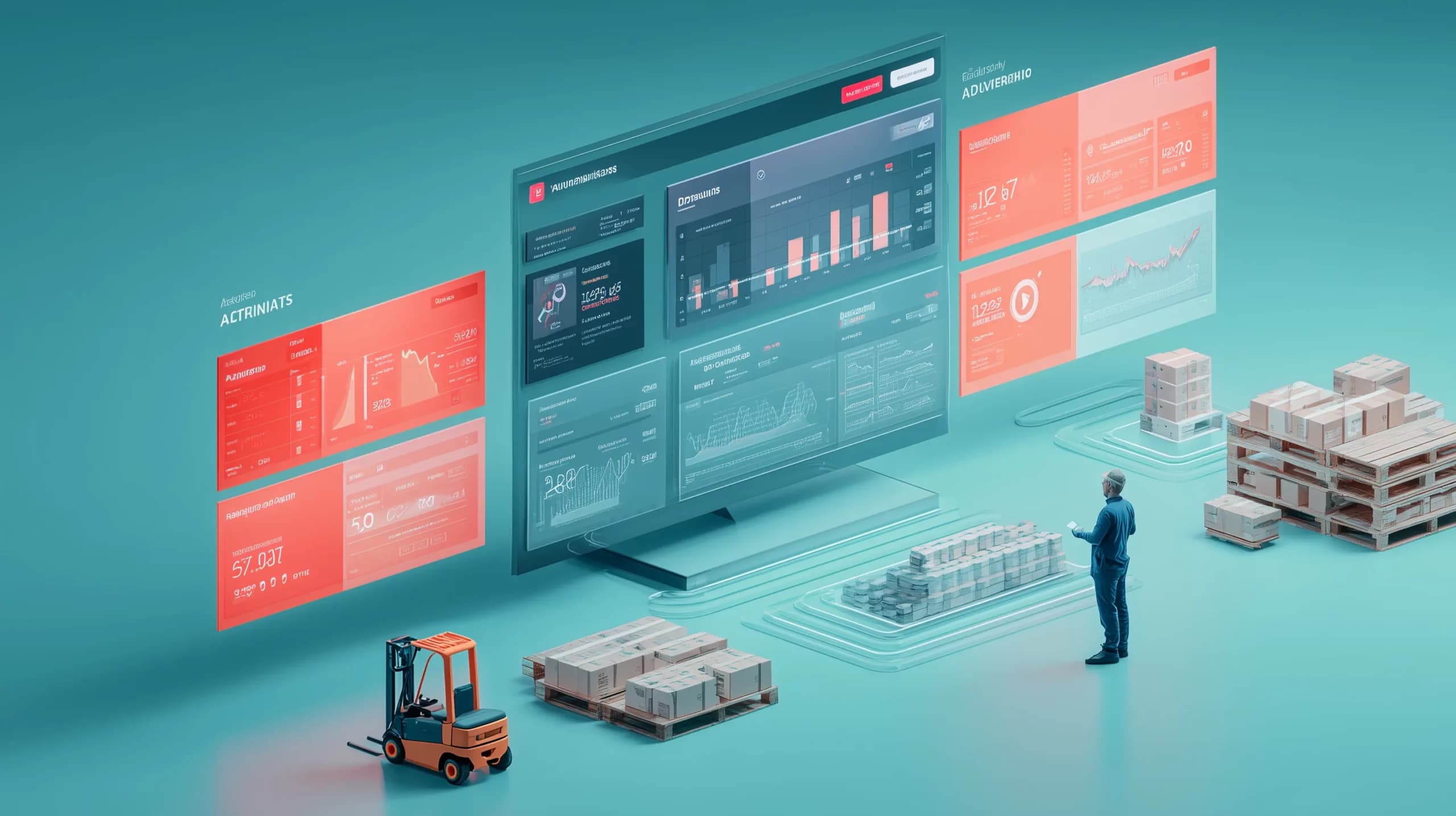
Here is when business intelligence for wholesalers makes a difference. When all data feeds from various sources are combined in one system, the company will be able to utilise the benefits of real-time business reporting by using dashboards.
As a result, your employees won’t have to chase their noses across multiple sheets of paper to look for necessary data. If the dashboard is configured properly, your team will spot such issues immediately – e.g. low inventory level of a popular product or any delay at some loading dock.
Turning Data Into Action
Otherwise, there would be no point in reporting at all. Connected operational analytics takes your company from a purely reactive state to a proactively-oriented organization.
By connecting your inventory, sales, and warehouse analytics, you can enable automatic processes. Your reorder threshold will be triggered automatically according to actual sales velocity and not average historical ones. Pricing could be made dynamic, depending on current inventory analytics. In effect, connected operational analytics will not only paint a clear picture of your business for you but give you the means to manage it too.
Related Articles
In today’s fast-paced B2B landscape, relying on outdated ‘end-of-day’ reports costs wholesalers both money and client trust. This article explores why upgrading to real-time data for stock, pricing, and field sales is the only way to meet modern buyer expectations, leverage AI, and protect your profit margins.
4 min readRead More
As B2B businesses grow, the real challenge is not outdated accounting software, but the lack of connection between stable on-premise systems and fast-moving operational processes like sales, inventory and warehouse management. Tools such as Sage 50 remain reliable for finance, compliance and reporting, but they are not designed to handle real-time operations, leading to delays, ...
5 min readRead More
Organizing the locations in a warehouse helps greatly to speed up the processing of orders, since the shelves, racks, and bins for each product are assigned accurately, giving the warehouse teams the opportunity to find them instantly instead of hunting for them manually. The major reason for delays in some increasing wholesale warehouses is not ...
6 min readRead MoreIndustry news straight to your inbox
Get the latest commerce news, trends, and strategies to grow your business
Subscribe to newsletter
By submitting this form, you agree to receive promotional messages from Simplisales