Integrating On-Premise Accounting Systems with Modern Operations
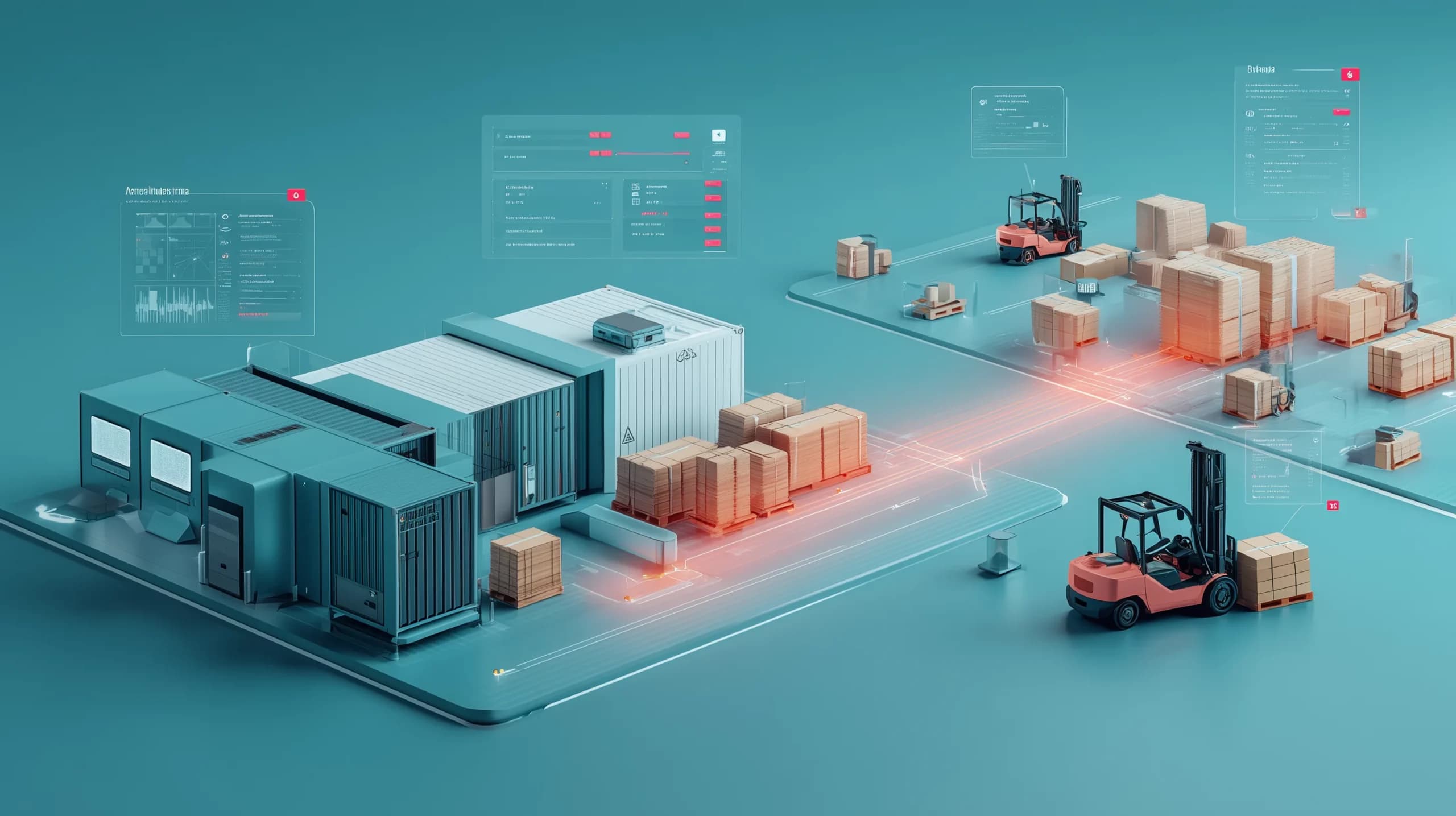

A typical moment in the life of many B2B businesses that experience growth.
You are assessing your operations, and the picture is rosy — more orders, more customers, with a little more complexity. Then the remark comes from one of the employees:
Changing the accounting system is not an option for us.
And they do have a point.
Software programs such as Sage 50 have been successfully used for a considerable amount of time. They are branded as reliable, stable and strongly tied to financial procedures. However, while accounting stands undefeated, each other area — sales, inventory, warehouse, customer perceptions — is shifting at neck-breaking speeds.
That’s where the real issue arises.
The trouble does not lie in your accounting system.
It is everything that is not linked to it.
Let us explore the reason why on-premise accounting integration is crucial, and how modern wholesalers are harnessing the power of hybrid systems that work without interrupting the currently effective processes.
Why Many Businesses Still Use On-Premise Accounting
Despite the appearance of cloud solutions, a number of B2B enterprises still prefer accounting tools like Sage 50 that are installed on-premises.
And their reasons for doing so are quite valid:
- They are remarkably trustworthy and have been examined rigorously
- The finance units are well-versed in using them
- They satisfy all the compliance and reporting needs
- The risk of migration is pretty high, and such a move is frequently unwarranted
As for finance, these platforms perform the basic tasks as they should:
procure moving products, manage VAT, and generate financial statements.
The dilemma is that accounting products were not meant to be the tools for daily business transactions.
They are made for the past, not the present.
The Challenge of Disconnected Systems
As the companies get larger, the operational complexity goes up.
Your addition may be:
- eCommerce platforms
- Inventory systems
- Warehouse processes
- Field sales tools
But when these systems don’t connect properly to accounting, gaps appear.
You’ll often hear things like:
“The order is in the system, but not yet in accounting.”
“Stock appears available, but finance has not updated it.”
“We will reconcile it at the month’s end.”
These voids lead to decision delays, mistakes, and extra task assignments.
Common difficulties are:
- Redundant data entries in different systems
- Late stock and order visibility
- Departmental disagreement in reports
- Manual reconciliations at month-ends
This is not a failure of the accounting software but a lack of integration.
Bringing Operational Data to the Cloud
The B2B companies of the present era are tackling this issue by detaching operations from accounting.
Rather than trying to get accounting systems to do it all, they set up a cloud-based operational layer.
The functions of this layer include:
- Order management
- Inventory handling
- Customer pricing
- Warehouse movement
To illustrate, the Simplisales Website not only allows customers to enter orders in a central system directly, but also the Simplisales App enables sales teams to capture orders as they happen in real time.
Such orders do not need to be passed through the accounting department initially. They are directly moved into operations, where speed counts the most.
There, they go to accounting only after they are validated, and only then are they synced with accounting.
Thus, this method brings about a reduction of conflicts without affecting financial control.
Keeping Accounting Untouched
The primary issue regarding integration projects is the disturbance.
Finance teams are usually haunted by doubts:
Will this cause our accounting setup to malfunction?
Will we suffer from data integrity loss?
Will it lead to reporting problems?
The response is straightforward: it shouldn’t.
A well-integrated design keeps the accounting systems at their core, untouched.
Rather than replacing them, you:
- Use validated data in accounting
- Keep accounting as the main financial record
- Avoid duplicating operational logic in accounting
This helps to hold the pressure while at the same time improving the operational performance.
Creating a Hybrid System That Works
Now the most practical way to do business is with a hybrid model:
- Traditional accounting for financial control
- Cloud-based applications for the daily movement of goods
In this model:
- Sales, warehouse, and inventory functions in real time
- Accounting gets the correct and organised data
- Teams no longer work separately
The Simplisales Dashboard is the main tool here.
It is a board of the central operational layer where:
- Orders are processed
- Inventory is tracked across points
- Stock movements are updated instantly
- Sales and purchasing data are synchronised
From there, only the necessary financial data flows into accounting systems like Sage 50.
This sets a clear distinction:
Operations are speedy. Accounting is right.
The Benefits of Proper Integration
The merger of on-premise accounting with the modern tool of operations results in a noticeable impact.
What you see:
Less Manual Work
Orders aren’t entered twice, nor are inventory spreadsheets updated through different systems.
Better Data Consistency
Sales, warehouse, and finance have access to the same information.
Faster Decision-Making
You get operational data on time, while you used to wait for late reports.
Improved Scalability
You can easily grow with less downtime in admin tasks.
Instead of coping with bottlenecks, your system now propels progress.
Why This Matters More as You Scale
Small-scale systems with disconnected components can be handled.
Discomposed systems at larger scales are bottlenecks.
More ordered items means:
- More data needs to be put right
- More possibility of error
- More weight on crews
Without the combined system, a scale that increases the complexity cannot be handled by your team.
With the right hybrid setup, the growth is structured rather than chaotic.
Final Thoughts: Integration Is Better Than Replacement
Most businesses think they have to replace their old accounting system.
The fact is, this is not usually the case.
A better alternative is to integrate the systems by making the financial system and the operational tools work together.
The result of a successful integration is:
- Accounting maintains its reliability
- Operations become quicker
- Teams are aligned
- Data is credible
And above all, your business becomes scalable more easily.
Related Blogs
Explore more insights for your wholesale business.
Accounting · 09 FEB 2026
Why Accounting Software Is Not Enough for Growing B2B Businesses
As a B2B wholesale business owner, you would depend a great deal on the accounting software that helps you to keep track of all the invoices, the revenue, and the taxes. On the flip side, it will not be unusual if you find yourself typing in the search engine “accounting software is not enough” or […]
Accounting · 02 FEB 2026
When Inventory Outgrows Accounting Tools
The problem with inventory in the case of growing wholesale businesses usually comes not from the errors but from the mere dependency on accounting software for the wrong job. The accounting systems are super precise when it comes to cash flow and stock value, but they see inventory as a definite figure that is updated […]
Accounting · 02 JAN 2026
Integrating Accounting Software with Inventory and Warehouse Systems
As wholesalers grow, accounting software alone can no longer keep up with the real-time demands of inventory and warehouse operations, leading to mismatched numbers, manual checks and daily friction between finance, sales and warehouse teams. Accounting systems are built for financial accuracy and compliance, while inventory and warehouse systems reflect what is actually happening on […]
Run your business,
without the complexity
Start free · Try paid plans for 30 days.
