Order Frequency vs Order Value: Which Metric Matters More in Wholesale?
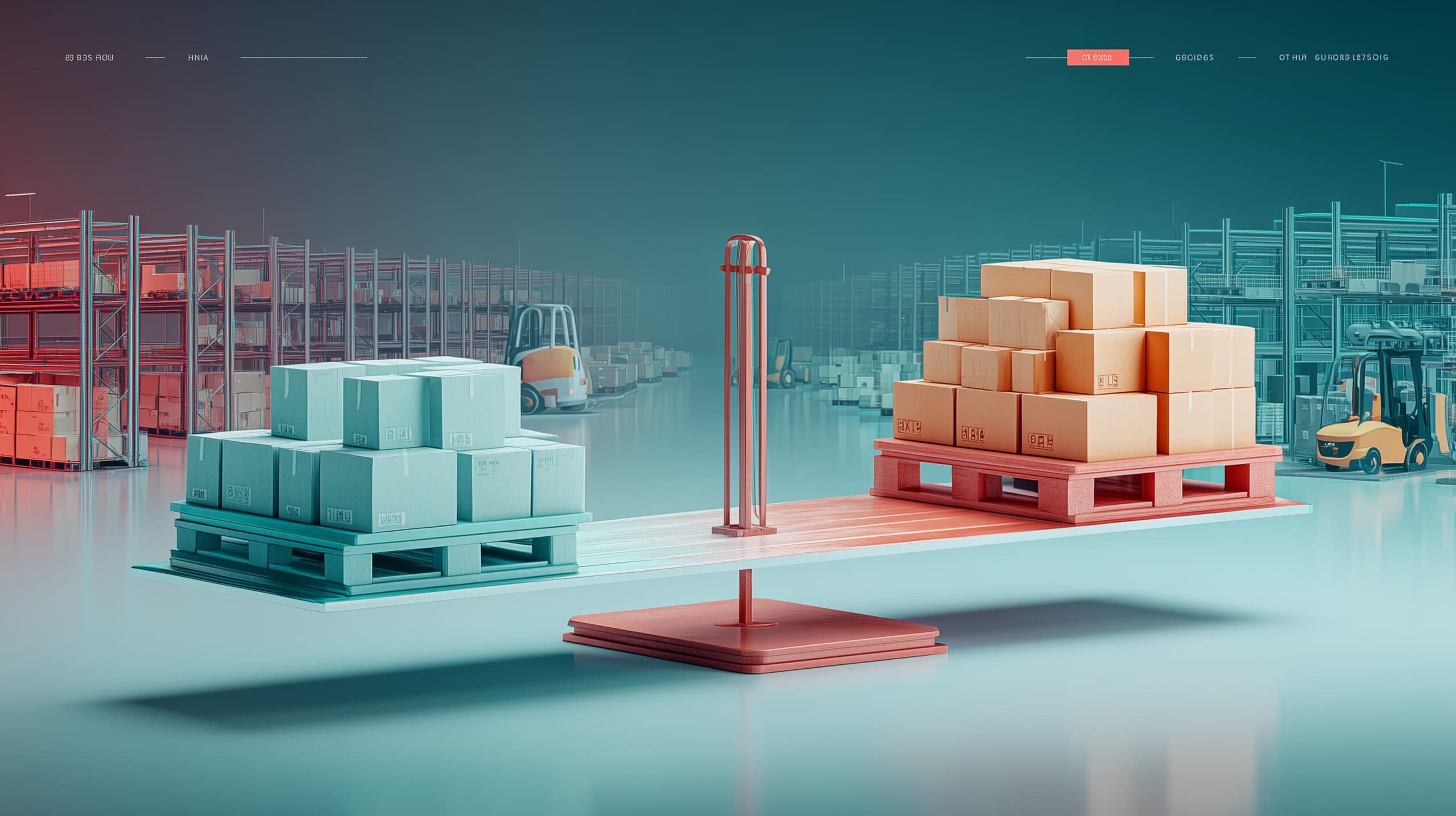

In a sales meeting, you might have witnessed this sort of thing.
A report states that your average order value has gone up, and there is someone who celebrates it. It seems logical; more revenue is brought in by the bigger order, right?
Then, the other report tells a different story: customers are not placing orders very frequently.
All of a sudden, the room is all silent.
The reason is that in wholesale, it isn’t always about the magnitude of each order. Sometimes it is about how regularly the customers return. And the trade-off between order frequency and order value is one of the most critical, and most misinterpreted, performance indicators in B2B sales.
If you operate a wholesale business, the question is not which metric is paramount. The question is how both metrics function in tandem to create sustained growth.
Let us consider how these parameters impact the financial side, how operational efficiency is measured, and the customer relationships under consideration.
Understanding Order Frequency and Order Value
It would be a good idea to plainly explain the two metrics before you start comparing them.
Order Frequency represents how regularly a customer makes an order in a specified time frame.
Average Order Value (AOV) displays the average revenue that every order generates.
In other words:
- Order Frequency → The buying frequency of the customers
- Order Value → The amount they get each time
Both metrics bear sway on total revenue. The relationship can be stated simply:
Revenue = Order Frequency × Average Order Value
This implies that changing either metric can increase your business. However, each one comes with its distinct operational challenges.
Why Order Value Gets So Much Attention
Most wholesalers are hardwired to give priority to order value augmentation.
The increase in larger orders is mainly a function of:
- Lower shipping costs per unit
- Higher immediate income
- Streamlined invoicing and administration
- Better warehouse picking efficiency
Thus, wholesalers tend to push for larger orders through:
- Minimum order quantities
- Volume discounts
- Bundle pricing
- Pallet-level promotions
These tactics are effective in most cases. But they can also cause problems.
Big orders tend to have longer intervals between purchases, which can deteriorate customer engagement and uncertain revenues in the long run.
The Hidden Power of Order Frequency
Order frequency is one of the best metrics for measuring customer loyalty, while large orders are just one factor in this case.
Customers who tend to order regularly are the ones who:
- Build stronger relationships with the distributor
- Use your product as an integral part of their operations
- Create a constant and reliable revenue flow
Regular orders are also great for the physical demand forecasting as well as the inventory planning.
Suppose that you have the following two clients:
- Client A: A one-off payment of £5,000 every three months
- Client B: Ordering £1,500 every month
After a specific period of time, Customer B is the one who will bring more value because of the predictable and easier purchasing method concerning operations.
By frequently ordering the products, you are able to make your company stable.
When Frequency Matters More Than Order Size
In most of the modern B2B sectors, especially in fast-moving ones, order frequency is frequently also more significant than order size.
This is true when:
- Clients use lean inventory approaches
- Quicker delivery times are greatly needed
- Cash flow becomes more essential
Retailers and smaller vendors often seek smaller orders rather than committing to large stock.
This transition is partially motivated by the emergence of digital ordering platforms and advancements in logistics.
Using tools like Simplisales Website, clients have the ability to easily redo their orders without contacting the sales teams. The barrier to ordering drops, and frequency naturally increases.
Finding the Right Balance Between the Two
The top wholesale businesses are not the ones that only maximise one of the two metrics. They, in fact, are the ones succeeding in both of them.
Instead of asking whether to increase the order value or frequency, you may try:
- Shouldn’t the customers order as often as they need to?
- Are the orders scaled to the right size for us to perform efficiently?
- Is our process of ordering so problematic or inconvenient that it causes customers to avoid frequent purchases?
Most of the time, making the order frequency better starts with the reduction of friction.
The mobile order and customer portal are the two that truly make a difference here.
The Simplisales App is a tool designed for sales representatives, which allows them to place orders literally on the spot when visiting customers. This way, the order frequency rises without a growth in administrative effort.
At the same time, the Simplisales Dashboard helps track the purchasing patterns of the businesses and form conclusions about which customers will benefit from some changed pricing or ordering.
Data visibility makes things easier: the right mixture becomes apparent.
Practical Ways to Improve Both Metrics
Apart from selecting one of the two metrics available, wholesalers make both of them better at the same time.
Here are some interesting strategies:
Encourage Repeat Ordering
Let your clients reorder the products they buy most often with ease.
Consider
- Preserved order lists
- One-click reorder
- The automated reminder for replenishment
Introduce Smart Pricing Tiers
Giving the extra incentives that naturally lead to fewer members, but this is not an option that you want to go with.
Some examples are:
- Get a small discount on your order by purchasing more items than required
- Get some products at a discount by buying other related items
Reduce Ordering Friction
If ordering requires phone calls or manual processes, frequency drops.
Digital ordering platforms and mobile tools allow customers to order whenever needed.
Monitor Customer Behaviour
With the help of operational dashboards businesses can keep track of customers which frequently place orders as well as those which from time to time order in large quantities also – this is instrumental in adjusting prices and promoting accordingly.
Why Data Visibility Matters
Many wholesalers are haunted by the thought of not being able to determine whether their customers are actually good or not, and that lack of knowledge has not helped them out.
Without the right reporting, it is very hard to figure out if:
- Customers who order frequently have more lifetime value.
- Which products are purchased again and again?
- Where ordering friction was and what is the effect on the frequency.
The interconnected operational system, for instance, the Simplisales Dashboard, serves to bring about insights as it combines customer behaviour, inventory movement and sales data in one place.
Having these insights at their fingertips, wholesalers can now devise strategies to both increase order frequency and order value.
Final Thoughts: It’s Not Either–Or
Experience a seamless B2B e-commerce journey with Simplisales.
The future is bright for wholesale businesses. Make it brighter with Simplisales, a simple and affordable B2B e-commerce solution for wholesalers.
In wholesale, the ultimate victor is neither the company that has found the biggest orders.
It is the one that has regular and predictable purchasing patronage.
Big orders give a short-term sales increase, while frequent orders are a guarantee of long-term profitability.
The wholesalers, who withstand the storm, pursue the same path; they build mechanisms for both of those processes to happen: quick ordering that is user-friendly to clients to buy regularly, but they still support larger orders whenever required.
Related Blogs
Explore more insights for your wholesale business.
Sales · 25 SEPT 2026
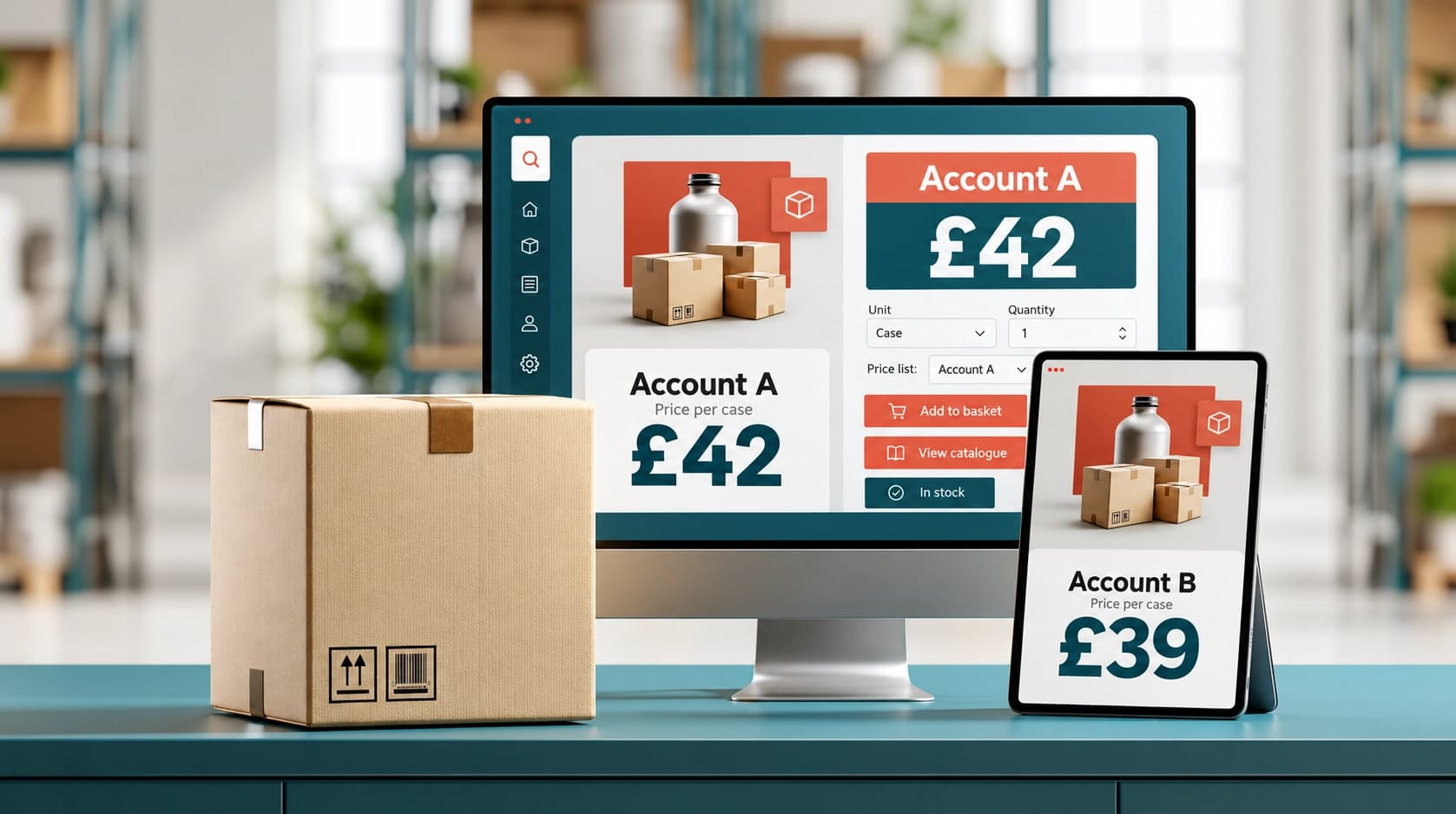
Customer-Specific Pricing in B2B eCommerce
Why one B2B customer does not always mean one price A buyer logs into a wholesale website and […]
Sales · 16 FEB 2026
From Purchase Orders to Stock Availability: Closing the Procurement Gap
Numerous B2B wholesalers have this high-cost gap, on which the purchase orders do not tally with the actual stocks, resulting in supply chain teams depending on the isolated data for decision-making, which in turn leads to delays, stockouts, excess safety stocks, and broken customer promises. Conventional purchasing methods mostly deal with the dispatch of orders, […]

Sales · 30 JAN 2026
Why Forecast Accuracy Is the New Competitive Advantage in Wholesale
Forecast accuracy has become a true competitive advantage in wholesale because even when nothing “goes wrong”, small mismatches between demand, stock and cash quickly turn into missed sales, excess inventory and internal pressure. Forecasting is no longer a back-office planning task but a front-line capability that directly affects cash flow, delivery reliability, sales confidence and […]
Run your business,
without the complexity
Start free · Try paid plans for 30 days.
