
Every wholesaler has gone through that situation.
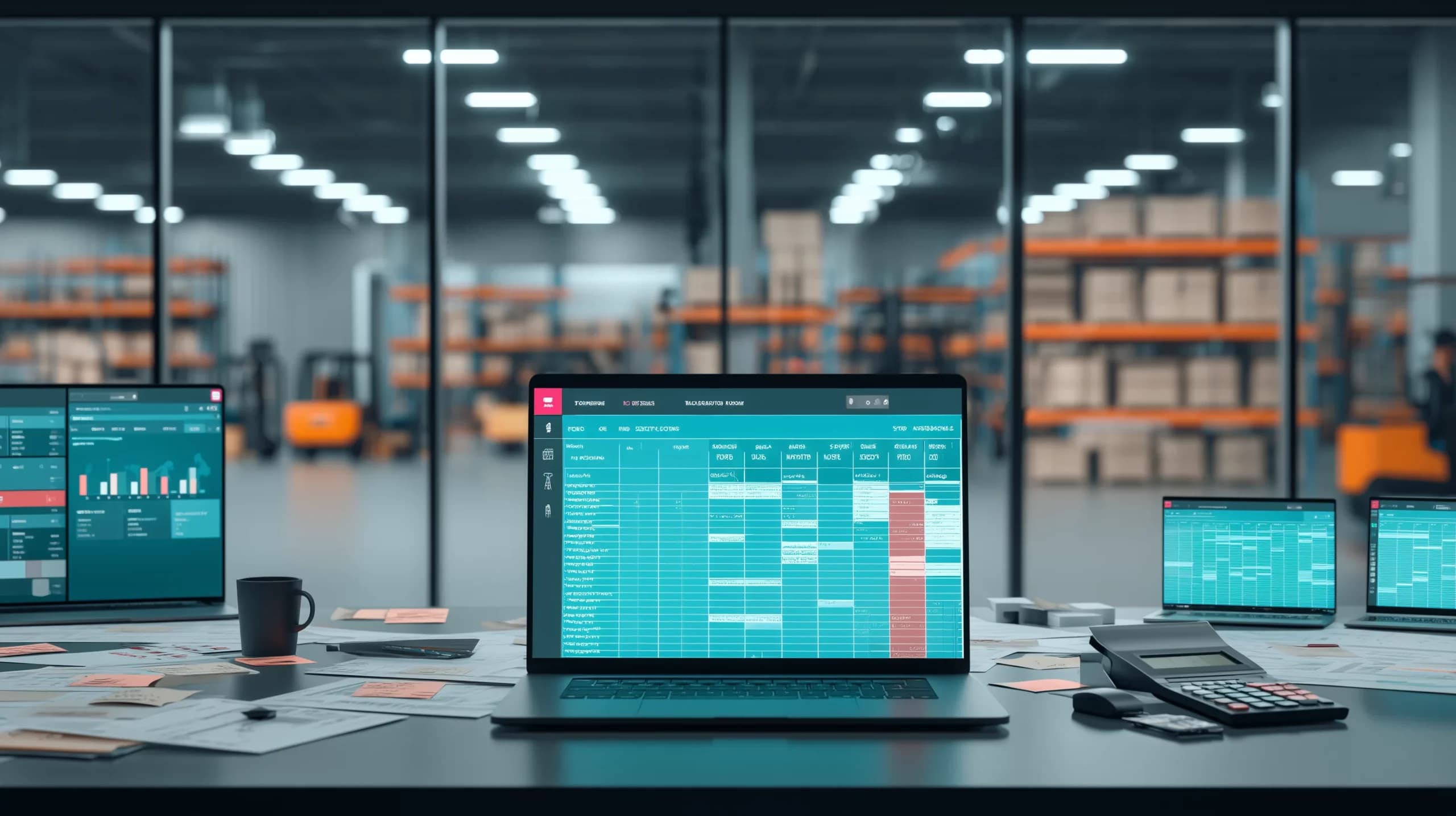
You find yourself in the meeting room, staring at the completely prepared spreadsheet that took days to compile. The brief view of last year’s sales is arranged month by month. Suddenly, someone stretches their arm and indicates a column that says, “Let’s add 10% — the market feels stronger this year.” Moreover, there is someone who disagrees and puts forward 5%. The third voice comes up with a point and says, “But what about that big customer we lost?”
At the end of the day, they go for a certain number.
This happens not because that number is the right one, but rather, it feels reasonable enough.
And that number quite silently transforms into the forecast that will determine purchasing, stock levels, cash flow, and sales targets for the next quarter. This is the way of manual forecasting in wholesale. But the shocking truth is that it’s failing more frequently than most in the industry realise.
What Manual Forecasting Really Looks Like in Wholesale
Manual forecasting is generally not perceived as “manual” when you do it.
You deal with:
- Spreadsheets,
- Historical sales reports,
- Gut instinct,
- And experience built over the years in the business.
Many wholesalers will tell you:
We know our customers. We can feel when demand is coming.
And that experience is considerable.
But the thing is, in today’s environment, experience alone often falls short
Manual forecasting typically denotes:
- Looking backwards instead of forwards
- Averaging last year’s numbers
- Adjusting based on memory rather than data
- Reacting late instead of planning early
When markets are stable, it works.
However, wholesale markets are not stable anymore.
Why Wholesale Has Outgrown Spreadsheet Forecasts
Wholesale sales these days depend on more factors compared to the past, which makes them more difficult to predict.
Consider what affects your sales now:
- Managing and implementing discounts,
- Regional seasonality trends,
- Ad hoc customer inventory movements,
- Stock reservations and backorders,
- And even global factors such as inflation and supply chain disruption
Spreadsheets were not made to manage such a high level of intricacy.
They are based on the assumptions that:
- There will be an increase in sales that is linear,
- The behaviour will be consistent,
- And the cycles will be predictable.
But the truth is, the reality looks totally different.
For example, the salespeople usually wonder:
Why did we overstock this item again?
How did we run out of our best-seller?
The problem here is not with the hard work put in.
It is essentially the tool itself that is the problem.
The Real Cost of Getting Forecasting Wrong
Forecasting mistakes do not reveal themselves straight away.
Rather, they lurk silently in the stockrooms, warehouses, and balance sheets.
When a forecast goes wrong, the wholesalers usually experience:
- Money tied up in excess inventory,
- Goods that are not selling are wasting storage space,
- Last-minute reorders that cost more than the usual,
- Unmet demand because the most in-demand items are out of stock.
Initially, it affects the sales teams:
We receive continuous customer requests for products we simply can’t stock.
Then it affects the financial department:
Why do we have all this cash just sitting on these products?
Meanwhile, the operations department gains the least benefit, which is when the problem turns extra serious.
Mistakes in forecasting not only disrupt the inventory management.
They also ruin the relationship between teams.
Why Gut Feeling Isn’t Enough Anymore
There’s a big misconception about AI in wholesale.
Many think it replaces human judgment.
In reality, it supports it.
Manual forecasting relies heavily on gut feeling, which is valuable but limited.
AI-based forecasting looks at patterns humans can’t easily track:
- Micro-seasonality,
- Customer-level purchasing habits,
- Correlations between products,
- Demand shifts that happen gradually, not suddenly.
This is where Predictive Inventory Management changes the game.
Instead of asking
What do we think will sell?
AI asks
What is already telling us it will sell?
How AI Forecasting Actually Works (In Simple Terms)
The AI-based forecasting model doesn’t rely on magic or guesswork.
Here’s how it works: it analyses:
- Historical sales data,
- Current order trends,
- Customer behaviour,
- Stock movement in real time.
The primary difference here is the continuous learning process.
While a spreadsheet remains the same until someone updates it, the AI models automatically change with the input of new data.
Connecting tools through the Simplisales Dashboard yields wholesalers:
- Forecasts that are rolling instead of fixed ones,
- Alerts beforehand for demand spikes,
- The view into stock future risks has become more comprehensible.
It’s forecasting that evolves, not forecasting that expires.
From Monthly Guesswork to Continuous Forecasting
The majority of manual forecasting is done on a monthly or quarterly basis.
This means conclusions will be made – even if reality would otherwise change.
AI-driven forecasting runs continuously.
This is how it helps wholesalers to:
- Detect the changes in demand sooner,
- Modify purchase orders in time,
- minimise a situation of over-buying,
- Help cash flow linger
Sales managers typically observe the change instantly:
We’re not reacting anymore, we’re planning.
Just this shift reduces stress in the entire business.
Connecting Forecasting to Sales and Inventory
Forecasts are relevant only in case they are linked to actual steps.
Manual forecasting’s most significant flaw is disconnection.
The numbers remain in a document, unconnected with the daily activities.
When forecasting is allied with:
- Inventory,
- Sales orders,
- Warehouse data,
It becomes operational, not theoretical.
Via the operational online platform and the Simplisales App, the Simplisales Website forecasts affect the following areas directly:
- Reorder suggestions,
- Stock allocation,
- Availability shown to customers and sales reps.
Forecasting is no longer simply a planning exercise; it transforms into a working system.
What Sales Teams Gain from Better Forecasting
Sales teams are the first to experience the detrimental effects of poor forecasting.
The feedback they receive is:
You had this last week.
Why is it suddenly unavailable?
AI-powered demand forecasting helps sales by:
- Improving product availability,
- Aligning promotions with real stock levels,
- Reducing awkward conversations with customers.
When sales representatives find the stock available, they do more selling and close faster
Reducing Risk Without Overcomplicating Operations
One question that frequently pops into people’s heads is that AI forecasting is hard.
Nevertheless, it is straightforward.
Instead of:
- Debating numbers,
- Questioning assumptions,
- Revisiting forecasts constantly,
Teams get clear signals:
- What needs attention?
- What can wait,
- Where risk is building.
With the help of the Simplisales Dashboard, this data can be seen without gathering reports or spreadsheets.
It’s straightforwardness, not complication.
Manual Forecasting vs AI Forecasting: The Real Difference
Manual forecasting poses the question:
What do we think will happen?
AI forecasting inquisitively asks:
What is already happening — and what does it lead to?
The distinction is not between intelligence.
It’s a different way of looking at things.
One stares in the rear-view mirror and makes guesses about the future.
The other one sees the forward situation in real time.
Final Thoughts: Forecasting Should Reduce Stress, Not Create It
Experience a seamless B2B e-commerce journey with Simplisales.
The future is bright for wholesale businesses. Make it brighter with Simplisales, a simple and affordable B2B e-commerce solution for wholesalers.
In case forecasting meetings are a source of heavy reading, that’s a banner.
Forecasting should boost your confidence rather than debates, compromises, and acts of crossed fingers.
The conventional methods of forecasting fail, and not because of human negligence, but due to the fact that the wholesale market has turned too dynamic for the tranquillity of that tool.
AI does not supplant the human mind. Rather, it extends it.
If you want forecasting that the market responds to as fast as you do, it’s high time to get rid of the spreadsheets and the intuition-based decisions.
Look into the features of the Simplisales App, the Simplisales Website, and the Simplisales Dashboard that usher in the AI-led demand forecasting and predictive inventory management for you to plan with certainty rather than speculation.
The chain of demand will no longer be an enigma. Start grasping it effectively.
References
ZipDo Education – AI in the Wholesale Distribution Industry Statistics (industry data showing adoption and benefits of AI for forecasting in wholesale)
Gitnux – AI in the Wholesale Industry Statistics (statistics on AI improving forecasting accuracy, reducing stockouts and improving inventory optimisation)
BizData360 – Demand Planning: AI, Best Practices for Better Forecasting 2025 (discusses forecasting challenges and the limitations of manual processes)
Wissen Market Research – Predictive AI In Supply Chain Market Size & Forecast (market analysis on predictive AI demand forecasting trends and growth)
Related Blogs
Explore more insights for your wholesale business.
Logistics · 21 SEPT 2026
Warehouse Location Codes for Wholesalers
Why warehouse location codes matter A warehouse operative receives a picking list for twelve products. The stock is […]
Logistics · 11 SEPT 2026
Food Distribution Software and Batch Traceability: What Must Stay Connected
Why batch traceability depends on connected records Imagine that a supplier tells you that a batch […]
Logistics · 14 FEB 2026
Why Spreadsheet-Based Inventory Management Breaks at Scale
You might perceive spreadsheets as the simplest tool for inventory control if you are a growing wholesaler, distributor, or operations manager, but once orders skyrocket and items spread across multiple warehouses, while real-time accuracy becomes critical, they instead turn into a bottleneck rather than a solution. This article begins with a discussion of why spreadsheet-based […]
Run your business,
without the complexity
Start free · Try paid plans for 30 days.
