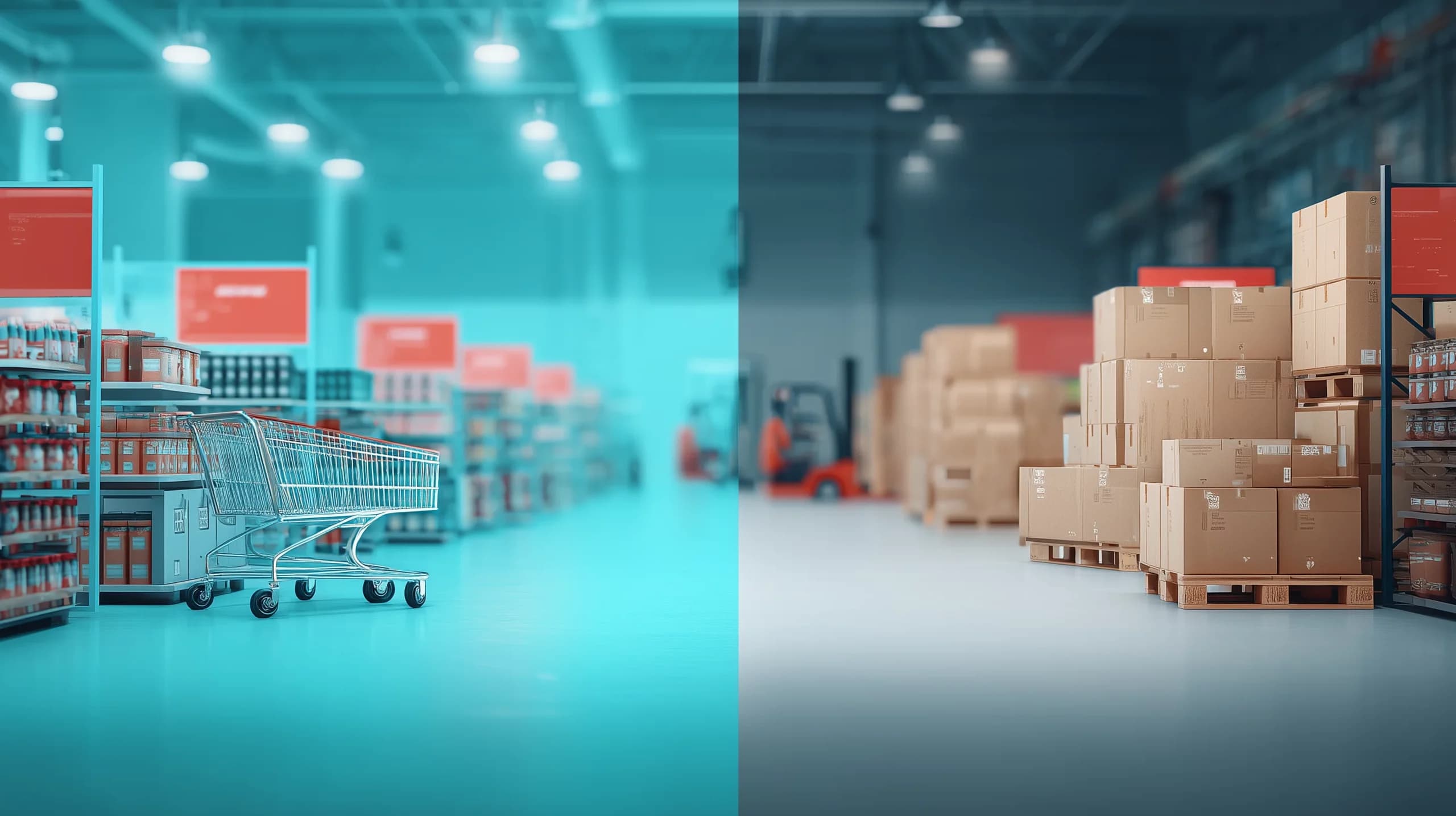

You might have felt like this at least once in your life. You make a casual visit to a shop for something very small, such as a pack of batteries or a cleaning product. While you look around the shelves, you see an iceberg-sized unwelcome sight, like a bulk-size carton, a wholesale multipack, or even a small sign at the place that says “Trade customers welcome”.
If told a decade before, you would have considered that absolutely bizarre. Retailers were selling to the consumers, while wholesalers sold to businesses. The two lived in such completely different worlds that they didn’t even see each other.
But today? The lines are blurred. The two that only a while ago appeared as two separate, distinct spaces have now begun to merge into a single, hybrid variety. If you are a wholesale trader, instead of just being a spectator of this change, your active participation is required. This transformation is no longer just a process; it’s your way of doing business in growth, sales, and competition.
In this article, we will look into the reasons why hybrid retail-wholesale models are becoming more popular, consider their effects on B2B trade, and, most importantly, find out how you can make a shift in no time by using tools such as the Simplisales Website, the Simplisales App, and the Simplisales Dashboard.
Why Hybrid Models Are Suddenly Everywhere
When you look closely at consumer expectations these days, you do not need extra effort to convince yourself: it’s everyone who is in for flexibility.
B2B buyers are looking for the user-friendliness of retail.
Retail buyers are interested in wholesale prices and bulk discounts.
And how about e-sellers? They are just surviving through cash management and optimising profits.
Multichannel stands here because it caters to all demands.
1. Consumers Are Shopping Like Businesses
A customer who initially bought one box of detergent now takes three. Parents are taking wholesale snack packs for school children. Small café owners are shopping at the retail stores that are open when the wholesalers are not.
People want bulk, better pricing, and more control.
2. B2B Buyers Expect Retail Convenience
Your wholesale buyers find that constantly having to:
- Ring sales representatives for every order
- Wait for quotations
- Navigate slow, outdated B2B portals
They want:
- Instant purchasing
- Mobile ordering via an app
- Online price visibility
- Tracking, transparency, and speed
This retail-like expectation is exactly what tools like the Simplisales App deliver — instant B2B ordering from anywhere.
3. Margins Are Changing — You Need Multiple Revenue Streams
Energy costs, shipping charges, labour expenses… everything has continued to climb.
Multichannel models can help wholesalers to:
- Sell leftover stock directly to consumers
- Add retail mark-ups while B2B customers still support
- Increase their audience without adding operational cost
The more channels you have, the more secure your business will be.
What Exactly Is a Hybrid Retail-Wholesale Business?
In the simplest words:
It is a business that sends B2B and B2C from the same operating backbone.
That may appear in such a way:
- Wholesaler opening a small retail section
- Wholesale website offering both trade and consumer pricing
- Retailer offering bulk options or trade discounts
- B2B distributor launching a consumer-facing app
- Brand owns wholesale, online retail, and physical retail simultaneously
You might have noticed the likes of Costco and Booker are already doing it. Now, it is not only big but also small and medium-sized wholesalers that are adopting this concept because it is not only trendy, but it is effective as well.
What is the secret behind their success?
The exclusive digital infrastructure is adequate for both sides without the extra workload.
That’s where platforms like:
- Simplisales Website (public + trade pricing tiers)
- Simplisales App (mobile B2B ordering)
- Simplisales Dashboard (multi-channel stock and order management)
Turn the mere transition into a possibility, let alone the easy transformation.
The Benefits of Going Hybrid (and Why Wholesalers Love It)
The hybrid model had not gained popularity yet, so wholesalers used to be stuck with a single revenue model. Now, it is a different story altogether — you can expand your market reach without the need to change your core identity.
What are the major benefits of these hybrid models?
1. A Larger Customer Base Without Extra Operational Cost
Hybrid businesses are appealing to:
- Retail shoppers
- Small local businesses
- B2B buyers
- Online B2C customers
- Trade-only buyers
- Marketplace buyers
All of these can be accessed from the same inventory, which is efficiently managed through the powerful tool Simplisales Dashboard.
No additional warehouse.
No new staff.
Just enhanced segmentation.
2. Dynamic Pricing for Different Audiences
A good hybrid system works the following way:
- It shows retail prices to the public
- Trade prices to the businesses that are registered
- A particular price to the customers that are assigned to them
- Bulk pricing rules automatically
The Simplisales Website is built exactly for this.
Consumers see one thing.
Your wholesale customers see something completely different — tailored to them.
3. Stock Moves Faster and Smarter
The biggest pros of hybrid selling are avoiding dead stock.
Think of a situation where you have a slow-moving product.
It is perfect for B2B, but businesses are not buying it at this time.
But instead of just keeping it in your stock, you can:
- Sell to retail customers in smaller packs
- Market it through your consumer-facing site
- Promote it via the mobile Simplisales App to trade buyers
A hybrid is a sales method that offers inventory mobility.
4. Multiple Revenue Streams Give You Stability
If one sector, either retail, B2B, or online, slows, the other one carries you across.
This is even more potent in the case of wholesalers who previously depended on:
- Seasonal customers
- Fixed B2B contracts
- Large orders from a few key buyers
Hybrid models decrease risk distribution among various audiences.
What’s Driving the Hybrid Trend in 2025?
Although hybrid forms have been here for a while, the forces behind them are rapidly changing them into a pervasive form of the future.
1. Digital Commerce Is Now the Default
Researching digital sources is the first step for B2B buyers.
Before going to a store, retail buyers check prices online.
This digital-first approach entails:
- Your website must serve a distinct audience
- Your product data should be error-free
- Your stock should synchronise on all channels
The Simplisales Dashboard is designed for that purpose. Besides, it is indispensable for a hybrid-selling strategy.
2. Mobile Ordering Has Exploded
Trade buyers expect the ability to order:
- From the van
- From the warehouse
- During a delivery
- After a sales visit
The Simplisales App enables precisely this type of flexible ordering.
3. Consumers Want “Trade Prices” Even When They Aren’t Traders
Due to Costco, which is an online behemoth, and cash-and-carry chains, people demand goods to be bought at wholesale prices.
Hybrid wholesalers have a luxurious opportunity and, thus, they do it smoothly, without ruining their margin, by setting:
- Minimum order quantities
- Tiered pricing
- Trade-only product visibility
- Customer-based discounts
4. Retailers Are Partnering More With Wholesalers
Be it a local shop, café, clinic, small chains, barbers, and whatnot. They buy wholesale but live in the consumer world.
Providing them with an app, an online account, and a digital buying experience through something like Simplisales will turn these people into loyal, recurring customers.
How to Transform Into a Hybrid Retail-Wholesale Business (The Practical Steps)
Many wholesalers fear this transition will be difficult.
However, what is the truth? You need a proper framework, that’s it.
Step 1 — Build a Website That Serves Both B2B and B2C
Your website should provide:
- Two price views (public + trade)
- Customer group discounting
- Registration and approval for trade accounts
- Bulk pack and unit pack options
The Simplisales Website has all this built in.
Step 2 — Launch a B2B Ordering App
Retailers look for convenience primarily.
An app serves as their easy way to order regular items.
The Simplisales App lets them:
- Scan barcodes
- Repeat last orders
- View trade-only discounts
- Order anytime
Step 3 — Run Everything From a Unified Backend
Inventory, orders, customers, pricing — all must sync.
The Simplisales Dashboard ensures:
- Multi-channel stock accuracy
- Real-time order syncing
- Customer segmentation
- Automated pricing logic
This is the very core of a contemporary hybrid enterprise.
Step 4 — Segment Your Audiences
You do not want the B2B part of your strategy to hobnob with the B2C side.
The simplest solution would be?
- Public sees retail pricing
- Approved businesses see wholesale pricing
- Key accounts get custom pricing
- Sales reps get their own order entry portal
All automated via Simplisales.
Is the Hybrid Model Right for You?
If you are the one who’s already:
- Selling to B2B
- Receiving the occasional retail inquiry
- Dealing with price-sensitive buyers
- Managing rising operational costs
- Wanting new revenue streams
Then definitely, the hybrid model is not just “suitable”, but may also be the next step in your business.
And with platforms such as Simplisales, it is much easier now.
Final Thoughts: Hybrid Is Not a Trend. It’s the New Standard.
Experience a seamless B2B e-commerce journey with Simplisales.
The future is bright for wholesale businesses. Make it brighter with Simplisales, a simple and affordable B2B e-commerce solution for wholesalers.
The companies that will be successful in the coming decade will be the ones that will not be scared to combine the convenience of traditional retail with the power of wholesale.
Hybrid is a flexible approach.
Hybrid easily scales along with the requirements of the business.
A hybrid is not affected when things change and adapts with ease.
Above all, though, hybrid allows you to still be in the game when everyone wants to have it all, at all times, everywhere.
Related Blogs
Explore more insights for your wholesale business.
Ecommerce Tips · 16 OCT 2026
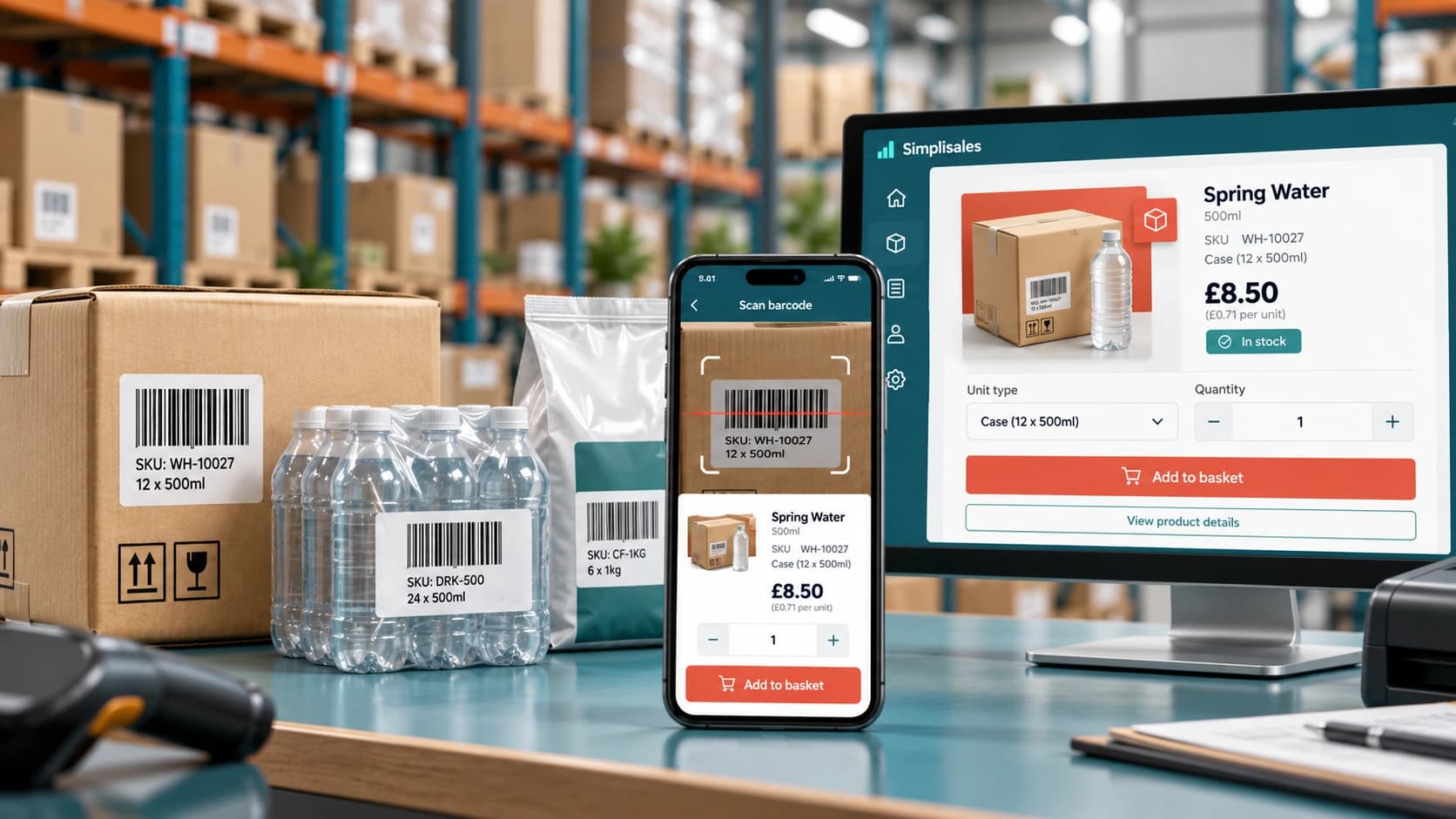
Barcode Ordering Apps for Wholesale
A retailer walks around the stockroom with a phone. In fact, when […]
Ecommerce Tips · 12 OCT 2026
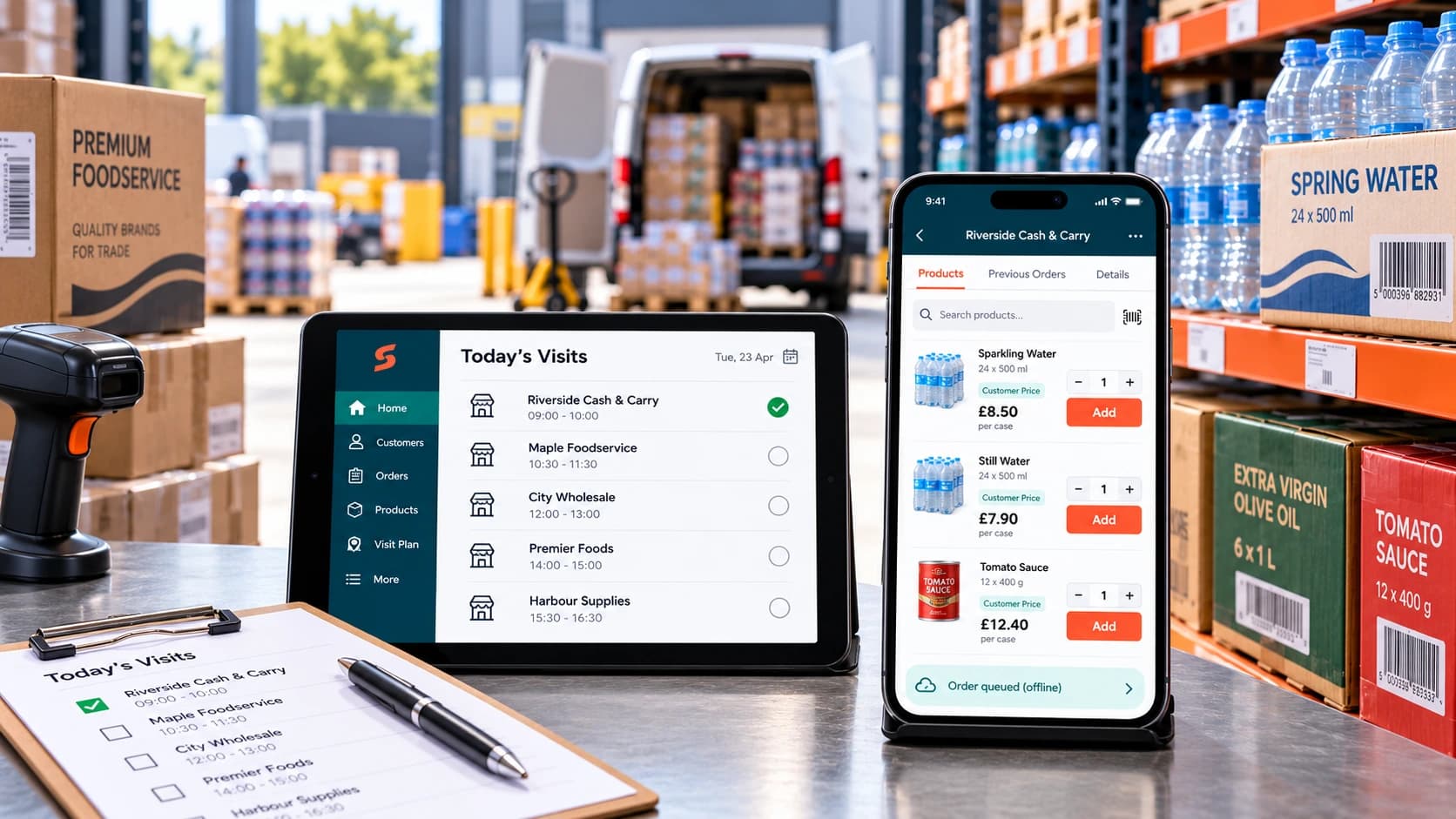
How to Roll Out a Sales Rep Ordering App
A […]
Ecommerce Tips · 10 AUG 2026
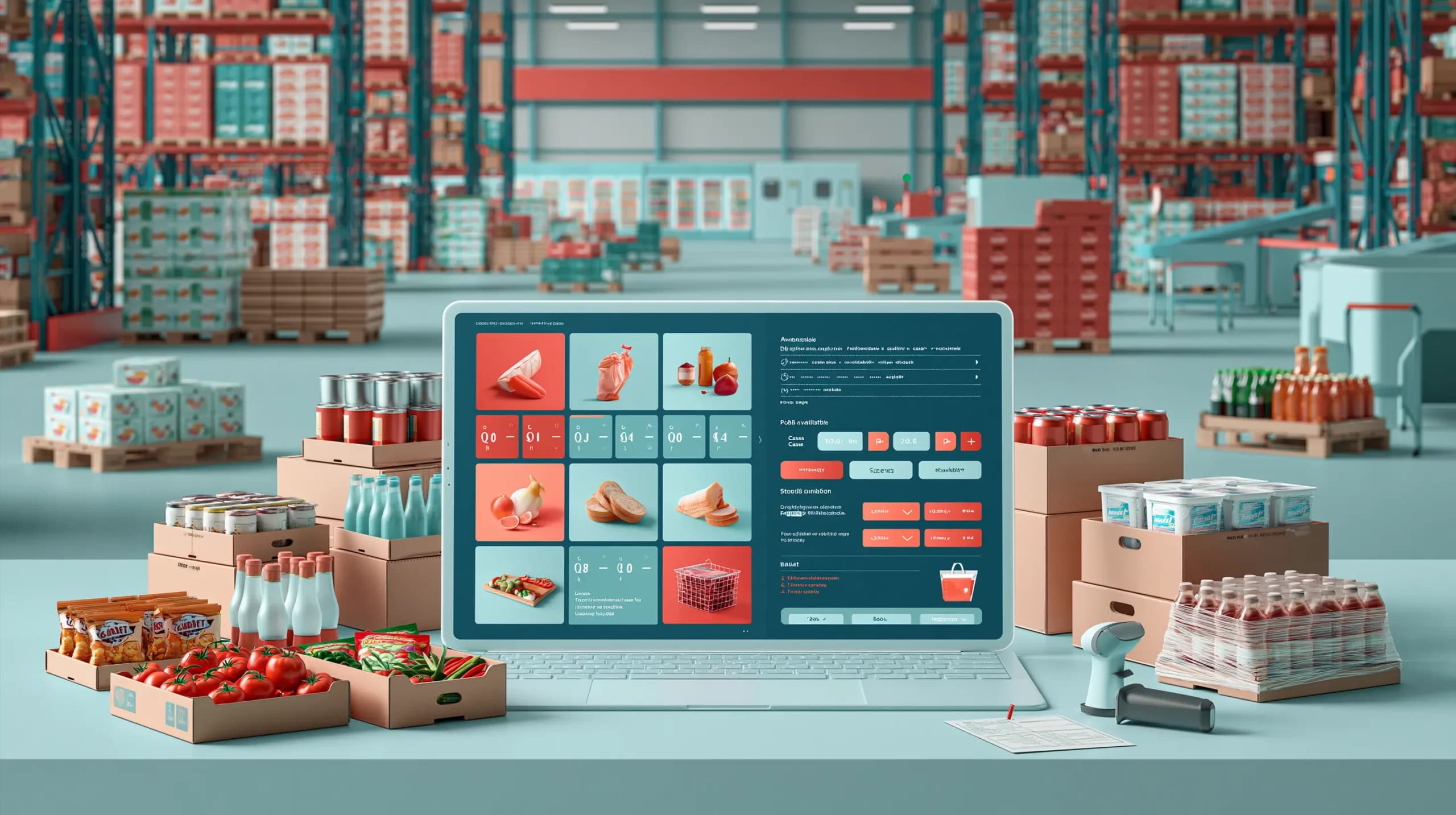
Food Wholesale Ordering Software: 12 Features UK Distributors Actually Need
This blog post covers the 12 features UK food distributors should prioritise when choosing food wholesale ordering software, from customer-specific pricing and multiple pack sizes to real-time multi-warehouse stock, batch and expiry tracking, purchasing, warehouse picking and delivery operations. It also highlights the importance of fast repeat ordering, offline sales rep tools, AI-assisted capture of […]
Run your business,
without the complexity
Start free · Try paid plans for 30 days.
