From Sales Orders to Warehouse Fulfilment: Closing the Operational Gap
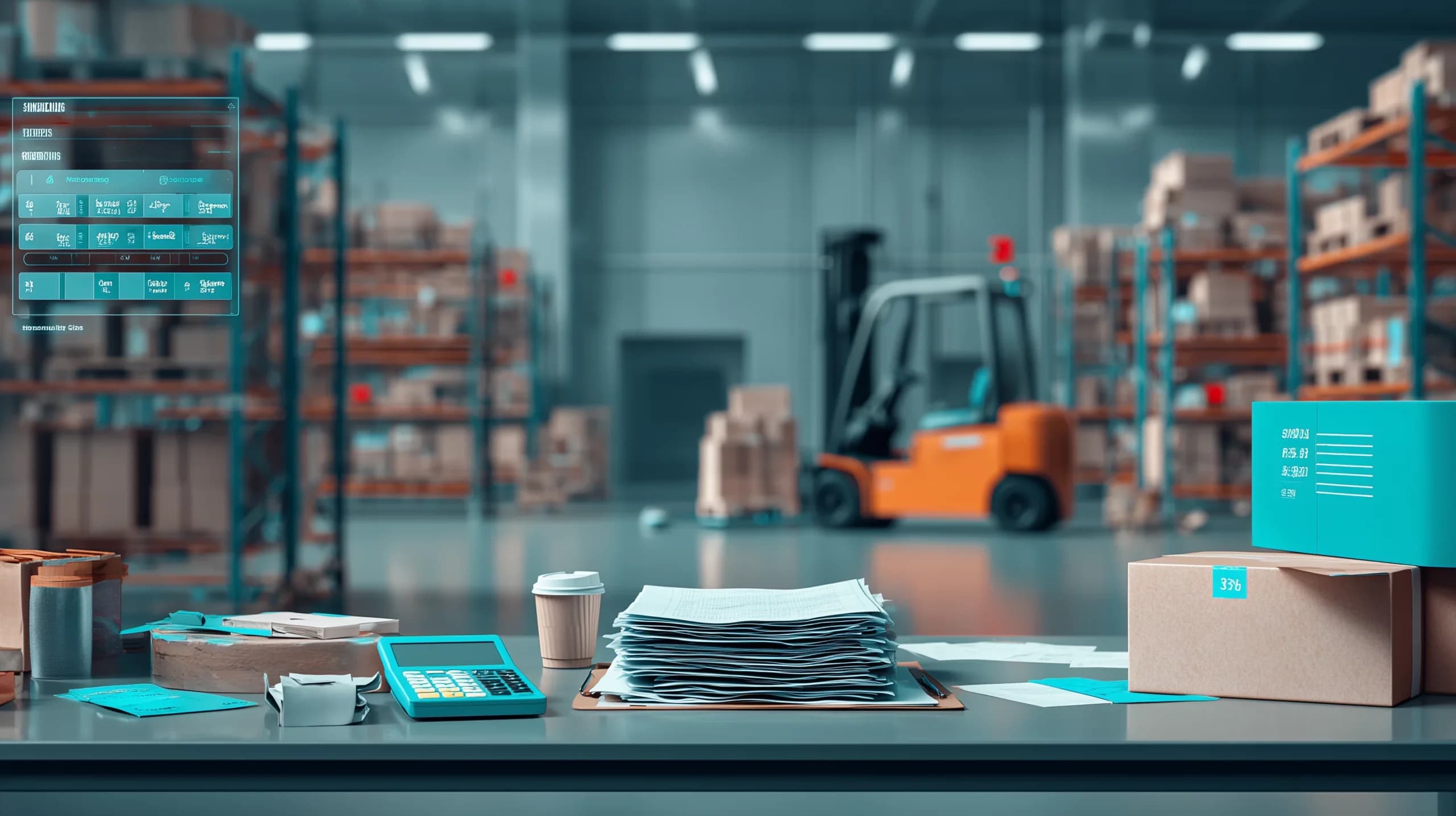

The sales rep has a scene that is often found in wholesale businesses.
A sales rep having full confidence solidifies the deal with the customer. The customer is satisfied, the contract is closed, and the order is recorded. Several hours later, the team in the warehouse is picking goods and unexpectedly, questions arise.
This product is not where it is supposed to be.
Is this the order confirmed or just promised?
Which version of the order are we packing?
No one committed a mistake on purpose.
But somehow, between sales and the warehouse, the clarity was lost.
This gap, or the gap when taking an order and fulfilling it, is among the most expensive and hard-to-solve operational problems in the wholesale business.
Such errors are more prevalent than most companies think.
Let’s analyse the reasons for the occurrence, how manual processes are failing, and how closing this operational gap transforms speed, accuracy, and trust across your teams.
How Orders Are Typically Handled in B2B Wholesale
In many wholesale businesses, the order processing system is more of an evolutionary improvement than a conscious decision made by the management.
Sales orders could be received from:
- Field sales representatives,
- Telephone calls,
- Emails,
- WhatsApp messages,
- Customer portals.
Every single channel seems to be under control. As a whole, they contribute to complications.
A standard cycle would be as follows:
- The sales department gets the order (often manually).
- Someone re-enters the order info into another system.
- Warehouse receives a picking list.
- Finance department invoices once fulfilment is “confirmed”.
In actual practice, they cause delays, redundant work, and confusion.
Sales teams frequently believe that:
After I send the order, it’s all done.
However, the warehouse teams have a different perspective on this.
Where Manual Processes Quietly Break Down
As a matter of fact, the operational challenges that are serious are not likely to result from just one major defect. Instead, they are the product of minor disconnections occurring every single day.
Manual order processing results in problems such as:
- Double entry of orders,
- Not receiving the last-minute changes from the warehouse,
- Sales decisions based on outdated stock levels,
- Fulfilment teams dealing with incomplete information.
Warehouse staff members often say:
Which order is the latest version?
Sales teams express their concern:
Why hasn’t this shipped yet?
The problem is not the effort it takes; the problem is the lack of visibility.
Why the Sales-to-Warehouse Gap Hurts More as You Scale
With the increase in order volumes, the manual work does not increase in a linear fashion but instead, multiplies the risk.
Every new order implies the following:
- Another handoff,
- Another potential misunderstanding,
- Another opportunity for delay.
So, it is no surprise that wholesalers are in the phase of growth:
- Make more mistakes in picking,
- Receive more complaints from customers,
- Take longer to fulfil orders,
- Experience more operational stress.
After a while, the solution of putting more workforce compoundedly fails.
It only adds noise to an already distorted process.
What “Closing the Operational Gap” Actually Means
Bridging the gap does not refer to making everyone play the same role or to making them follow the same system.
It is all about forming a single order flow that everybody feels secure following.
In a joint arrangement:
- Sales orders are generated one time,
- Availability of stocks is checked immediately.
- The warehouse is automatically notified of the necessary picks.
- As well as the fulfilment status, which is sent back automatically.
No more following up.
No more unwarranted doubts.
No version problems.
This is where platforms such as the Simplisales Website get the credit where it is due: orders placed by clients synchronously will be processed with live inventory and warehouse workflows, and will not be passed on manually later.
Connecting Sales Orders to Warehouse Workflows
Absolutely, the moment when the goods are transferred from the supplier to the customer is the handoff.
As soon as the sales department confirms an order, the warehouse should, without delay, be notified about:
- Items to be picked,
- Number of items to be picked,
- Deadline for picking the items.
But that only works when systems talk to each other.
With connected order management:
- Validated sales orders come straight to the warehouse queues,
- The picking lists are perpetually updated,
- The changes are visible in real-time,
- Prioritised orders are highlighted
Through the use of the Simplisales App, sales reps working in the field are able to raise orders immediately- not as provisional promises that are expected to be retyped later on.
Reducing Errors Between Sales and Fulfilment
Fulfilment mistakes primarily don’t stem from erroneous activities on the part of the warehouse.
Most errors occur as a result of incorrect information.
Warehouse personnel often claim:
We select as per the instructions we receive; if the instructions are wrong, that is what goes out.
In order to reduce errors, it is necessary to eliminate uncertainty.
A transparent sales-to-warehouse process ensures that:
- Only the confirmed orders are picked,
- The stock is allocated incorrectly,
- The substitutes are made visible before the packing,
- And the packing teams are not using their guesswork.
This dramatically reduces:
- Mispicks,
- Partial shipments,
- And awkward follow-up calls to customers.
Why Real-Time Visibility Changes Everything
The key factor that separates manual and connected workflows is time.
Processes that are solely manual usually lack the timely aspect.
But interlinked systems function in a direct manner.
Helping teams maintain a central focus in the Simplisales Dashboard, the dashboard teams can have a look at:
- Order’s status at any time,
- Quantity of what has been picked, packed, or is still pending,
- Points at which uncertainty is taking root,
- Notably urgent orders that need ordering immediately
Instead of reacting to problems after they happen, teams start preventing them.
Creating a Single Order Flow Across Teams
Sales, warehouse, and operations don’t need different truths.
They need the same truth, viewed from different angles.
A single order flow ensures:
- Sales sees availability and fulfilment status,
- Warehouse sees clear, prioritised picking tasks,
- Operations sees overall throughput and delays.
No more:
That’s not what I was told.
Just shared understanding.
Automation Without Losing Control
Automation often sounds risky to businesses that rely on precision.
But in wholesale fulfilment, automation actually increases control.
Automated order flows:
- Remove repetitive data entry,
- Enforce consistent processes,
- And surface exceptions clearly.
Instead of spending time on routine corrections, teams focus on what actually needs human judgment.
This is how order processing automation becomes an operational advantage, not a loss of flexibility.
Final Thoughts: Operational Gaps Are Growth Killers
The physical space between a sales order and the warehouse’s fulfilment might appear minuscule.
In truth, it’s the area that is suffering the most from poor operations.
Each delay, mistake, and misunderstanding erodes customer faith and internal trust.
Filling that gap involves neither more effort nor harder work.
It involves working together.
When you desire sales orders that move smoothly into fulfilment — without friction, duplication, or confusion — you have to rethink the systems’ cooperation.
References
NetSuite – Inventory Integration with Order Fulfillment
Bizowie – Why Warehouse Management and ERP Should Be One Integrated System
Comparatio – How Integration Simplifies Order Management and Improves Customer Experience
Related Blogs
Explore more insights for your wholesale business.
Ecommerce Tips · 16 OCT 2026
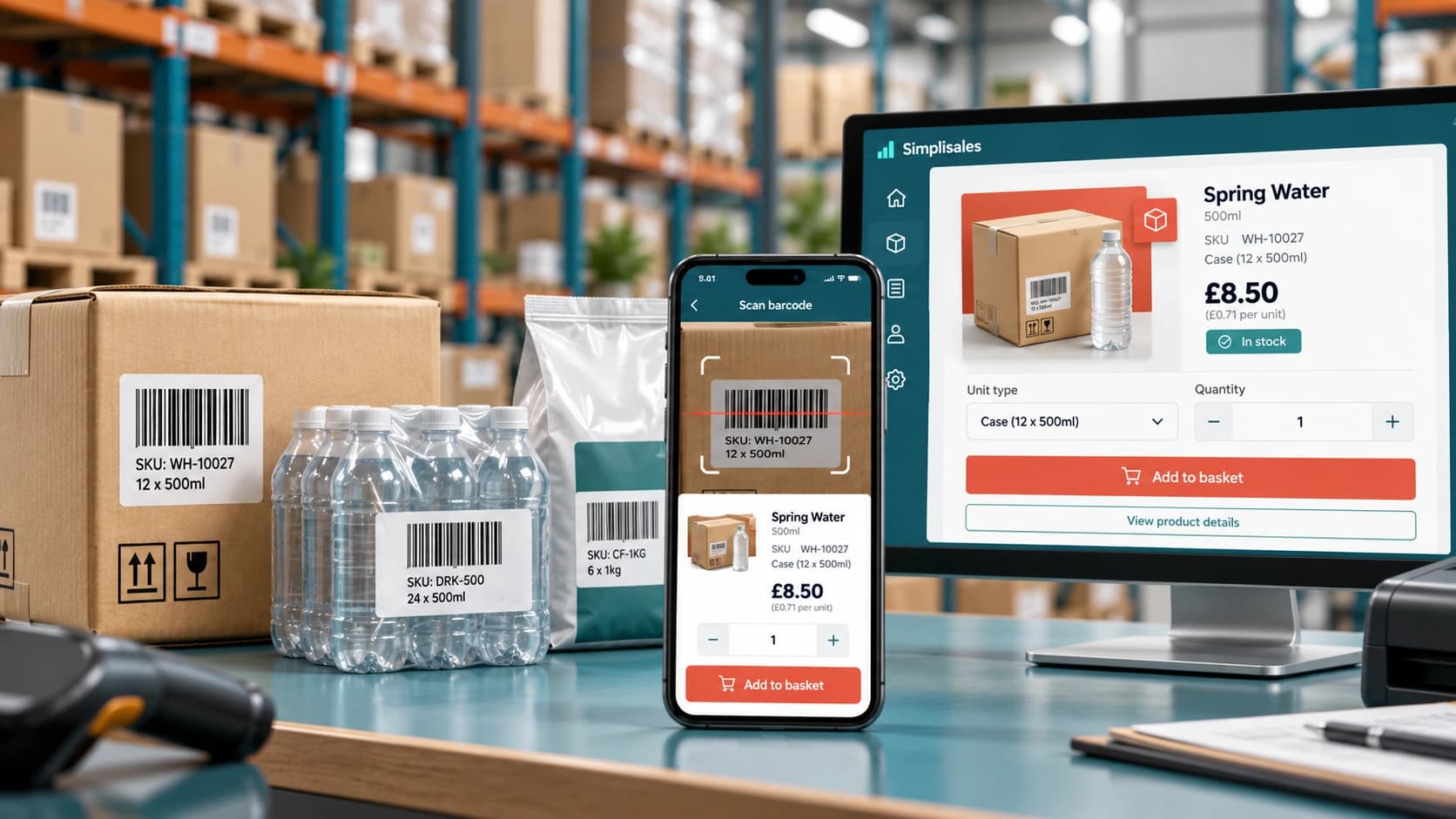
Barcode Ordering Apps for Wholesale
A retailer walks around the stockroom with a phone. In fact, when […]
Ecommerce Tips · 12 OCT 2026
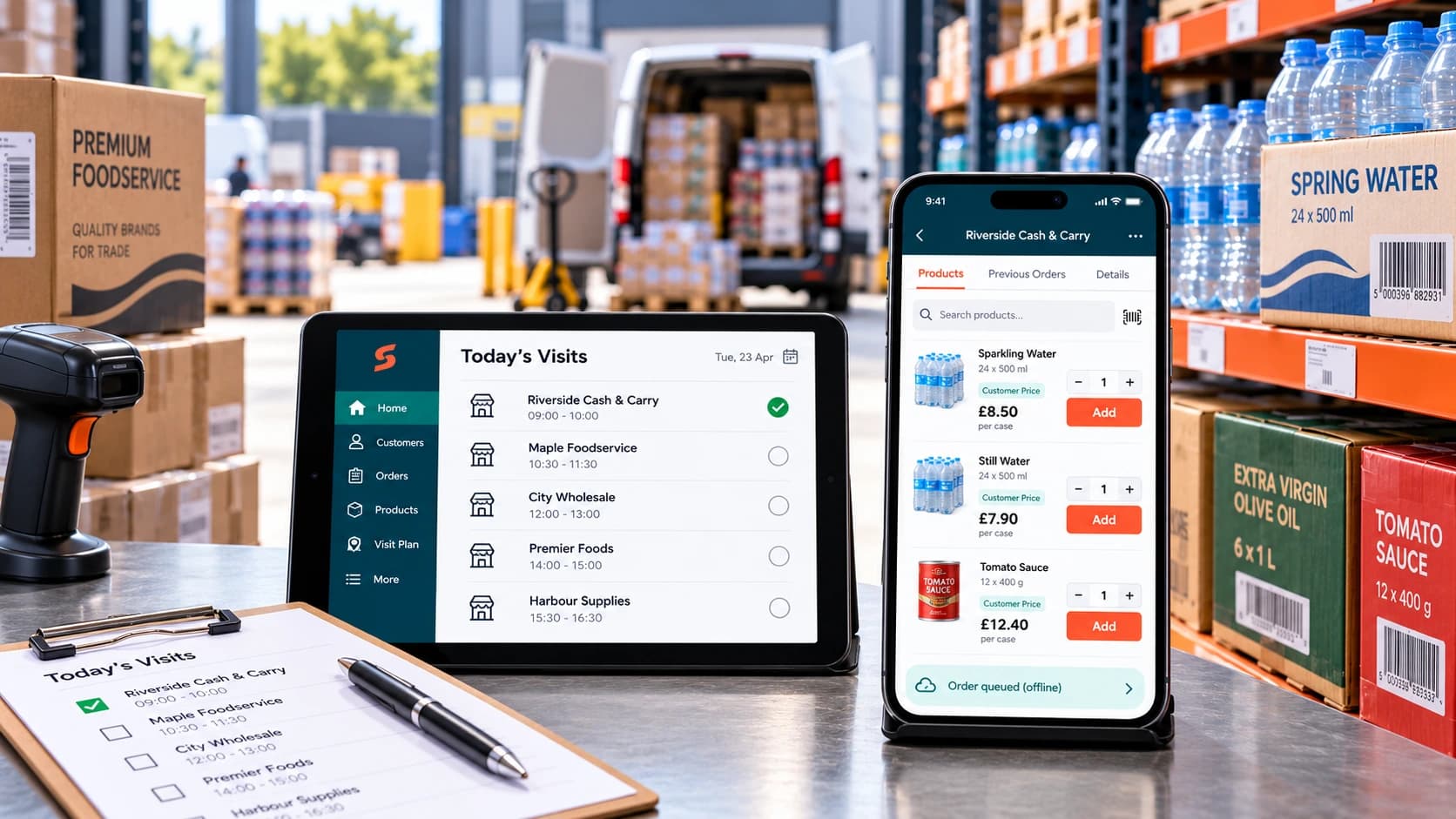
How to Roll Out a Sales Rep Ordering App
A […]
Ecommerce Tips · 10 AUG 2026
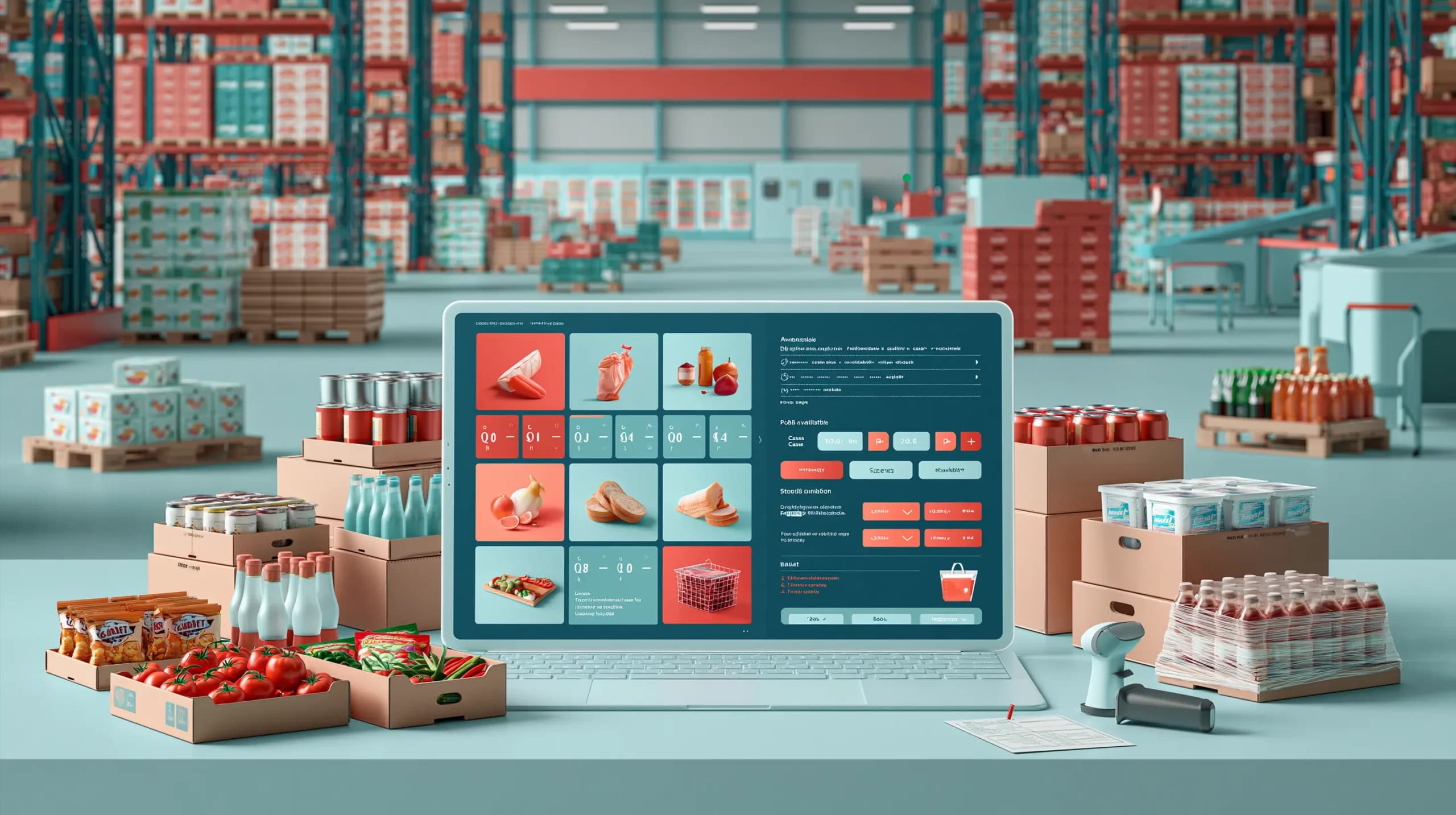
Food Wholesale Ordering Software: 12 Features UK Distributors Actually Need
This blog post covers the 12 features UK food distributors should prioritise when choosing food wholesale ordering software, from customer-specific pricing and multiple pack sizes to real-time multi-warehouse stock, batch and expiry tracking, purchasing, warehouse picking and delivery operations. It also highlights the importance of fast repeat ordering, offline sales rep tools, AI-assisted capture of […]
Run your business,
without the complexity
Start free · Try paid plans for 30 days.
