AI in B2B eCommerce: Opportunities for Wholesalers in 2025

Introduction: AI Is Knocking on the Wholesalers’ Door
This is where artificial intelligence takes the stage and challenges wholesale businesses to correct their faults. Let us face it, artificial intelligence is no longer just a buzzword bouncing among the speakers at the tech conventions. It is the present, it is functional, and it is already apart from some companies. Now AI is integrating with B2B eCommerce, mainly in wholesale, as the unaffiliated ally that everyone needs but doesn’t know about.
If you are a wholesaler still depending on physical activity processing, your intuition, and spreadsheets that feel older than your warehouse, you might not be aware of it but, 2025 could be the year AI prompts you to be more efficient by saying, “Shall weworksmarter?”
In this article, we will go through the exact implications and advantages that AI in B2B eCommerce will have for you such as the transformation it can make to your sales, pricing, and customer relations, as well as the tools like Simplisales that make it possible for you to step into the future without the trouble of the skills required for it.
The Big Picture: AI in B2B eCommerce
The first thought that comes to the mind of most people when imagining AI in eCommerce is the existence of chatbots, product recommendations, and the layout of special personal features for consumers to use.
By contrast, the situation is different in B2B wholesale – and therefore, the opportunities.
So, in this way, AI is a great addition to your business:
- Data-driven decisions instead of guesswork
- Predictive insights that help you prepare for demand changes before they happen
- Automation that frees up your time for strategic work
- Personalised sales approaches tailored for your business buyers
Most importantly, it does not mean that you have to abandon your personal knowledge – in fact it is mostly the opposite. To fully grasp AI’s impact, it’s useful to consider the wider digital transformation in the sector. Take a look at our post, The Future of B2B Sales: The Rise of the Hybrid Model, for a comprehensive view.
Demand Forecasting: No More “Fingers Crossed” Inventory
It is a situation to imagine. You are deciding whether to prepare for the holiday season by adding more products to your stock. In previous years, you might have relied on your sales record of the year before or just the gut feeling that you have. Instead of figuring it out through those ways, AI will look at the sellers’ data of the past as well as the market trends and even the signals of the economy to make an exceptional and accurate estimate of the owners’ needs.
Consequently, it is of great importance for wholesalers:
- Decrease the amount of overstock inventory that would block your resources
- Prevent the stockouts that can harm the long-lasting customers
- Transform your warehouse space to reality by actual demand instead of hypothetical guesses
With Simplisales, you can link your data with the AI-powered forecasting which will result in your inventory decisions being taken from the realm of myths and into the reality of power strategy. Pairing AI forecasting with best practices from our blog post Inventory Management Tips for Wholesale Distributors can help you achieve even greater stock accuracy.
Price Optimisation: Staying Competitive Without Guesswork
Department pricing decision is not like writing a number on a product. It is like juggling between the margins, competitor pricing, customer loyalty, and market shifts.
AI-driven price optimisation tools can:
- Identify the preset prices of similar products in the market in real time from your competitors.
- Propose variable price changes
- Consider the previous buying behaviour of customers
For instance, the AI can observe that one of your top customers usually places order right after the previous quarter has ended, thus it will be able to suggest a specific discount to the customer to guarantee their loyalty and together with it, enhance your sales volume.
With the use of the Simplisales Dashboard, you have the opportunity to track these studies and change your prices simply by clicking a button or two. No complicated spreadsheets or any late-night calculations involved.
Customer Behaviour Analysis: The Secret to Stronger Relationships
B2B buyers are not just ‘customers’; they are business partners, and the art of building is long-term relationships.
AI can unearth trends in customer behavior that even your top salesperson might be oblivious to.
Examples of what AI can track:
- Which products each buyer prefers over time
- Seasonal purchase patterns
- How quickly they respond to offers
- Signs they might be considering a competitor
In this case, offering your buyers with a bunch of products the feel like they are specially occupied with, is no rocket science.
The Simplisales App is a platform that allows the integration of AI data directly into your sales process, making it possible for your reps to have concrete data before making a call.
AI + Simplisales: Your 2025 Advantage
Let’s be frank, a lot of wholesalers like the sound of AI but have very little or no courage to use it because they feel lost in implementing it. That’s the area where Simplisales would be of great assistance.
The intuitive design of our website, app, and dashboard is such that AI functionalities look more like a natural extension of your workflow and less like “difficult technology.”
Here are the things that AI with Simplisales can assist you with:
- Automatically anticipate demand and adjust your stock accordingly
- Real-time pricing optimization
- Tailored offers for every single buyer
- Automate repetitive order management tasks
Try to imagine having a digital sales assistant who neither sleeps, takes coffee breaks nor forgets a single detail.
Looking Ahead: The Future of AI in Wholesale
By 2025 and afterwards, AI for B2B sales will probably shift from “competitive advantage” to “basic requirement.”
We can look forward to:
- AI-powered negotiation tools that help you close deals faster
- Predictive supplier management to avoid delays and shortages
- Hyper-personalised product catalogues for each buyer
- Seamless integration between AI tools and ERP systems
Wholesalers who begin now will not only be the first to reap the benefits but also set themselves as the innovators and the visionary partners in their the view of others.
Conclusion
The development of AI is not about filling the gap of the human factor, but to be the one which makes that factor more efficient.
This is like the difference between calling the client and saying. “What do you need this month?” and calling them and stating, “I have noticed your stock of Product X usually runs low in the third week of the month. Should I reserve some for you now?”
Not only does he have smart operational decisions, but he is also protected from the future with his business.
Related Blogs
Explore more insights for your wholesale business.
Ecommerce Tips · 16 OCT 2026
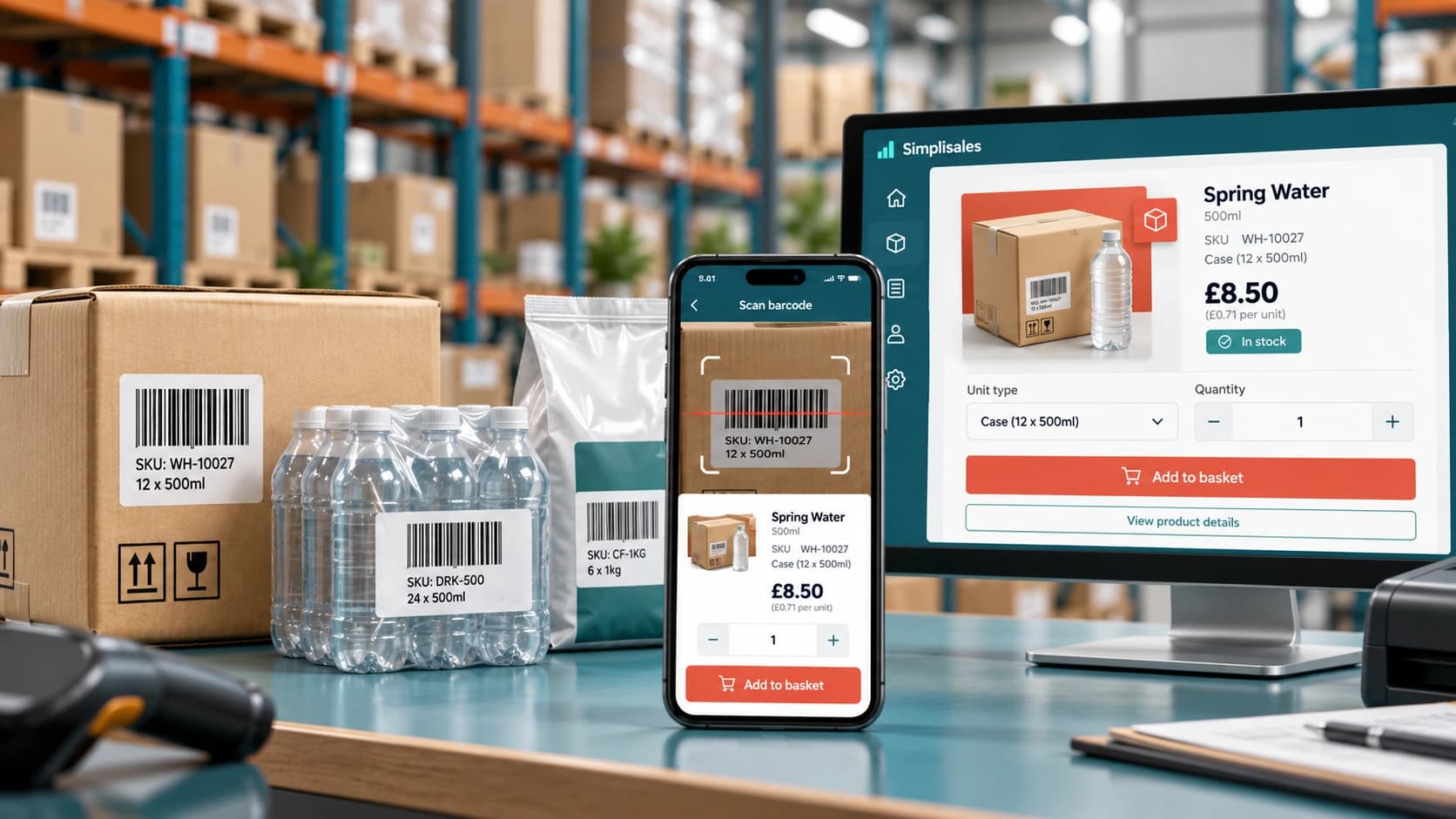
Barcode Ordering Apps for Wholesale
A retailer walks around the stockroom with a phone. In fact, when […]
Ecommerce Tips · 12 OCT 2026
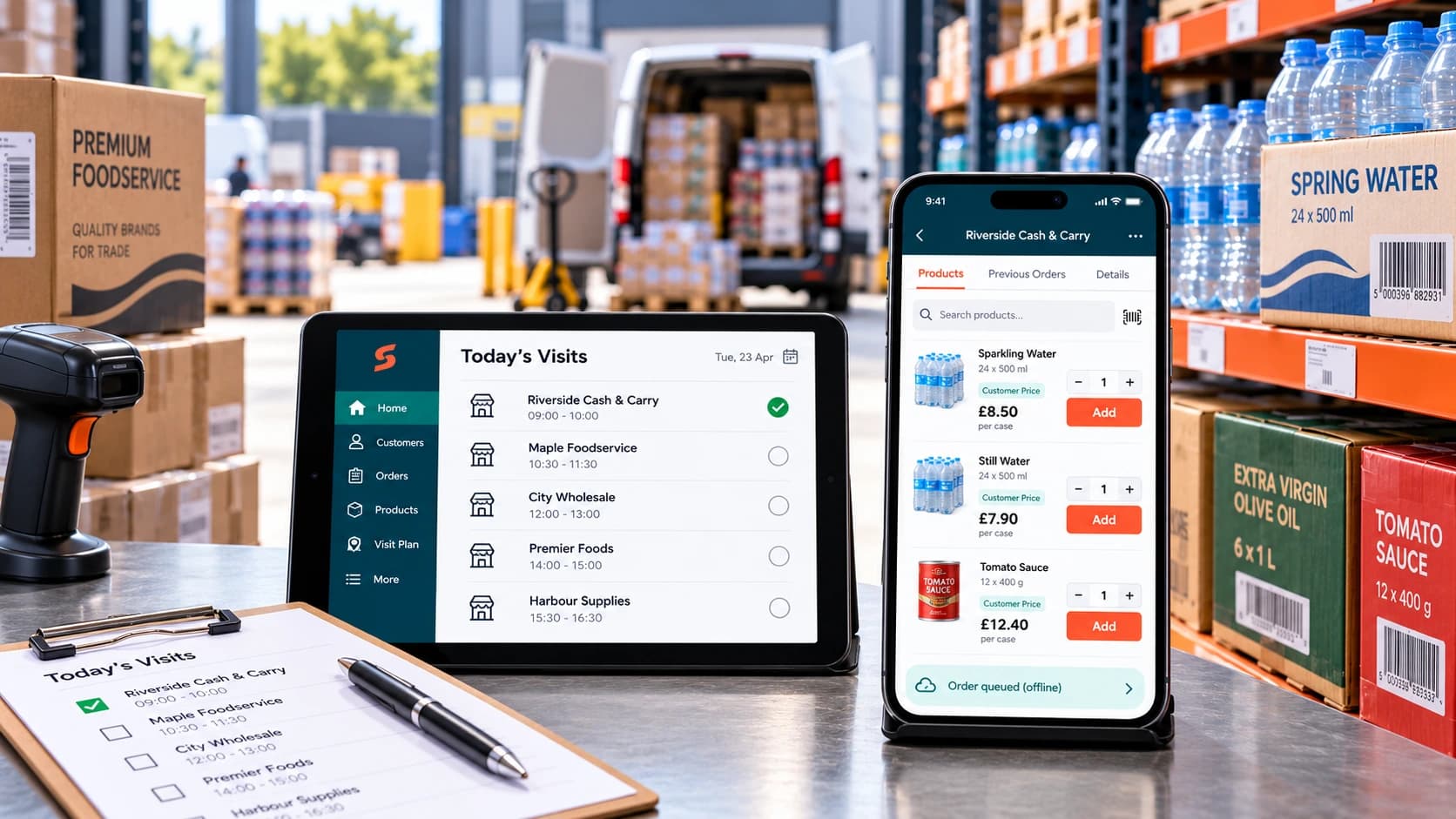
How to Roll Out a Sales Rep Ordering App
A […]
Ecommerce Tips · 10 AUG 2026
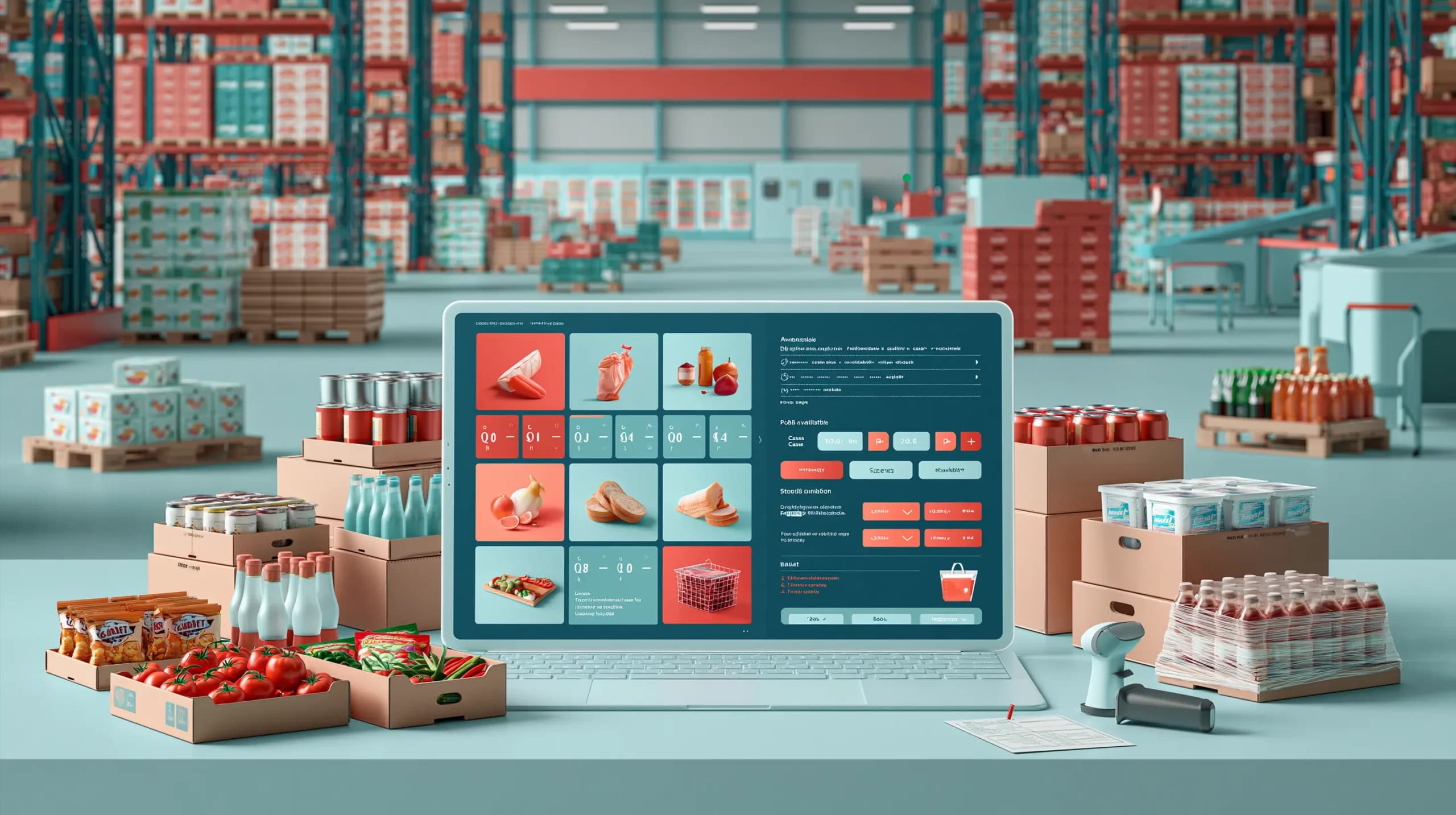
Food Wholesale Ordering Software: 12 Features UK Distributors Actually Need
This blog post covers the 12 features UK food distributors should prioritise when choosing food wholesale ordering software, from customer-specific pricing and multiple pack sizes to real-time multi-warehouse stock, batch and expiry tracking, purchasing, warehouse picking and delivery operations. It also highlights the importance of fast repeat ordering, offline sales rep tools, AI-assisted capture of […]
Run your business,
without the complexity
Start free · Try paid plans for 30 days.
