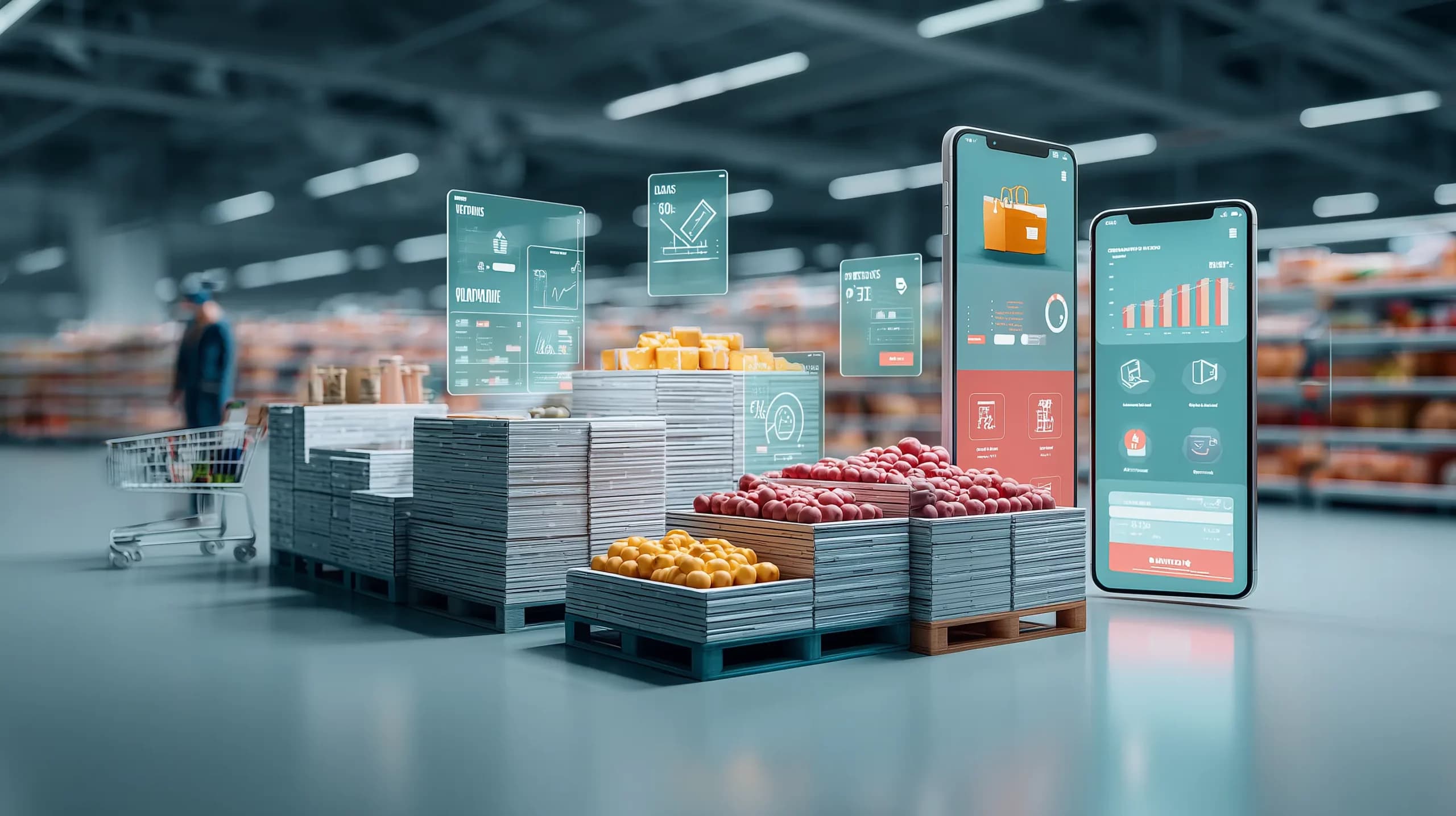

Introduction: From Trolleys to Touchscreens
Let’s address the truth: Cash & Carry stores have remained unchanged for decades. Industrial buildings, pallets accumulating, workers using the forklifts, and customers hauling trolleys filled with bulk products is the picture of the place. The flair of classic style still works…however, the reality is this: the customers of 2025 do not want only the shelves and stock anymore. They also demand the options of speed and convenience, all right at their fingertips.
Mobile apps are the solution here.
At first glance, it may appear that only supermarkets or high-tech retail chains fit the bill, but conversely, the Cash & Carry wholesalers can hardly do any better than this approach. Want to know why? Your clients, who are retailers, caterers, corner shops, cafés, are busy people. And they don’t wish to glide down aisles for no good reason.
An app on the mobile can manage the whole thing, from the way they shop with you, the level of loyalty they feel, and in the end, the amount they spend.
Let’s go through the reasons why 2025 is the year when Cash & Carry stores have no choice but to adopt mobile apps.
1. Customers Expect Digital Convenience
Reflect on your habits. Is there a time you have ordered food, booked a taxi, or even paid a utility bill without your phone? Hardly. Your purchasers are just like that, they look for the same online conveniences that they have in their personal lives from the businesses they cooperate with.
A mobile app offers your customers the following benefits:
- Browse stock in real time – They won’t be making “Is it available?” phone calls again.
- Place orders before arriving – Straightaway skip queues, just collect and go.
- Access personalised promotions – Right in their pocket.
- Track invoices and history – No more paperwork mess.
It’s very straightforward: If you do not offer it, some other company will.
2. Hybrid Shopping: The Best of Both Worlds
To some customers, the aisle-shopping part is the best, whereas others’ aim is to quickly refill supplies. So, why don’t you include both options?
A mobile app makes your Cash & Carry hypermarket-ready. This means the buyers can:
- Shop physically but use the app to access fast prices, product information, and sales.
- Pre-order online and collect later, all together without waiting.
- Schedule deliveries when they can’t show up at the store.
This is not about replacing your warehouse; it is fully about adding on to it. The app serves as the medium through which physical and digital existence converge.
| Without App | With App |
| Buyers must visit to check the stock | Buyers see stock in real time |
| Promotions are on posters only | Promotions are personalised in-app |
| Queues at checkout | Self-scan & pay via app |
| No data on buyer habits | Full insights on who buys what, when |
3. Apps Keep Customers Coming Back
Cash & Carry stores face the biggest problem of customer loyalty. Customers usually visit their competitors’ stores to get good deals. A mobile app not only helps the customers but also makes it more profitable to remain with you.
Here’s how:
- Push notifications – Remind them of promotions, low-stock alerts, or new arrivals.
- Loyalty programmes – Reward frequent buyers with discounts or points.
- Personalised offers – If a café always buys soft drinks, show them relevant deals first.
- Quick reorders – Customers can repeat their last order in two taps.
Think of the app as your silent salesperson always nudging customers to choose you over someone else.
4. Efficiency for You, Not Just Them
The focus is not only on making processes easy for your customers but also on making the app your operations outside problems.
- Fewer phone calls – Orders are logged automatically.
- Reduced manual errors – Customers will no longer mishear the quantities or forget some of the items.
- Integrated stock management – If the right dashboard is present alongside, the stock level will update live.
- Sales insights – Identify trends (e.g., “Why is there an increase in energy drink sales in March?”) and act quickly.
While your paperwork is being processed, your team can run the floor effectively and take care of the customers.
5. Competing in 2025 Means Going Digital
The truth is that competition has become fierce. Traditional wholesalers, supermarkets which are getting into the B2B sector, and even online-only players are after your customers.
In the year 2025, standing still is the same as falling behind. No longer are mobile apps “nice to have”; they are becoming the basic expectations of customers.
Those who will be the winners include:
- Embrace technology.
- Offer customers flexibility.
- Deliver both in-person experience and digital convenience.
If your buyers can get stock out faster, track orders, and grab promotions in the app, they will reconsider before switching to someone else.
6. Simplisales: Making Mobile Simple
Now you may wonder: “It sounds good and all, but designing an application is a long and painful process, isn’t it?”
That’s the very reason why Simplisales serves as an easy solution.
- With the Simplisales App, you get a ready-to-sell mobile app designed for wholesalers
- Connecting to the Simplisales website is easy and can be accessed by customers both online and via the app.
- And the Simplisales Dashboard ties it all together: orders, stock, and payments without the headaches.
This implies that a sizeable IT team and never-ending custom development are not required. You simply connect our tools and focus on what you do best: manage your Cash & Carry.
7. Real-World Example: Imagine This
Think of yourself as the manager of a very frequented Cash & Carry in London.
- A neighbourhood minimarket has noticed that it is running out of bottled water. Instead of going there directly and looking for the item in stock, they check your app, and the stock is confirmed.
- They order the product, pay for it and select to collect it in two hours.
- When they come, their order is already at the counter for them. No line, no waiting.
This one interaction with the app has saved them one hour. So, you have a customer who is more likely to choose your shop instead of others.
If you consider this for 100 customers a week, you can better understand its impact.
Conclusion: The Future is in Their Hands
The future is bright for the wholesale businesses. Make it brighter with Simplisales, a simple and affordable B2B eCommerce solution for wholesalers
Essentially, 2025 will not only be about running a Cash & Carry efficiently but also about creating a hassle-free shopping experience for your customers. And the mobile app is just the tool to help you achieve this.
The mobile app is a tool that connects the physical and the digital world; it enables your customers to be more time-efficient, and it provides you with the knowledge you need to conduct business more effectively. Above all, it helps your business stay ahead in a market where convenience is a priority.
Should you be wondering whether a mobile app is even worth it, there is a one-word answer: Yes. The customers are the ones who have already anticipated it. The real question arises: Do they get it from you, or do they get it from someone else?
Related Blogs
Explore more insights for your wholesale business.
Wholesaling · 28 AUG 2026
B2B Pricing: SaaS Fees, Add-Ons and Total Cost of Ownership
The Monthly Subscription Is Only the Starting Point How Current B2B eCommerce Pricing Models Compare Shopify: Low Entry Cost Does Not Mean You Need Shopify Plus BigCommerce: Watch GMV and Payment Costs Add-Ons Can Change the Comparison Completely Calculate Total Cost of Ownership The Best Platform Depends on What You Already Have Where Simplisales Fits […]
Wholesaling · 27 JUL 2026
How to Become a Tobacco Wholesaler in the UK
This blog post explains that becoming a tobacco wholesaler in the UK requires more than registering a company, as businesses involved in manufacturing, importing, storing, transporting, or selling tobacco must comply with the Tobacco Track and Trace system. Wholesalers need an Economic Operator ID for the business, a Facility ID for each relevant premises, and […]
Wholesaling · 20 JUL 2026
How to Become an Alcohol Wholesaler in the UK
Starting an alcohol wholesale business in the UK involves more than registering a company, as most businesses selling alcohol to other businesses must obtain approval under HMRC’s Alcohol Wholesaler Registration Scheme (AWRS) before trading. The guide explains who needs AWRS approval, how and when to apply, what HMRC’s fit and proper assessment involves, and the […]
Run your business,
without the complexity
Start free · Try paid plans for 30 days.
