The Change of Retail and Wholesale: Is the Line Blurring?

The Coffee Shop Realisation
Imagine a scene: You step into your beloved café on a Monday morning. You place an order for your usual oat latte, and while you wait, your eyes spot something new – a small shelf filled with bags of the shop’s exclusive coffee beans, which are on sale for bulk purchase. “Wholesale orders welcome,” reads the sign, right on the shelf.
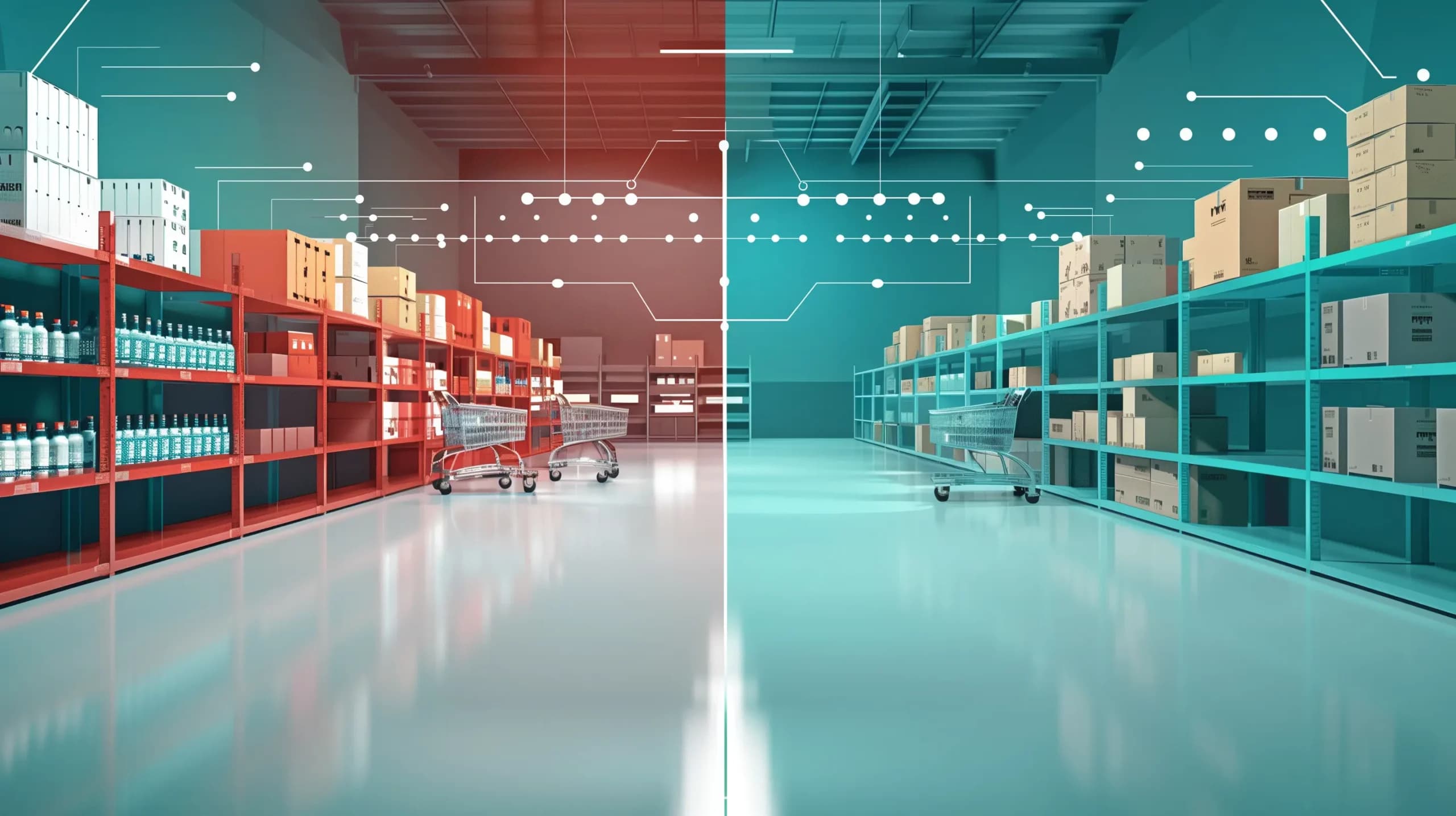
That’s when the realisation dawns, it is not just a coffee shop, and this is not the only case. The shop has added an extra layer to it. It is not just a retailer; it is also a wholesaler, thus becoming the bridge between the two different worlds. The coffee shops are not the only ones to do this; the same goes for a lot of other industries, from fashion to food service. The difference between retail and wholesale is fading faster than ever.
What has made this transition possible?
The answer is straightforward: the digitisation of processes, demand of clients for new services and hybrid commerce are the three essential things which have caused the shift. The usual definitions of B2B and B2C are not workable anymore. The businesses today are selling to everyone effortlessly.
From Segmentation to Convergence
For a long time, retail and wholesale had their own separate realities. Retail was all about the end consumers, the ones who buy the products quickly, the ones who get emotional about the products and the ones who buy in smaller quantities. On the other hand, the wholesale sector was dealing with bulk orders, long-term relationships, and pricing issues.
However, with the swift wave of digital commerce, the two worlds are crashing into each other. The retailers have started offering wholesale purchasing, while the wholesalers are running advanced e-commerce sites. Both are significantly dependent on data, automation, and personalisation to meet the needs of their customers.
Why the Line Between Retail and Wholesale Is Fading
The main factor that has caused this to blur is customer behaviour. B2B buyers have changed; they now shop online, compare prices in a second, and look for the same well-done services that they have been getting from their favourite retail brands.
Let’s expand more on that:
- Digital expectations: Nowadays, wholesale buyers wish for self-service options, real-time stock visibility, and mobiles that are easy to navigate.
- Personalisation: Print for all services is out of fashion. The buyers’ interest is in personalised prices and recommendations.
- Speed: Instant confirmations, same-day delivery, and straightforward reordering are the new norms.
In short, wholesale buyers are acting like retail consumers, and as a result, it is changing the whole industry.
The Digital Transformation Behind It All
The bridge through which the two fields connect is technology.
E-commerce platforms, automation, and analytics have made it feasible for wholesalers to sell to smaller clients directly and for retailers to venture into business sales.
This transition is the cause of what specialists have called the “Direct-to-Business” trend. Brands are employing digital tools to bypass the traditional middlemen and reach customers directly, whether they are people or companies.
Tools like the Simplisales Website make this transition enjoyable. With a ready-to-sell website aimed at wholesalers, it is possible to set different prices for B2B clients while ensuring a smooth retail experience for other users. The foundation of this issue is flexibility, that is, having one single platform that is relevant to different customer types.
The Rise of “Direct-to-Business” Models
You know what Direct-to-Consumer (D2C) is. Now meet Direct-to-Business (D2B).
D2B brands, by the name itself, are brands that go directly to the business channel, leaving behind the traditional distribution channel instead of going through it. Also, they use eCommerce platforms, mobile apps, and digital data to manage all their operations online.
Just take a look at the main reasons:
- Better margins: Not having intermediaries means lower expenses.
- Deeper insights: Communication with the end users gives the opportunity to gather much-requested data about their preferences.
- Stronger relationships: Direct communication with the end user ensures they learn about the brand and trust it more.
- Faster growth: Unlike customary delays, business scaling becomes less complicated.
And with the Simplisales App, wholesalers can bring this D2B experience right to their buyers’ pockets. Whether your customers are restocking inventory or browsing promotions, a mobile-first B2B app makes ordering frictionless and efficient.
Lessons Wholesale Can Learn from Retail
Retail has always been one step ahead in understanding customer psychology.
Now, wholesalers can learn a few key lessons:
- User Experience matters: A clean, intuitive interface builds trust.
- Data is gold: Analytics reveal what buyers want before they even ask.
- Agility wins: Retailers adapt fast, and wholesalers need that mindset too.
- Omnichannel is essential: Buyers might browse on mobile, order from desktop, and pay in store. Consistency is everything.
Using the Simplisales Dashboard, wholesalers can monitor sales, analyse data, and manage both B2B and retail-style interactions in one place, gaining the agility that defines modern retail success.
The Technology Driving the Convergence
Retail has always been one step ahead in understanding customer psychology.
Now, wholesalers can learn a few key lessons:
- Cloud-based platforms: A clean, intuitive interface builds trust.
- Mobile apps: Empower field sales and customers alike with instant access to pricing and stock.
- Automation tools: Streamline order processing, invoicing, and customer communication.
- AI and analytics: Forecast demand, personalise offers, and improve inventory planning.
Using the Simplisales Dashboard, wholesalers can monitor sales, analyse data, and manage both B2B and retail-style interactions in one place, gaining the agility that defines modern retail success.
Preparing Your Business for the New Normal
In case you are unsure of how to cope with this changing environment, here are some logical steps to follow:
- Audit your channels: Recognise the channels where your clients are most active.
- Unify your systems: Make sure that your offline and online data are interlinked.
- Offer flexible pricing: Differentiate retail from business clients without making your setup complex.
- Prioritise user experience: Make the buyer feel the platform was only for them.
- Embrace hybrid tools: Connect both retail and wholesale features into a single solution.
It is not a matter of choosing a side; it is about creating a system that supports both without any effort.
Final Thoughts: The Future Is Fluid
Experience a seamless B2B e-commerce journey with Simplisales.
The future is bright for wholesale businesses. Make it brighter with Simplisales, a simple and affordable B2B e-commerce solution for wholesalers.
Once, the concepts of retail and wholesale felt like two completely separate worlds; however, they are now merely two lenses through which the same commercial universe can be observed.
The realm of the future is the one brought about by clear-headed, multi-disciplinary thinkers – the businesses that manage to intersperse the B2B effectiveness with the B2C experience. Be it a conventional wholesaler who is adjusting to the digital sphere or the retailer who is branching off into the business sector, the message is definitely the same: there are no borders at all.
Running a fully integrated, future-ready operation with data, sales, and customer experience coming together without a hitch can be done with the help of the Simplisales App, Simplisales Website and Simplisales Dashboard.
Related Blogs
Explore more insights for your wholesale business.
Wholesaling · 28 AUG 2026
B2B Pricing: SaaS Fees, Add-Ons and Total Cost of Ownership
The Monthly Subscription Is Only the Starting Point How Current B2B eCommerce Pricing Models Compare Shopify: Low Entry Cost Does Not Mean You Need Shopify Plus BigCommerce: Watch GMV and Payment Costs Add-Ons Can Change the Comparison Completely Calculate Total Cost of Ownership The Best Platform Depends on What You Already Have Where Simplisales Fits […]
Wholesaling · 27 JUL 2026
How to Become a Tobacco Wholesaler in the UK
This blog post explains that becoming a tobacco wholesaler in the UK requires more than registering a company, as businesses involved in manufacturing, importing, storing, transporting, or selling tobacco must comply with the Tobacco Track and Trace system. Wholesalers need an Economic Operator ID for the business, a Facility ID for each relevant premises, and […]
Wholesaling · 20 JUL 2026
How to Become an Alcohol Wholesaler in the UK
Starting an alcohol wholesale business in the UK involves more than registering a company, as most businesses selling alcohol to other businesses must obtain approval under HMRC’s Alcohol Wholesaler Registration Scheme (AWRS) before trading. The guide explains who needs AWRS approval, how and when to apply, what HMRC’s fit and proper assessment involves, and the […]
Run your business,
without the complexity
Start free · Try paid plans for 30 days.
