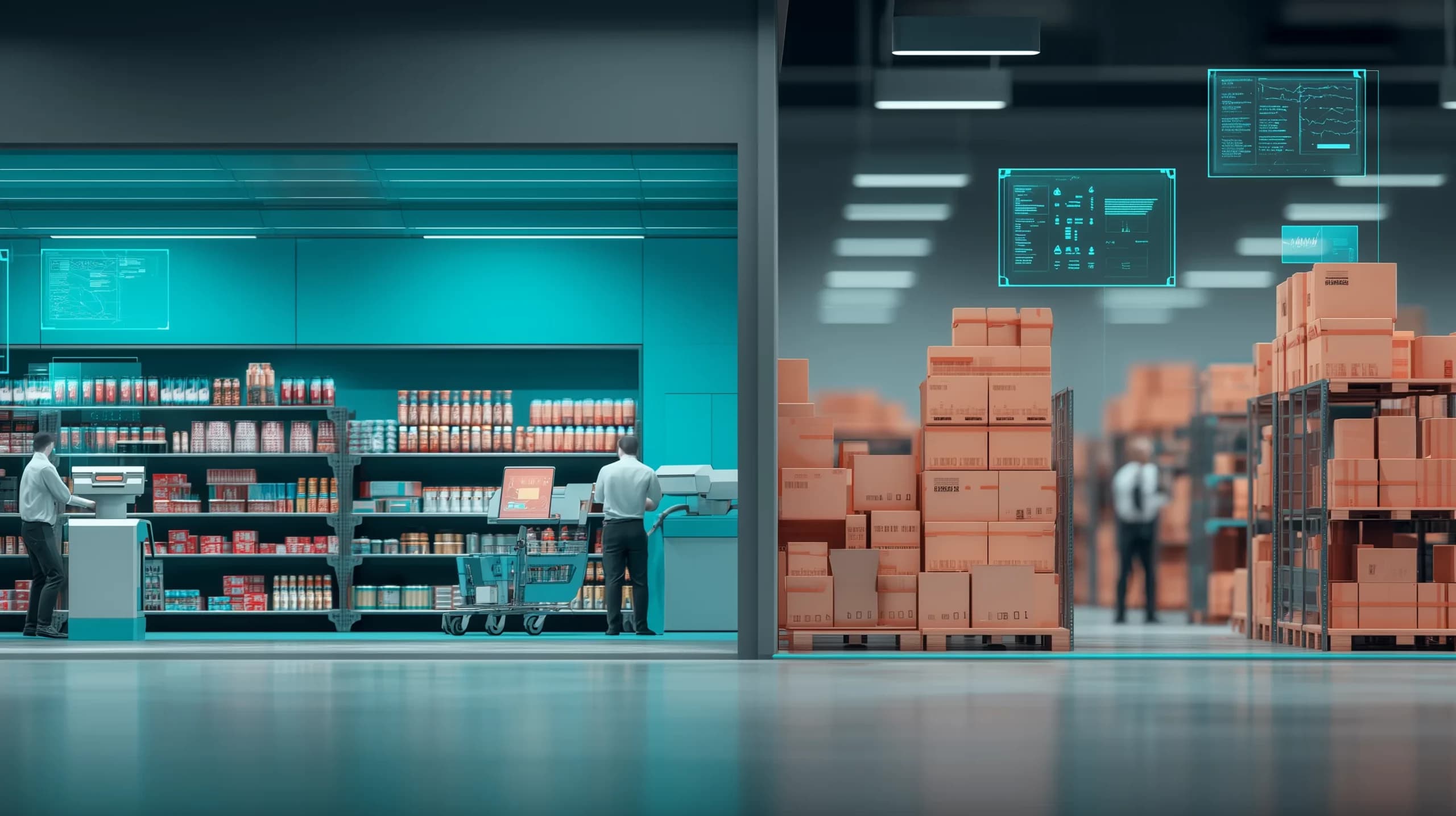

Among wholesale enterprises, a significant yet subtle occurrence is seen in the increased frequency of such instances.
A frequent client is on the phone.
They come prepared to ask for what they require, the quantity they need and the price they paid last time.
However, instead of making the order directly, they still have to state:
Can I have the list back, please?
What was my price on this?
Can you do the order for me?
No problem is there. No urgency is there.
Yet time is being wasted on both sides.
This is the point where self-service ordering changes the game in both B2B and retail industries.
- Not by pushing out sales teams.
- Not by cutting off connections.
- But by eliminating friction.
What Self-Service Ordering Really Means Today
Self-service ordering does not mean leaving customers on their own.
Instead, it offers them control when they wish.
In the contemporary B2B and retail sectors, self-service represents:
- Clients can search for the products independently
- Prices are unique and clear
- Stock availability is real-time
- Orders can be sent without the need for a phone call or e-mail
- Reordering takes only seconds instead of discussions
Usually, this is possible through a B2B buyer portal, a stand-alone website, or a mobile app.
If executed accurately, it feels as smooth as breathing, not compulsory.
Why Buyers Are Actively Choosing Self-Service
There is a shift in B2B buyers, whether we approve it or not.
Becoming:
- More digital
- Less time to waste
- More impatient with long communication
For many buyers, having a sales call every time is not viable.
They prefer to check, confirm, order, and continue with their task.
Typical buyer musings often convey this thought:
I am not looking for help; I simply need access.
Why do I not get to see my prices right away?
I purchase the same items on a weekly basis.
Self-service ordering is the immediate answer this mindset deserves.
The Role of Buyer Portals in B2B
The buyer portal is the centrepiece of self-service.
A real buyer portal enables customers to:
- Log in securely
- View their own pricing
- Check previous orders
- Reorder instantly
- Track order status
This is the point where solutions like Simplisales Website gain their significance.
Rather than acting as only a catalogue, the site turns into an ordering tool, rather than a brochure.
Reordering: The Biggest Self-Service Win
In the wholesale sector, a majority of the income is derived from repeat orders.
However, there are still many companies that handle reorders by themselves.
Self-service turns the tables completely.
Thanks to the order history saved, customers can:
- Order the last items again
- Change quantities instantly
- Order after hours
This eliminates unnecessary talk and at the same time increases order frequency.
Of course, it’s one of the easiest ways to boost income without the need to recruit more sales personnel.
How Self-Service Reduces Sales Team Workload
This is the unpleasant truth, sir or madam.
More than half of the time that sales teams spend is devoted to:
- Receiving routine orders
- Addressing stock inquiries
- Confirming cost
- Sending order summaries
A lot of these activities are not actually selling.
Self-service ordering, on the other hand, sends these items out of the email inbox of the sales team.
That in no case means that sales teams are no longer so important; they just get more valuable.
That’s because they can devote time to:
- New clients
- Upselling
- Building relationships
- Discussing strategy
At the same time, routine orders go through the system automatically.
Mobile Self-Service: Ordering Without a Desk
Self-service configuration is not simply available to desktop portals.
The demand for the ability to make orders through mobile phones instead of the computer has been increasingly afloat in retail and hybrid wholesale models.
Customers have a mobile-first experience, which allows them to:
- Order directly from the shelf
- Reorder while checking availability
- Instantly confirm availability
The Simplisales App additionally offers self-service ordering outside of the office, making it location independent.
This is especially important for:
- Cash & carry customers
- Retailers with daily replenishment
- Field-based buyers
Keeping Data Aligned Behind the Scenes
Self-service functions only when the data are accurate.
- In case of price variations.
- If the stock is not correct.
- If orders are erased.
Trust disappears in a moment.
That’s why self-service applications should be linked to the core system.
The Simplisales Dashboard guarantees
- One definitive answer
- Real stock updates
- Right pricing
- Orders flowing directly to operations
Direct orders to the operations
In the buyer’s view, all the things go as they are supposed to.
In the background, teams keep in sync.
Self-Service in Retail vs B2B: The Lines Are Blurring
Retail was the first to implement self-service technology, but B2B is indeed on the same fast track.
The expectations are converging:
- B2B buyers seek less complex processes like in retail
- On the other hand, retail customers desire a B2B-type of account management
Hybrid models now rely heavily on:
- Account-based ordering
- Logged-in pricing
- Repeat purchasing
Self-service ordering is a common means through which both operate without the need for an extra system.
Common Fears (And Why They Don’t Hold Up)
Many wholesalers are hesitant to implement self-service.
The main fears are:
Sales will be out of control
Customers will quit making calls
It comes off as being impersonal
In reality, the opposite happens.
The actual result is the contrary.
Sales members end up with more significant talks.
Customers get easier services.
Friends are acquired by eliminating friction.
Self-service is not equivalent to the elimination of any human interaction; it rather deals with unnecessary interaction.
Self-Service Is About Choice, Not Replacement
The flexibility of self-service is the key to its success.
Some customers will:
- Order fully online
- Reorder silently
- Never call
Others will:
- Browse online
- Confirm by phone
- Order with a rep
The two ways can definitely coexist, and they should do so.
Self-service ordering is most productive when it lays the foundation for, rather than forcing a given behaviour.
Final Thoughts: Self-Service Is Quietly Becoming the Standard
The future is bright for the wholesale businesses. Make it brighter with Simplisales, a simple and affordable B2B eCommerce solution for wholesalers
Self-service ordering is not a passing fad anymore.
It’s being adopted as the general expectation in the B2B and retail sectors.
Not as a result of the company’s will- but because of the buyer’s will.
Combining
- The Simplisales Website for buyer portals
- The Simplisales App for mobile ordering
- The Simplisales Dashboard for operational control
You create a system where:
- Customers order when they want
- Sales teams sell where it matters
- Operations stay in sync
References
Swell – B2B Wholesale eCommerce Statistics (2025 Trends in B2B Digital Ordering)
Elastic Path – B2B Mobile Commerce Apps are Hot: Here’s Why
Related Blogs
Explore more insights for your wholesale business.
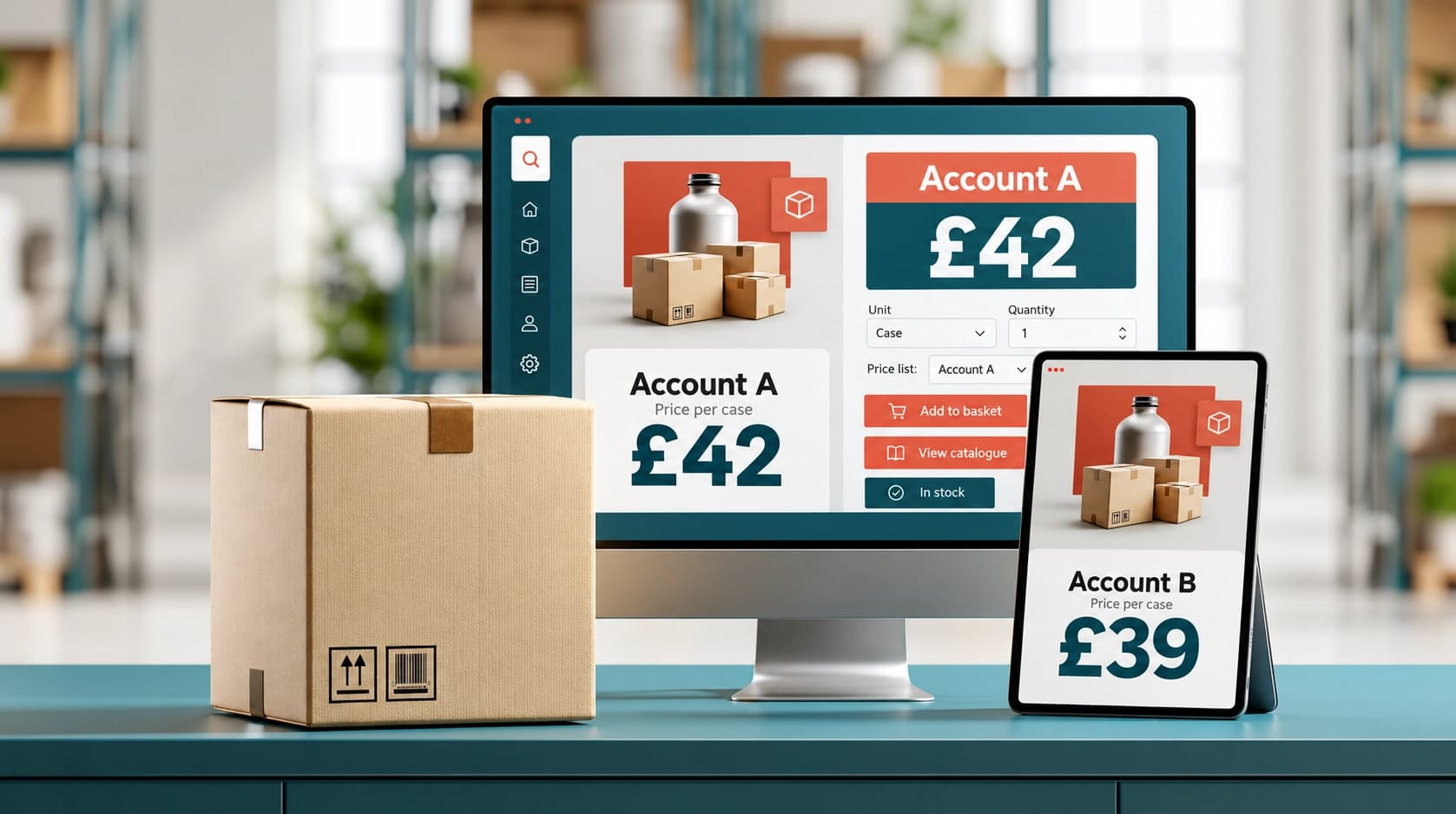
Sales · 25 SEPT 2026
Customer-Specific Pricing in B2B eCommerce
Why one B2B customer does not always mean one price A buyer logs into a wholesale website and […]
Sales · 09 MAR 2026
Order Frequency vs Order Value: Which Metric Matters More in Wholesale?
In wholesale, the debate between order frequency and average order value often reveals a deeper truth: sustainable growth depends on balancing both metrics rather than prioritising one over the other. Larger orders can improve short-term revenue, reduce shipping costs and streamline fulfilment, but they may also lead to longer gaps between purchases and less predictable […]
Sales · 16 FEB 2026
From Purchase Orders to Stock Availability: Closing the Procurement Gap
Numerous B2B wholesalers have this high-cost gap, on which the purchase orders do not tally with the actual stocks, resulting in supply chain teams depending on the isolated data for decision-making, which in turn leads to delays, stockouts, excess safety stocks, and broken customer promises. Conventional purchasing methods mostly deal with the dispatch of orders, […]
Run your business,
without the complexity
Start free · Try paid plans for 30 days.
