Data-Driven Wholesale: How Analytics Can Boost Your Sales
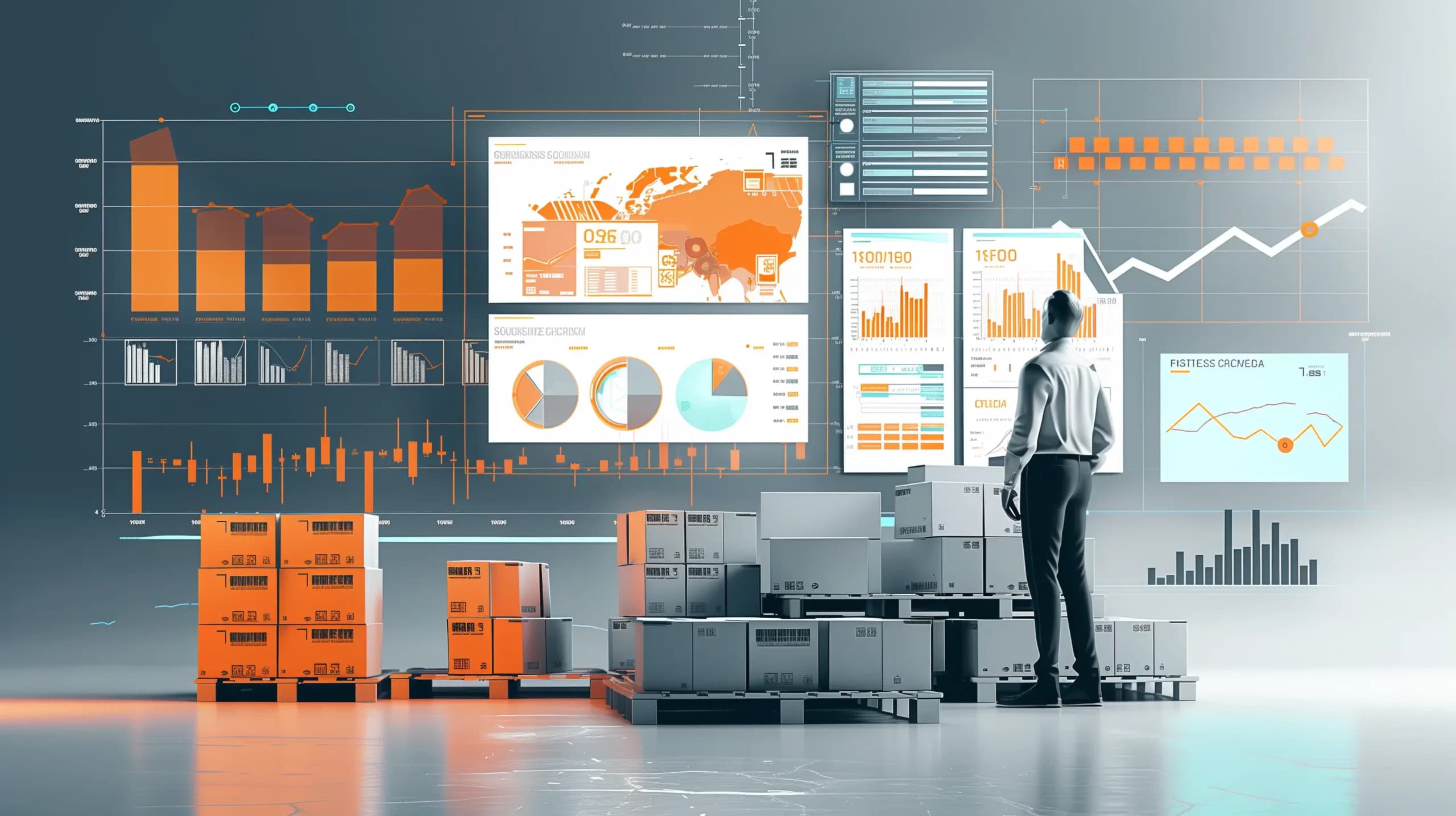

The Story Behind the Numbers
Picture this: Monday morning, when you walk into a warehouse. Pallets are arranged up high, the desk is overwhelmed with the invoices waiting, and the sales team is busy picking up the lines. The business is eating and drinking busy, even maybe successful. But, as soon as you see last month’s numbers, there’s a shock – flat sales, repeat orders are going down, and stock-outs are common now.
Here’s the trick: not that your products are unwanted by the customers. It’s just that you’re not having visibility without data. You are depending on your instinct, old spreadsheets, and gut feeling, while your rivals are using strong analytics to tune their performance perfectly, from pricing to inventory to customer experience.
And this is where data-driven wholesale breaks the ground. Believe me, it is not as hard as it may seem. The moment you notice patterns changing in your data of sales, customer behaviour, and market trends, you will never want to go back to making guesses.
Why Data Matters in Wholesale
Unsurprisingly, the wholesale business has limited margins, and competition is never far off. The last thing you want is to make decisions that are “probably right.” Instead, you need to be precise. The best thing about analytics is that it facilitates clarity amidst uncertainties.
By using data appropriately, you are able to:
- Understand your customers better: What products do they buy? With what frequency? What is their price range?
- Optimise your stock levels: Avoid overstocking slow movers and being out of stock for the popular goods.
- Spot opportunities for upselling or cross-selling: If customer A buys product X, he/she might need to buy product Y in addition.
- Forecast demand more accurately: Which are the seasons, regions, or customer classes that will likely have the most sales increases?
And the cream on the top is that tools like the Simplisales Dashboard, which show the data, are very simple to interpret without the necessity of you having knowledge of statistics.
The Core of Data-Driven Wholesale: Analytics at Work
1. Customer Insights
Every encounter speaks a language of its own. Analytics can reveal who your top-payers are, what they demand, and how often they come back for more. Instead of sitewide blanket offers, your pricing, promotions, and communication can really get personal.
That is the solution the Simplisales App provides you. Your customers make use of it to place orders, and it returns valuable data back to you- metrics like the average basket size, the order frequency, and the preferred delivery methods.
2. Product Performance
Not every product in your catalogue is equally popular. Some are the stars, while others are simply dead stock that takes up valuable space. With the help of analytics, you can manage products based on how profitable they are, how fast they sell, and their seasonal demand.
On the Simplisales Website, you can even present top sellers on your storefront, ensuring customers view the items that are most relevant to them.
3. Sales Team Effectiveness
Are your sales representatives spending time in the right accounts? Which territories are lagging behind? Analytics make sales performance transparent, hence, you can provide coaching where it is necessary and also reward where it is deserved.
Through the Simplisales Dashboard, you can keep track of these metrics in real time. No more waiting for the quarter’s end to get the shocking news.
Real-Life Examples of Analytics in Action
Let’s make this concrete.
- Case 1: Reducing Waste
A food wholesaler found that a certain product was being returned frequently. A detailed data analysis pointed out that the product was usually overstocked and this was the cause of returns. They made some alterations, reduced waste, and raised profit margins.
- Case 2: Increasing Repeat Orders
Another wholesaler had a problem that some customers didn’t want to continue after their second order. However, analytics disclosed the reason was associated with delivery times which were longer for new accounts. As a result, logistics fixing increased retention by 20%.
- Case 3: Smarter Promotions
A wholesaler opted for promoting only to those customers who made no orders in the last 90 days rather than giving discounts across the board. The result was a higher reactivation rate, along with preventing unnecessary discounts.
This is what magic analytics can do – it not only informs you about what is happening, but it also directs you to take action on it.
How Data-Driven Decisions Improve Customer Experience
Your customers do not care about your dashboards. Instead, what they want are the right products, sold at a fair price, and delivered at the right time.
You can leverage analytics to:
- Offer personalised pricing that reflects customer loyalty and order history.
- Ensure stock availability so customers won’t get annoyed with out-of-stock products.
- Streamline ordering through mobile-first platforms like the Simplisales App, which is simpler and direct.
- Respond faster to trends by changing your mix of products in real-time.
When customers are made to feel that their needs are understood and are important, they will remain loyal. And in wholesale, repeat business is everything.
The Technology Behind Wholesale Analytics
You might be perplexed on how to proceed: “Such a nice concept, but what are the practical ways to implement it?”
The fact is that the use of analytics is neither a paper tiger nor an insurmountable monster. These are some of the major technologies that power analyses of today:
- Cloud-based dashboards: Smart tools like the Simplisales Dashboard bring sales, inventory, and customer data to one platform.
- Mobile ordering apps: The Simplisales App is a customer-friendly interface for online purchase, and at the same time, it sends back informative data to the admin.
- eCommerce platforms: A system like the Simplisales Website, in addition to helping the products to be seen, gets you analytics of the visitor traffic, product views, and abandoned carts.
- AI-powered forecasting: According to market conditions and prior history of sales, machine learning algorithms are capable of making demand forecasts.
By using these devices together, you have the effect of a positive feedback loop where each order, click, or interaction makes you a better decision-maker.
Steps to Becoming a Data-Driven Wholesaler
If you think it’s time to take action, here’s a realistic step-by-step plan of action:
- Centralise your data: Set up and configure the Simplisales Dashboard to bring together all the data from sales, stock, and customers.
- Track the right metrics: Concentrate on the KPIs such as reorder rate, sales per customer, margin by product, and stock turnover.
- Act on insights: Based on the findings, do not just observe the numbers; also change the price, promotion, or product availability.
- Empower your team: Help your sales representatives to the Simplisales App so that they can use current data in the discussions with clients.
- Continuously improve: Make analytics an ongoing process, not a one-time project.
Common Pitfalls to Avoid
Naturally, it is easy to make mistakes associated with being data-driven. Here are several pitfalls to be aware of:
- Collecting too much data without knowing how to leverage it.
- Focusing only on vanity metrics, including total site visits, instead of meaningful numbers, for instance, conversion rates.
- Ignoring the human element—should support, but not replace, your customer relations.
- Failing to act—analytics become worthless when you do not implement changes based on insights gained.
The Future of Data in Wholesale
The analytics sector in wholesale is bound to grow even smarter with time. AI will not only forecast what the customers need, but also when they require it. Personalised recommendations will become the norm. Besides, mobile-first ordering will push the feedback data back instantly, allowing wholesalers to have clarity in a matter of seconds.
The ones to win will be those who have the guts to adapt before others do, those who look at data as a driver, not as a burden.
Final Thoughts
Experience a seamless B2B e-commerce journey with Simplisales.
The future is bright for wholesale businesses. Make it brighter with Simplisales, a simple and affordable B2B e-commerce solution for wholesalers.
Here’s the reality: data-driven wholesale is not an option any longer. The distinction entails whether you run your trade based on assumptions or rational decisions.
By utilising tools like the Simplisales App, Simplisales Website, and Simplisales Dashboard, you can transform mere figures into effective strategies that not only boost sales but also enhance customer experience and strengthen your market position.
So, are you ready to make a change from guessing to growing?
Related Blogs
Explore more insights for your wholesale business.
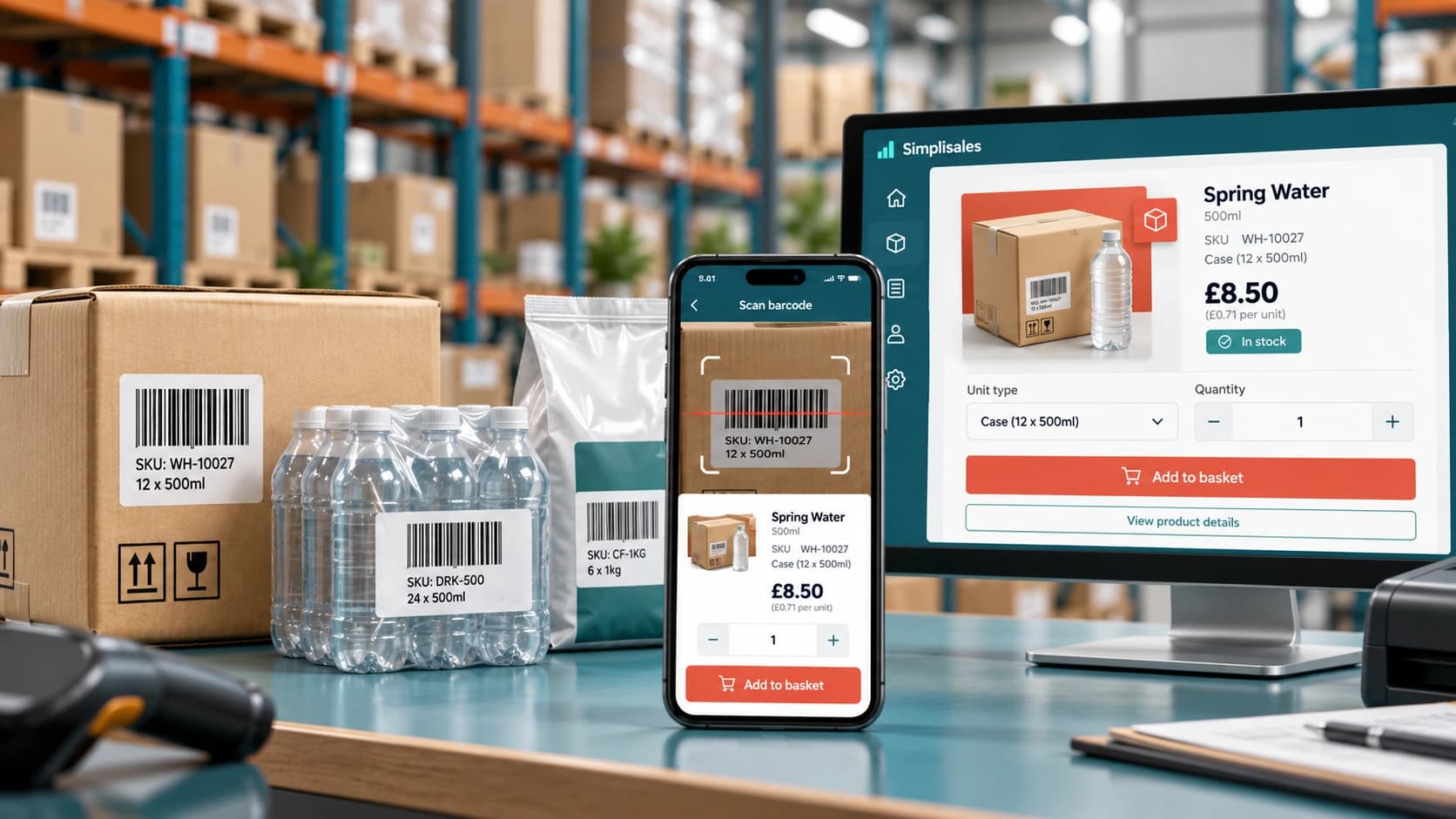
Ecommerce Tips · 16 OCT 2026
Barcode Ordering Apps for Wholesale
A retailer walks around the stockroom with a phone. In fact, when […]
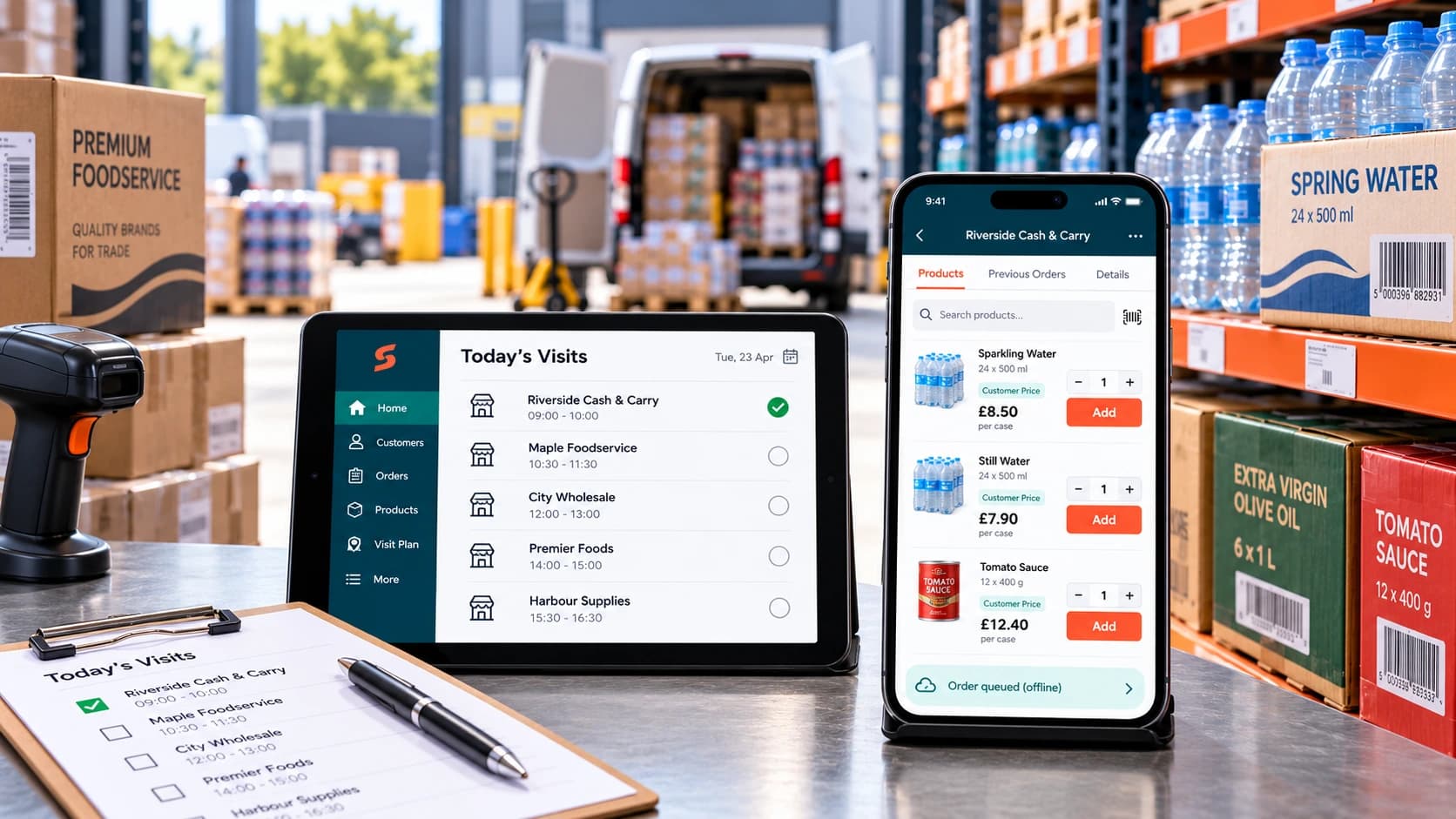
Ecommerce Tips · 12 OCT 2026
How to Roll Out a Sales Rep Ordering App
A […]
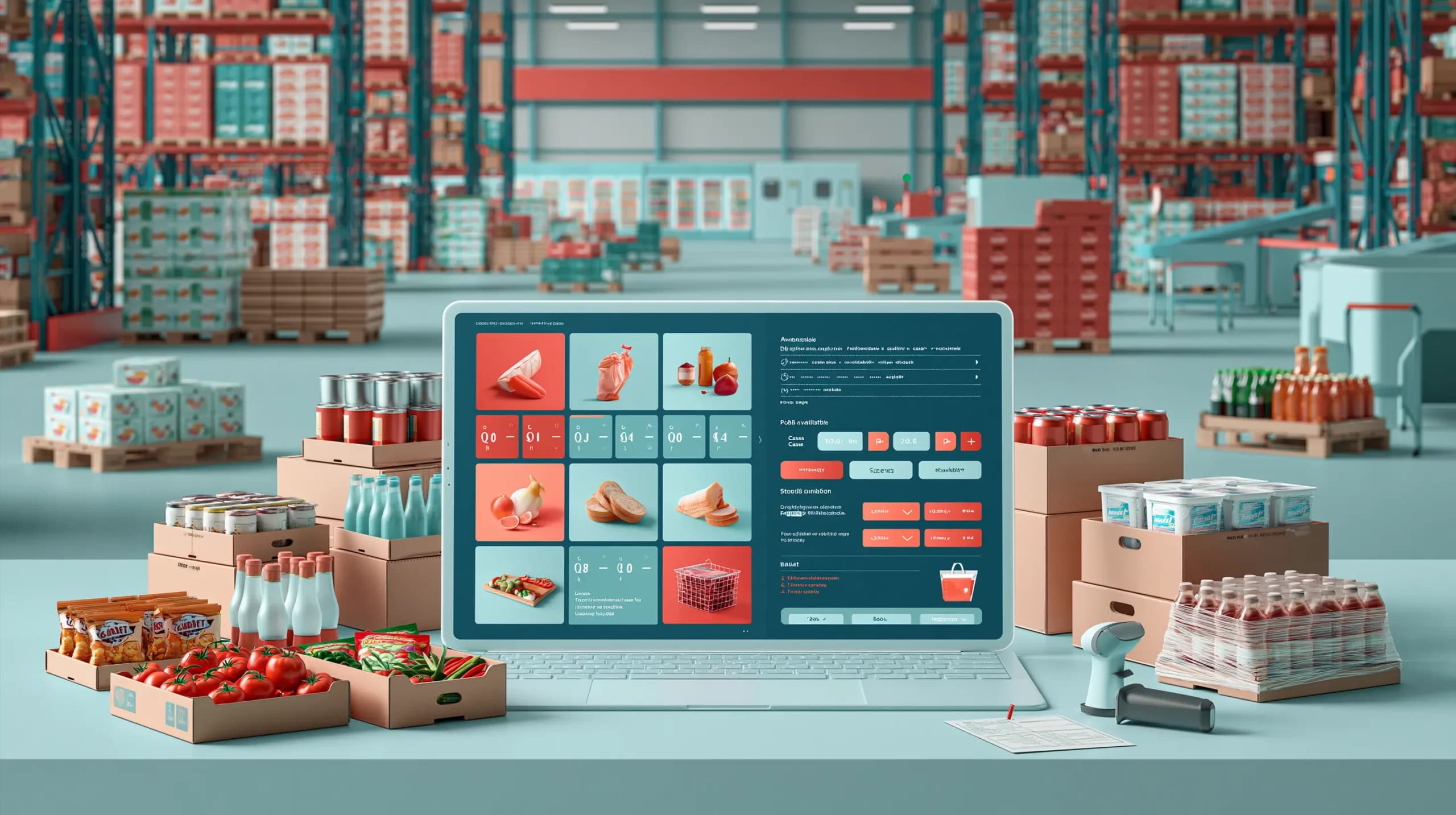
Ecommerce Tips · 10 AUG 2026
Food Wholesale Ordering Software: 12 Features UK Distributors Actually Need
This blog post covers the 12 features UK food distributors should prioritise when choosing food wholesale ordering software, from customer-specific pricing and multiple pack sizes to real-time multi-warehouse stock, batch and expiry tracking, purchasing, warehouse picking and delivery operations. It also highlights the importance of fast repeat ordering, offline sales rep tools, AI-assisted capture of […]
Run your business,
without the complexity
Start free · Try paid plans for 30 days.
