AI vs Automation in B2B eCommerce: What’s the Difference?


The stage comes in every wholesale dealer’s life when he feels exhausted and is in front of the laptop at midnight with a cold cup of tea beside him. That very moment when he admits the reality that he has become the owner not just of a single business but of a whole ecosystem of digital innovations. It is a cluttered desktop consisting of diverse applications and software claiming to “automate your tasks,” “predict your sales,” or “use AI to optimise your operations.”
And at the same point, you are probably in a state of bewilderment, like:
“Wait a second… aren’t AI and automation two sides of the same coin?”
If you have been experiencing some confusion, just relax and trust me – you are not at all forlorn. Many of the wholesalers I am in partnership with often confuse the use of the two terms, while in fact, they are used interchangeably in dealing with them. On the other hand, understanding this distinction is key if you want to sustain your competition, cut costs, and allocate your finances to promote smarter digital activities for your B2B eCommerce.
Thus, in this guideline, we are obliged to make it plain and straightforward. And alongside, I will guide you in the diagram where the tools like the Simplisales App, Simplisales Website and Simplisales Dashboard fall into – and how they assist you to run both automation and AI at the right time.
So, let’s take a cup of tea and commence.
The Everyday Experience: Automation vs AI in Real Life
Before we dive into B2B eCommerce, let us highlight a foremost instance from daily life.
Imagine you come to your house and as you step in the house, your smart lights automatically turn on. That’s automation, a rule-based action activated by a specific condition.
Now imagine your TV suggesting a film to watch based on what you previously watched. That’s AI, a machine which gets smarter as it interacts with you and makes predictions about your behaviour.
Same location, two different technologies.
The same reasoning applies to your wholesale business:
- When a program decides independently to create an invoice → Automation
- When a device gives a prediction on what item a customer might buy again → AI
When you distinguish this, you are opening a new level of proficiency that you could not enjoy before.
What Exactly Is Automation in B2B eCommerce?
Automation refers to your company working in an automated mode. It is the one that runs rules, routines, and repetitive tasks swiftly, and in such a way, it saves you from spending hours working manually.
In B2B wholesale, automation is generally:
- Auto-sending order confirmations
- Invoicing
- Syncing stock levels in real-time
- Initiating low-stock notifications
- Auto-assigning sales reps
- Printing delivery notes
- Bulk-updating price lists
- Report scheduling
Automation is predictable, consistent, and very trustworthy. It doesn’t need to think for itself; it just does what you instruct it to do.
How Simplisales Enables Automation
The Simplisales Dashboard is embedded with automation as an essential part. Dealers deploy it to automate tasks like:
- Inventory sync across channels
- Automatic customer segmentation
- Scheduled reporting
- Order routing
- Website catalogue updates across SimplySales
Tasking automation with these daily tasks, as a result, your team saves on average, each week, hours that can be reinvested in selling, planning, or perhaps even just relaxing in a more quality way.
What Is AI in B2B eCommerce?
If your business is on autopilot with automation working for you, it would be like having a brain with a genius-level of intelligence AI.
The AI doesn’t just follow the prescriptions but instead notices regularities, makes forecasts, and thus helps you in decision-making.
In wholesale, the artificial intelligence stands out when it comes to:
1. Sales forecasting
AI works with the analysis of several data sets. It considers historical data, seasonal trends, and buying patterns to predict what customers will decide on next.
2. Personalised product recommendations
Like Netflix, which is a movie recommendation site, AI uses a similar approach to suggest products to each user on your Simplisales Website.
3. Dynamic pricing
AI is the one that decides about the price based on several factors, such as demand, whether the product is in stock, or previous customer activities.
4. Predictive stock optimisation
Instead of waiting until you run out of stock, the AI will send you a heads-up warning.
5. Route optimisation and logistics
AI will show the quickest route and help you save on fuel.
6. Fraud detection
The AI system notices strange orders or payments.
Though automation must be told what to do, AI can see things that you would have never seen or thought of.
How Simplisales Supports AI Capabilities
The Simplisales Dashboard has been constructed to incorporate AI-based perspectives, like:
- Predictive sales analytics
- Stock irregularity detection
- Buyer behaviour reporting
- Intelligent product performance analysis
Utilising the Simplisales App, field reps can capture real-time sales data. This data, in turn, feeds the AI model to obtain up-to-date information, leading to even more accurate predictions
AI vs Automation: The Core Differences
Let’s break it down clearly.
| Feature | Automation | AI |
| Does it learn? | ❌ No | ✅ Yes |
| Does it follow rules? | ✅ Yes | ❌ No, it identifies patterns |
| Main purpose | Save time + reduce manual work | Improve decisions + predict outcomes |
| Examples | Auto invoices, stock sync, order routing | Forecasting, personalised recommendations, dynamic pricing |
| Strength | Consistency | Intelligence |
You need both, but you need them in the right place.
Where Automation Helps Most in Wholesale
These are the fields in which automation shows its bright side:
- Repetitive
- Boring
- Rule-based
- Time-consuming
Top Tasks You Should Automate Today
Order Processing
Your platform would automatically confirm orders, create invoices and sync stock levels.
Catalogue Updates
Every time you change a price or SKU in the Simplisales Dashboard, it will instantly be reflected in your Simplisales Website.
Sales Rep Assignments
Customers are routed through the system to the right rep by region or account type.
Logistics Documents
Packing lists, delivery notes, and shipping labels can be formed through automation.
Admin time instantly decreases when using automation properly, sometimes by 60%.
Where AI Has the Biggest Impact in B2B eCommerce
AI comes to the forefront when your business is planning to:
- Increase revenue
- Predict trends
- Personalise the buyer experience
- Reduce waste and stock risk
- Understand customer behaviour
1. Forecasting Future Sales
Using the historical data inside the Simplisales Dashboard, AI can show, for example:
- Seasonal patterns
- Buying cycles
- Likely reorder dates
It’s like having a sales analyst always available online.
2. Improving Customer Retention
AI can determine customers who are expected to drop off by assessing:
- Decreased order frequency
- Lower basket size
- Shift in product interest
And then initiate target messages in the Simplisales App or email.
3. Intelligent Product Recommendations
Customers find the right time to buy and the right products thanks to artificial intelligence, which increases the average order value without any effort.
4. Smarter Inventory Decisions
Instead of making guesses on products to stock, AI employs actual data:
- Which SKUs will sell
- How fast
- In what quantities
This will prevent years of amassing too much stock or buying things that are not necessary.
AI + Automation: The Real Magic Happens When You Use Both
The primary advantage of B2B wholesalers is that they do not need to ponder:
“Should I use AI or automation?”
They ask:
“Where should I use each?”
The ideal setup looks like this:
Automation handles the routine
Stock synchronisation, order confirmation, catalogue management, and rep assignment.
AI handles the strategy
Predictions, price optimisation, customer behaviour evaluation, and stock forecasting.
These two sides, together, will bring you from a reactive to a proactive stance in business.
The Role of Simplisales in Bringing This Together
Simplisales is made for the wholesale of the future, where AI and automation are side by side.
With the Simplisales App
Your reps manage real-time sales, note customer interactions and client visits. All of these provide inputs to AI models.
With the Simplisales Website
Buyers are offered personalised product experiences measured by automation and data.
With the Simplisales Dashboard
Insights are visible, workflows are automated, and intelligent recommendations are unlocked.
It is a complete ecosystem built to help your wholesalers grow faster with less effort.
Conclusion: AI and Automation Aren’t the Same, And That’s a Good Thing
Experience a seamless B2B e-commerce journey with Simplisales.
The future is bright for wholesale businesses. Make it brighter with Simplisales, a simple and affordable B2B e-commerce solution for wholesalers.
Replace manual work problems with automation.
Intellectual AI makes your business smarter.
After you grasp the distinction, the path to your two twin progress scales in your wholesale business leads through the effective usage of both.
AI and automation will be the brunt of your progress, whether you are seeking to reduce manual work, optimise stock, personalise your buyer experience, or forecast sales.
Related Blogs
Explore more insights for your wholesale business.
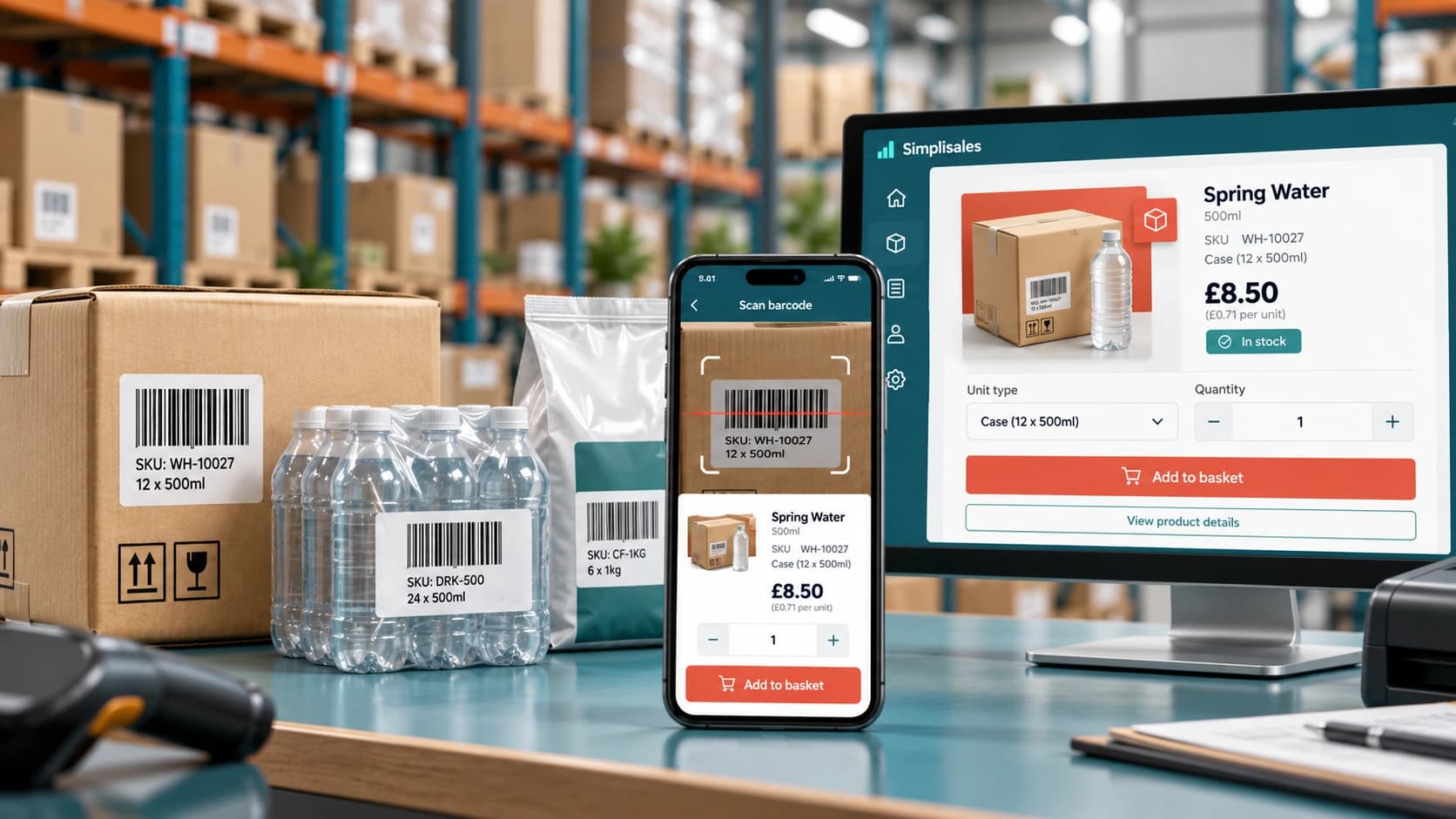
Ecommerce Tips · 16 OCT 2026
Barcode Ordering Apps for Wholesale
A retailer walks around the stockroom with a phone. In fact, when […]
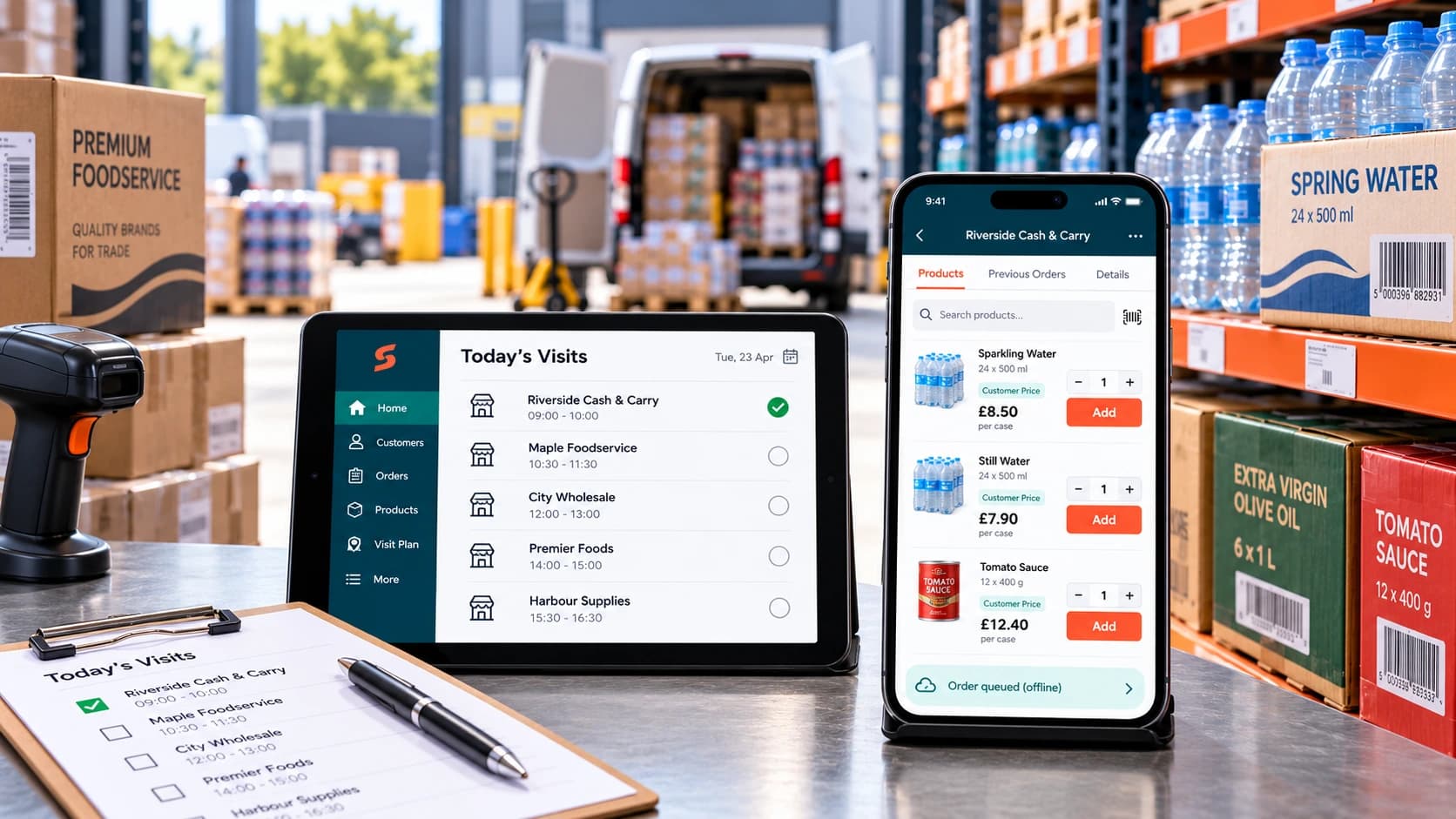
Ecommerce Tips · 12 OCT 2026
How to Roll Out a Sales Rep Ordering App
A […]
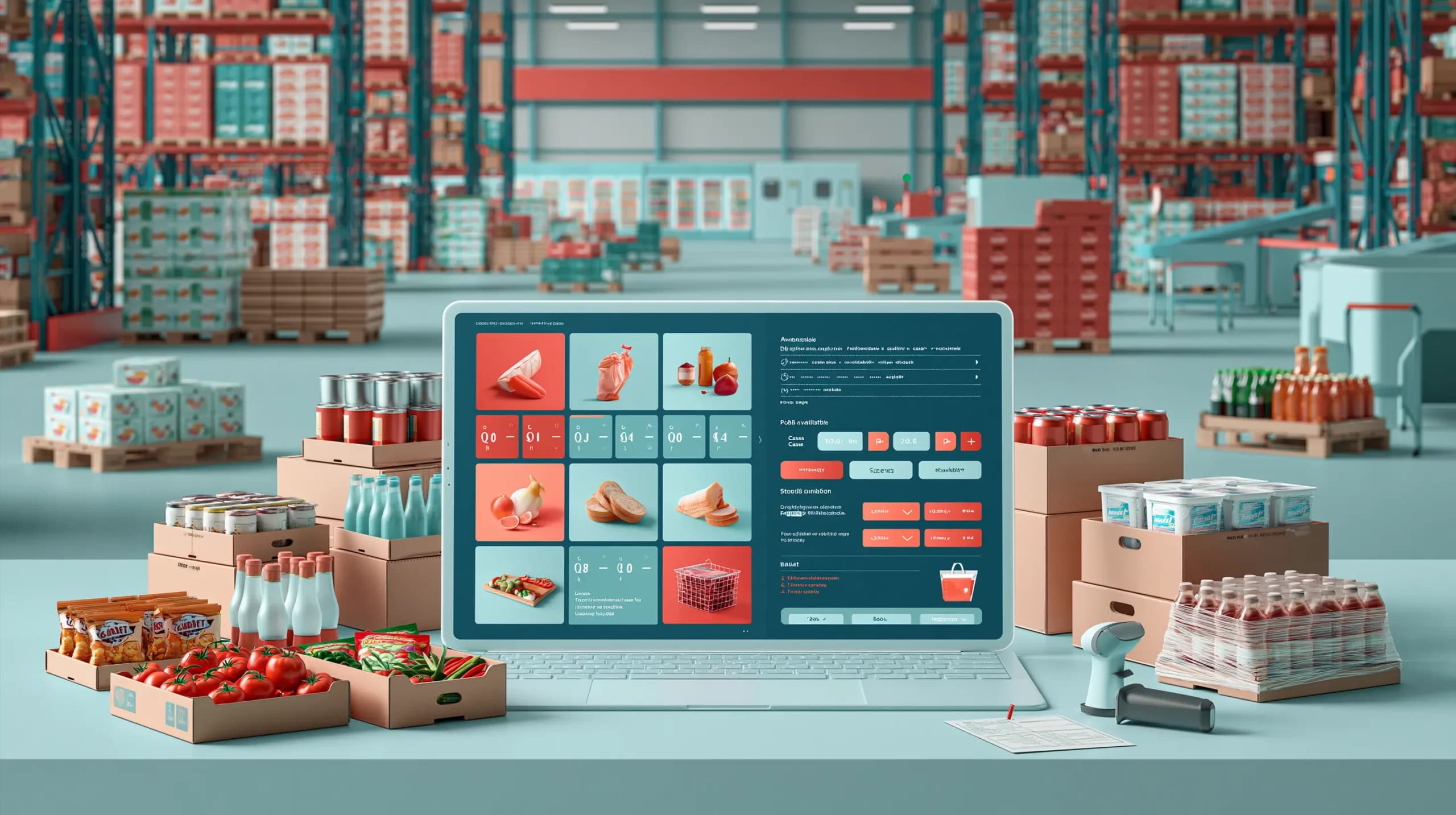
Ecommerce Tips · 10 AUG 2026
Food Wholesale Ordering Software: 12 Features UK Distributors Actually Need
This blog post covers the 12 features UK food distributors should prioritise when choosing food wholesale ordering software, from customer-specific pricing and multiple pack sizes to real-time multi-warehouse stock, batch and expiry tracking, purchasing, warehouse picking and delivery operations. It also highlights the importance of fast repeat ordering, offline sales rep tools, AI-assisted capture of […]
Run your business,
without the complexity
Start free · Try paid plans for 30 days.
