Dynamic Pricing in B2B Wholesale: Strategies for Growth

Introduction: The Coffee Conversation That Sparked a Pricing Idea
Have a look at this scenario: You and your wholesaler buddy are having their morning cups of coffee when he is telling you about the situation that occurred last week. One of his older clients asked him why the prices of their products were frozen for months while market costs were constantly changing. “It struck me, ” he reflected, “I’m losing money by maintaining the same status quo.”
This brings us to a topic. In the retail sector, price fluctuations are the reality of the day – just like airlines, hotels, or even your neighbourhood supermarket, which keep on changing shelf prices almost every week. But in wholesale B2B? There are still many companies that linger in the so-called conservative mode of doing business, using fixed price lists, lenient negotiations, and rare flexibility.
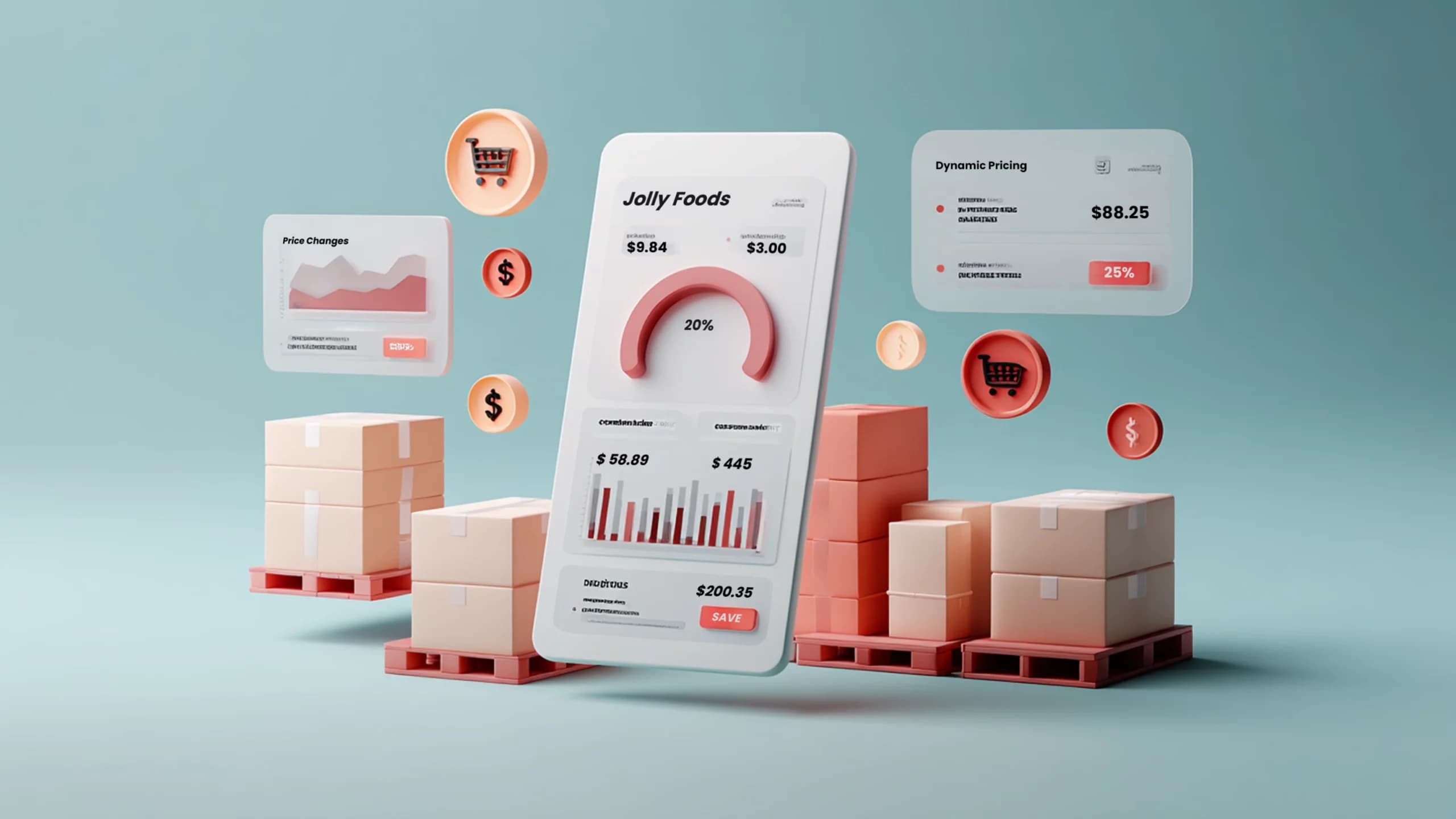
This is where dynamic pricing is welcomed. If done correctly, it does not imply taking advantage of your buyers. On the contrary! It is balancing the relationship – adapting to changes in the market, showing appreciation to dedicated customers, and taking measures to ensure that margins are not affected. And right, this is all possible thanks to the aid of new technologies.
Let’s summarise all.
What Is Dynamic Pricing in B2B Wholesale?
Dynamic pricing is a price-setting technique where prices do not remain static forever but vary according to some conditions. In wholesaling, this could be:
- Making adjustments to the increase in raw material prices.
- Granting discounts to bulk purchasers.
- Mirroring market demand and supply variations.
- Give loyal customers personalised rates.
Unlike retail, B2B buyers usually have ongoing relationships with you. This means that dynamic pricing must be handled finesse; in case you are too upfront, you might lose your buyers. Conversely, if it is implemented properly, it will boost confidence and make your business more competitive.
Why Should Wholesalers Care About Dynamic Pricing?
Let’s be real here: wholesale profits are marginal. You don’t have the luxury of just absorbing the cost changes like the big retailers. So, dynamic pricing is really worth your attention for the following reasons:
1. Stay Competitive
Your buyers are exploring their options elsewhere. If you are too costly, they will turn to other suppliers. If you are giving your product at a cheaper price, you might be losing profit. Dynamic pricing helps you to find the correct price point of your product.
2. Protect Margins
You can react right away to situations that are costing you either fuel, packaging material, or raw materials. No need to wait for months to make the necessary changes.
3. Build Stronger Customer Relationships
Customers feel important for having a personalised rate. A loyal customer who buys in large quantities obtains a price advantage compared with a new customer who is trying the product for the first time. It is a win-win situation.
4. Improve Cash Flow
The quicker adaptations result in periods without having stock that is wrongly priced. The sales cycle gets leaner and more profitable.
Real-Life Examples of Dynamic Pricing in Action
Dynamic pricing is not merely a tricky concept. Companies across the globe are already doing it.
- Food wholesalers: If the price of tomatoes increases due to a failed cultivation, wholesalers change their pricing immediately instead of waiting for the quarterly assessment.
- Building material suppliers: They adjust their prices in accordance with global commodity indexes, so the buyers know that the prices are reasonable and market-driven.
- Electronics distributors: Provide occasional price reductions or short offer campaigns for volume offers to keep the inventory flowing without hurting margins.
And here is the twist: clients are totally fine with it. The reason is that they witness dynamic pricing in many other aspects of life- flights, hotels, and even ride-sharing apps. In wholesale, it feels like the only thing one can do is to adjust.
The Role of Technology in Dynamic Pricing
Dynamic pricing can no longer be managed via spreadsheets as it has become too complicated. This is where tools like Simplisales Dashboard make an entry.
The Simplisales Dashboard allows you to:
- Make adjustments (based on demand, quantity, or customer segment) in pricing rules.
- Monitor profit margins in real-time.
- Price synchronisation across your Simplisales Website and Simplisales App is seamless.
This means that your buyers would see the correct price whether they are ordering online at midnight or calling your sales rep during the morning.
Technology renders it possible not just to do it, but to make it scale.
Strategies for Implementing Dynamic Pricing
Thinking of giving it a shot? Below are some simple and practical steps that can work dynamic pricing in your wholesale business:
1. Start Simple
You shouldn’t strive to overhaul everything in an instant. Go for some selected categories first where demand is the most changeable.
2. Segment Your Customers
Every buyer does not really need the same deal. Divide your customers based on order size, loyalty, or frequency. In this way, dynamic pricing is perceived as personalising instead of being unpredictable.
3. Use Rules, Not Randomness
Determine the conditions clearly, for example:
- 5% discount on orders of £5,000.
- Automatic price updates when supplier costs go up by over 2%.
- Seasonal pricing for products linked to demand cycles.
4. Communicate Clearly
Dynamic pricing shouldn’t be an unexpected thing. Speak frankly: “Our prices reflect current market conditions” or “Bulk orders unlock better rates”. This is a trust-building exercise.
5. Monitor and Optimise
Watch the sales data closely. Which pricing rules are effective in landing the deals? What ones are detrimental to margins? Make adjustments regularly.
Challenges and How to Overcome Them
Let’s get real: dynamic pricing is not without its challenges. Nevertheless, each of those challenges can be conquered.
- Customer pushback: A segment of the customers may not feel comfortable viewing the price hike. The answer? Concentrate on clear communication and loyalty rewards.
- Complex management: Manual operation is tough. The solution? Apply a tool such as the Simplisales Dashboard to run the processes automatically.
- Fear of mistakes: What if the prices go too high or too low? Solution? Have rules in place, such as minimum margin thresholds.
These hurdles can easily be turned into a strength in the relationship by being careful in handling them.
The Future of Pricing in Wholesale
Dynamic pricing is not a fad – it is the future of wholesale. Given that buyers are more and more eager to order through digital channels and get customised offers, static price lists are likely to be obsolete soon.
Imagine this:
- A shopper gets into your Simplisales Website.
- They fill their shopping basket with items.
- The system identifies them as a dedicated, high-volume customer.
- Immediately, they are greeted with a lower price than a casual buyer would
That’s the future. Personal, fair, and competitive.
Conclusion: Time to Take the Leap
The future is bright for the wholesale businesses. Make it brighter with Simplisales, a simple and affordable B2B eCommerce solution for wholesalers
Dynamic pricing is not about being unpredictable. It means responding to the market. In a fast-moving world where costs increase rapidly and consumers expect individualisation, holding onto price lists that are static is akin to saying that the fax machine is still in use.
With the aid of instruments like the Simplisales Dashboard, Simplisales Website, and Simplisales App, you can deliver dynamic pricing to your wholesale business without the disruptions.
The result? Increased profit margins, satisfied customers, and a company that is resistant to time.
Related Blogs
Explore more insights for your wholesale business.
Accounting · 23 MAR 2026
Integrating On-Premise Accounting Systems with Modern Operations
As B2B businesses grow, the real challenge is not outdated accounting software, but the lack of connection between stable on-premise systems and fast-moving operational processes like sales, inventory and warehouse management. Tools such as Sage 50 remain reliable for finance, compliance and reporting, but they are not designed to handle real-time operations, leading to delays, […]
Accounting · 09 FEB 2026
Why Accounting Software Is Not Enough for Growing B2B Businesses
As a B2B wholesale business owner, you would depend a great deal on the accounting software that helps you to keep track of all the invoices, the revenue, and the taxes. On the flip side, it will not be unusual if you find yourself typing in the search engine “accounting software is not enough” or […]
Accounting · 02 FEB 2026
When Inventory Outgrows Accounting Tools
The problem with inventory in the case of growing wholesale businesses usually comes not from the errors but from the mere dependency on accounting software for the wrong job. The accounting systems are super precise when it comes to cash flow and stock value, but they see inventory as a definite figure that is updated […]
Run your business,
without the complexity
Start free · Try paid plans for 30 days.
